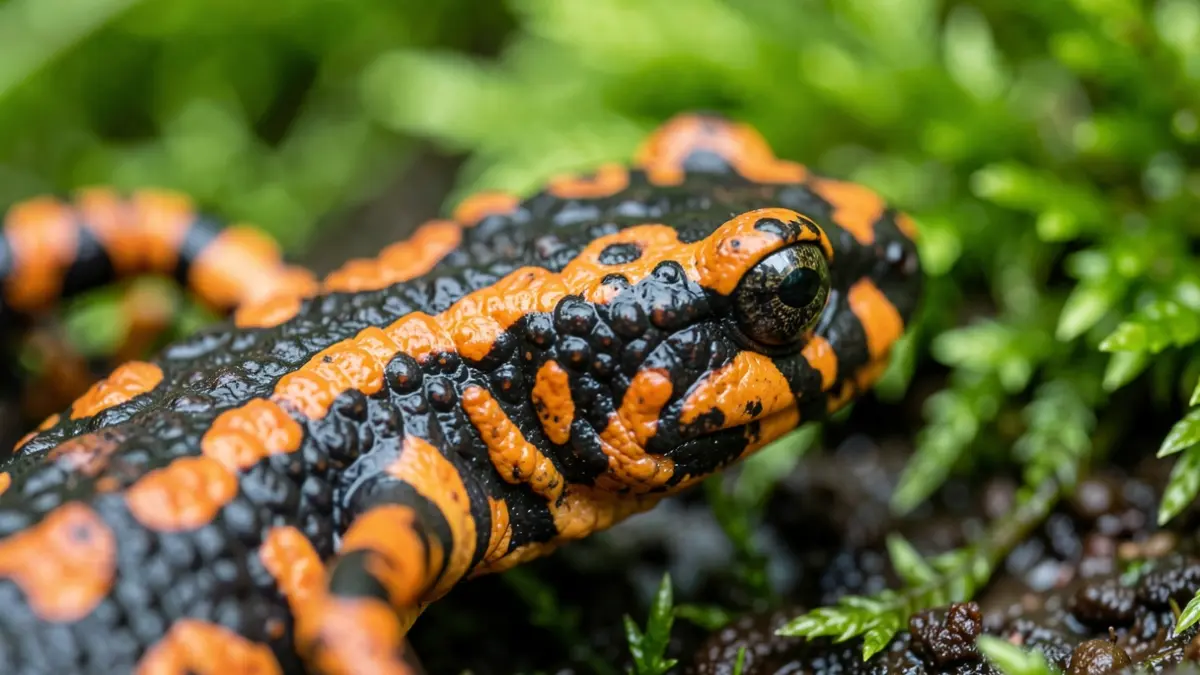
Investigator Guillermo Velo Antón from the EcoEvo group at the University of Vigo is one of the authors of a study that has identified the genetic keys to a "unique evolutionary adaptation" in salamanders from the Atlantic Islands. On two islands within the national park, females of the species Salamandra salamadra give birth to "fully formed terrestrial offspring", instead of larvae as in the species' ancestral reproductive mode. This evolutionary adaptation has occurred "independently", both on each of these islands and in the Cantabrian coast, making the common salamander the only amphibian species in the world with two reproductive modes that emerged at different evolutionary times.
The study, published in the scientific journal Molecular Ecology, has identified "evolutionary convergences" in this adaptation to terrestrial environments using massive RNA sequencing techniques. This allows salamanders to "colonize or remain in habitats without available water bodies". The results demonstrate "for the first time that the transition from giving birth to aquatic larvae to terrestrial offspring can be regulated by changes in maternal gene expression in the uterus", states Velo Antón, a professor at the Faculty of Biology.
Most amphibians have a "dual life cycle", with females laying eggs or larvae in water. However, Salamandra salamadra and its sister species Salamandra algira are the only amphibians "with variation in reproductive mode within the same species". The common salamander is unique in that this "adaptive innovation" has developed "independently in different times and places", making it a "truly exceptional study system".
This phenomenon occurred in the mountains of northwestern Iberia and, more recently, on the islands of Ons and San Martiño (Cíes). The study also "highlights the heritage and biological value of our Atlantic Islands National Park", according to Velo.
The research, which used massive RNA sequencing, shows that evolution "has partially resorted to the same molecular mechanisms" in both cases. "Key genes that change their activity in the uterus in a coordinated manner" have been identified, such as "increased vascularization" to provide oxygen and nutrients, and the activation of the MCM6 gene to accelerate embryonic development. "Increased activity of genes linked to the formation of ciliated cells in the uterine epithelium" was also observed.