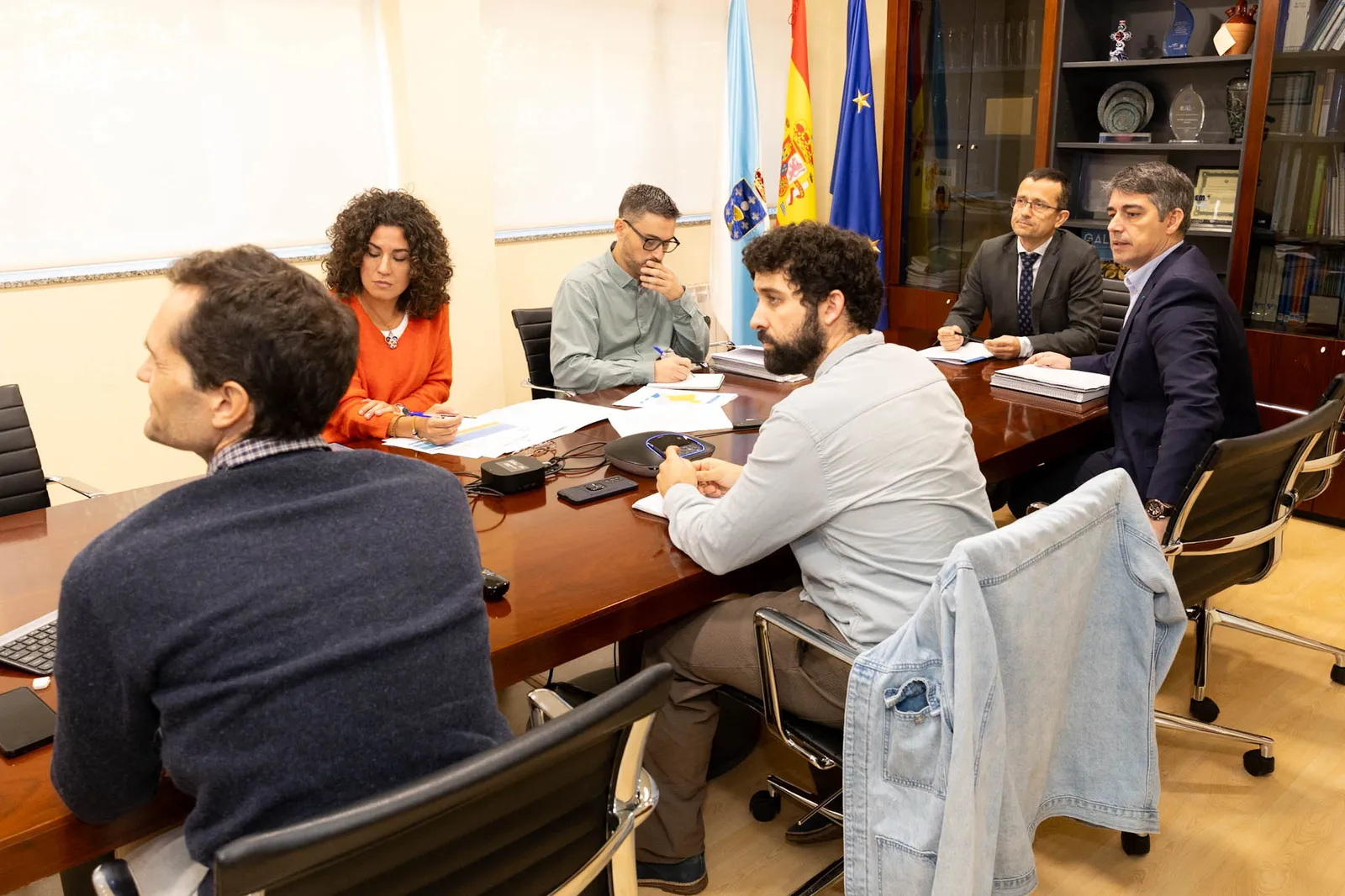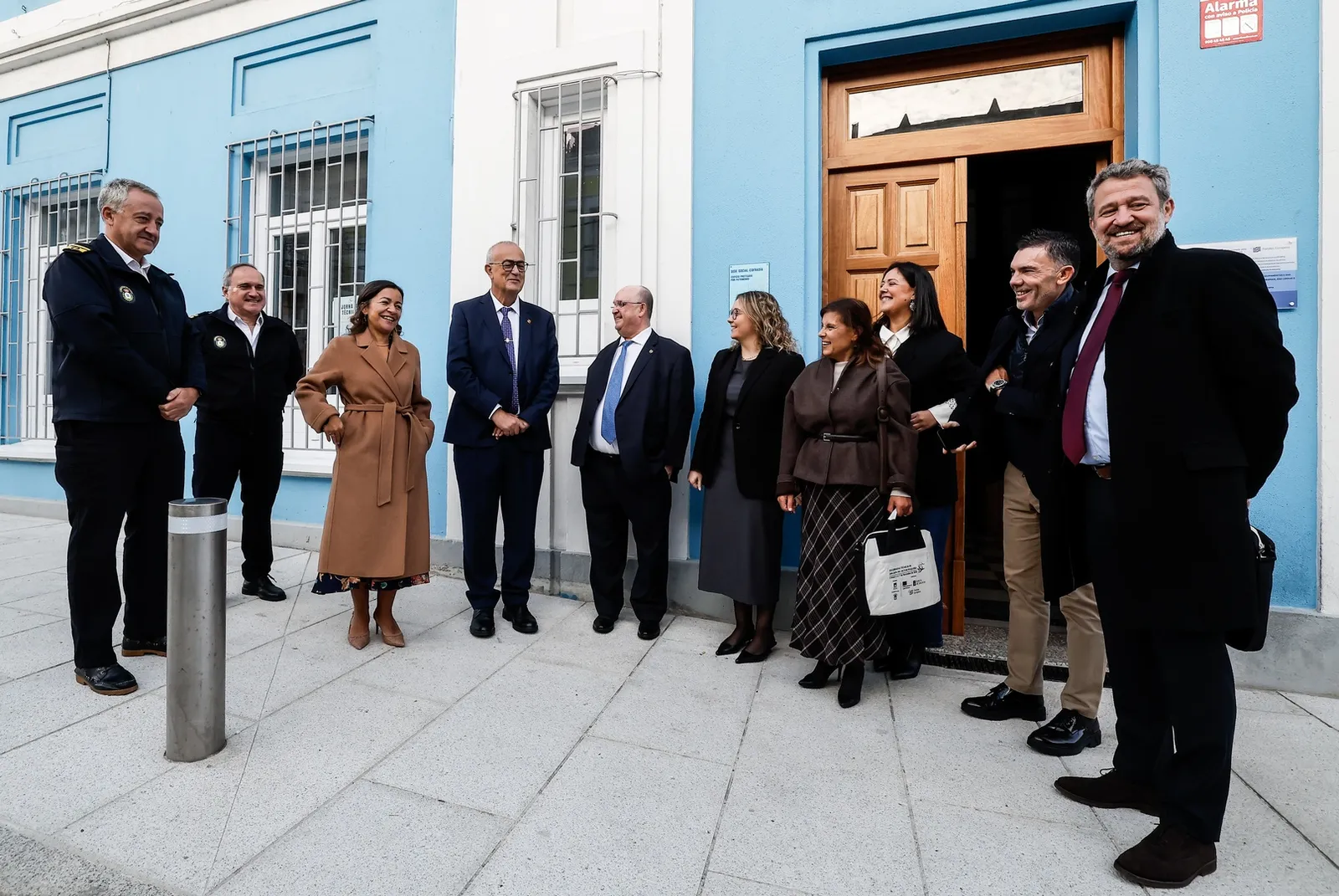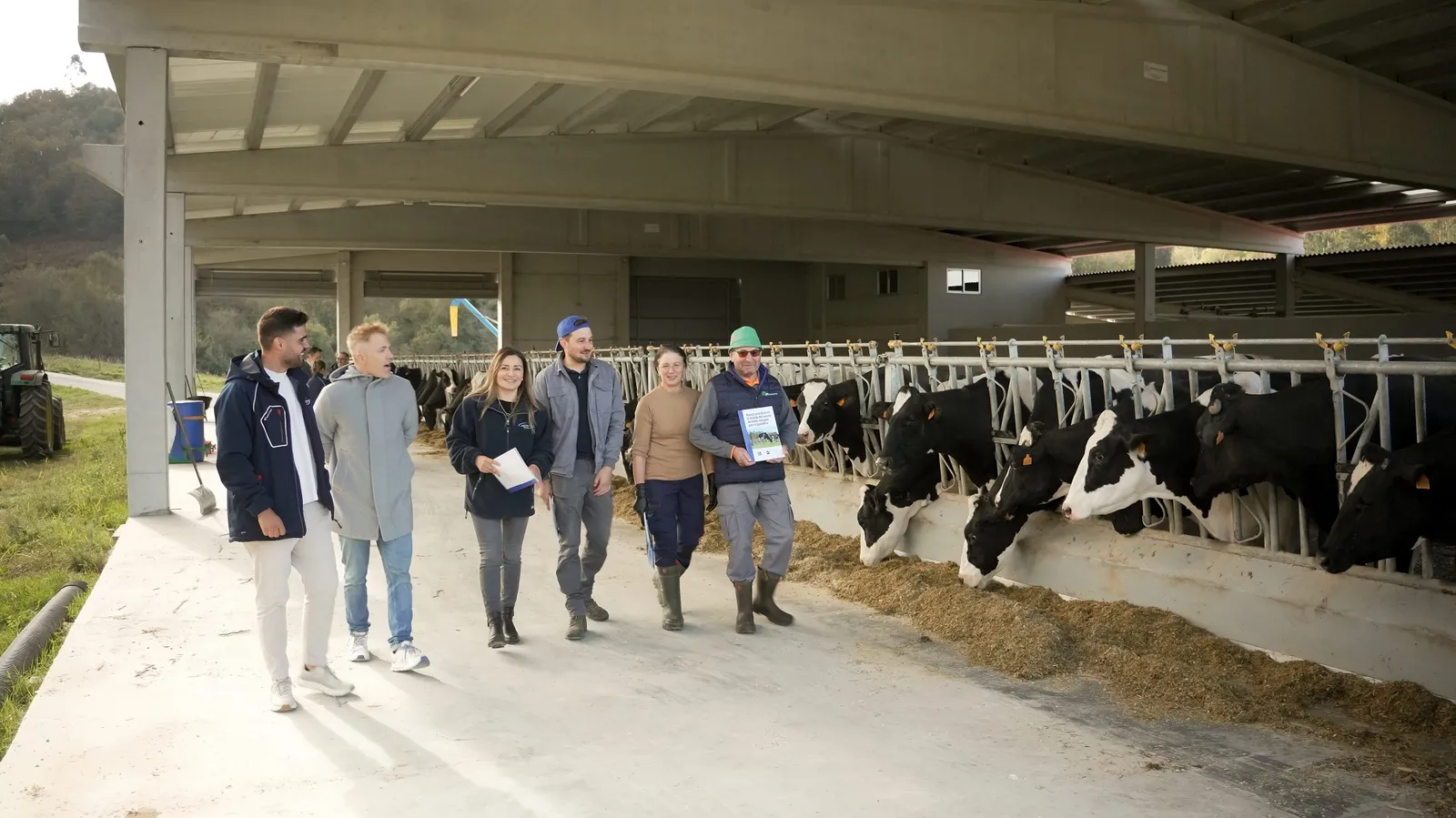
The USC-Lactalis Spain Chair of Innovation and Livestock Entrepreneurship presented the Manual of Best Practices in Dairy Cattle Management: A guide for the farmer. This practical tool aims to transfer scientific and technical knowledge to the daily management of farms. The presentation took place at the Casa Cortés farm in Mesía, allowing the Chair's work to connect with the reality of farms and to hear the perspective of professionals.
This manual is one of the first projects of the Chair, promoted by the University of Santiago de Compostela (USC) and Lactalis Spain, to unite university expertise, the company's experience, and that of sector workers. Both entities thus continue a collaboration of over fifteen years focused on innovation, training, and knowledge transfer in the primary sector.
The guide covers nine key areas for dairy cattle farms: biosecurity, animal welfare, animal feeding and water quality, facilities, milking routine, equipment and refrigeration, environment, milk quality, responsible use of antibiotics, and the Integrated Management System for Bovine Farms (SIGE). Each section combines technical information with practical tips and examples to facilitate daily application.
USC Professor Francisco Javier Diéguez Casalta, coordinator of the work, explained that the objective was to "gather and organize available knowledge to transform it into clear, realistic, and useful guidelines for farms." He highlighted that the manual provides adaptable criteria for each professional's reality to improve health, animal welfare, milk quality, efficiency, and sustainability, emphasizing the importance of bringing scientific knowledge to the field.
The manual was developed by specialists from the Animal Production Area of the Faculty of Veterinary Medicine of Lugo and reviewed by professionals from Quality and CSR of Lactalis Spain. Luis Antonio Díaz-Regañón Labajo, Head of Quality and CSR at Lactalis Purchasing and Supplies, noted that good practices are essential for producing quality milk, caring for animals, protecting the environment, and ensuring farm viability. "With this manual, we want to offer farmers a useful reference for making better decisions," he stated.
Víctor Bascoy, manager of the Casa Cortés farm where the meeting was held, positively valued the initiative, stating that incorporating good practices helps to work more efficiently and improve productivity and milk quality. He emphasized that continuous improvement requires training, advice, and concrete tools.