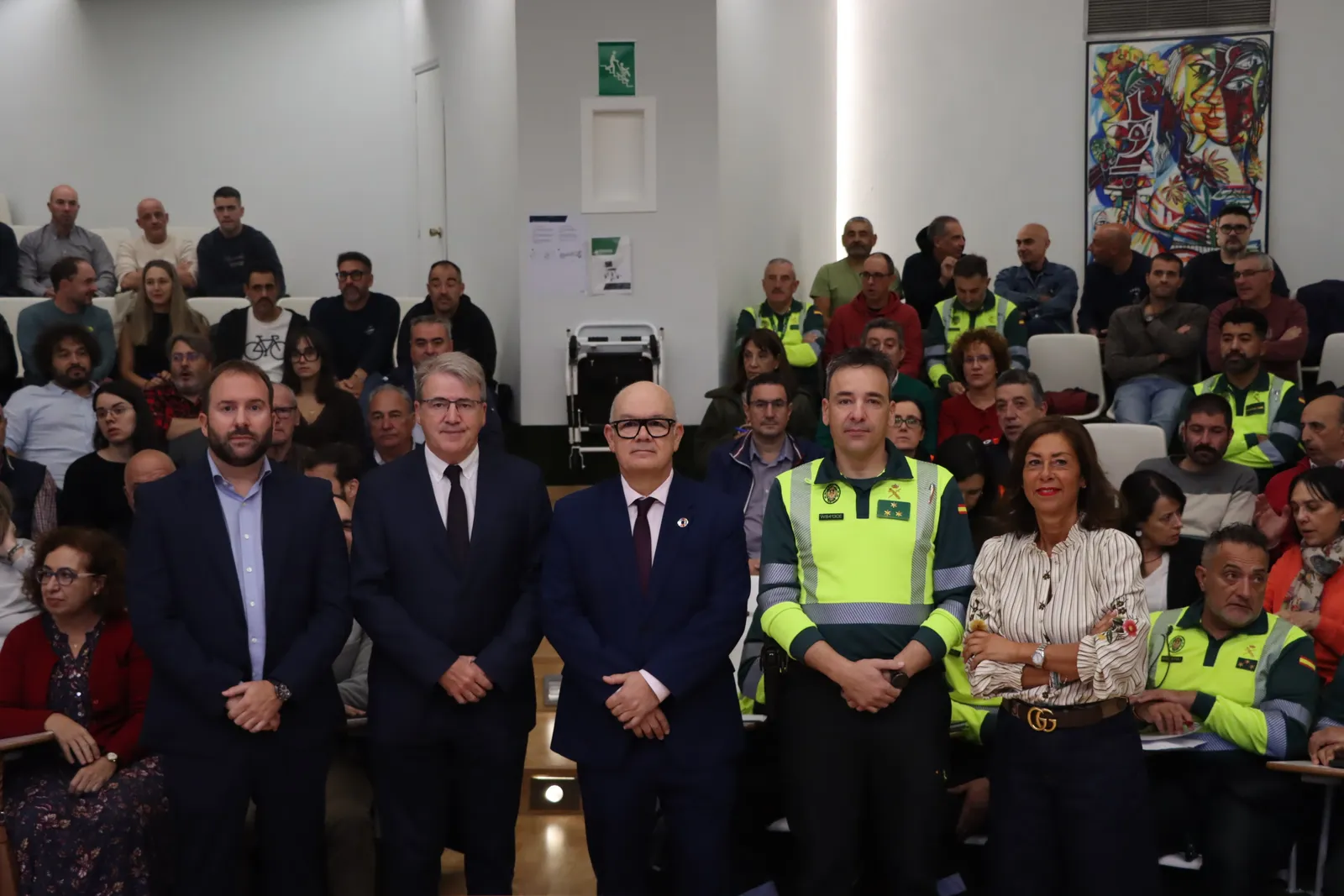
The Director General of Natural Heritage, Marisol Díaz, participated in Ourense in a technical conference on animal-related incidents organized by the General Directorate of Traffic. There, she presented the transversal wild boar management model that combines damage prevention, population control, actions on road infrastructure, health surveillance, and institutional cooperation.
Díaz emphasized that for the first time this year, a temporary hunting emergency was declared throughout Galicia to control the wild boar population due to persistent damage and increased accidents. She highlighted that during the 2024-2025 season, over 15,500 actions were carried out and nearly 18,900 wild boars were captured, demonstrating significant mobilization from the hunting sector.
The Xunta has a package of measures structured around five complementary lines: prevention with aid for electric fences to reduce wild boar entry into crops, economic compensation for agricultural damage, population control through hunting activities and live captures in urban areas, species knowledge with an estimated 82,200 individuals and an average density of 2.77 per km², and the valorization of game meat.
In the agricultural sector, 4,918 damage reports were registered by July 1, 2026. Regarding road safety, 4,080 incidents involving wild boars were reported in 2025, with 1,218 occurring in the province of Ourense. Additionally, conflicts in urban areas and the health risk associated with African swine fever are key concerns.
Marisol Díaz concluded by stressing that the wild boar challenge is multi-causal and requires a flexible and coordinated response among various institutions, including the Xunta, local councils, the DGT, the Civil Guard, road owners, the Galician Hunting Federation, and hunters.