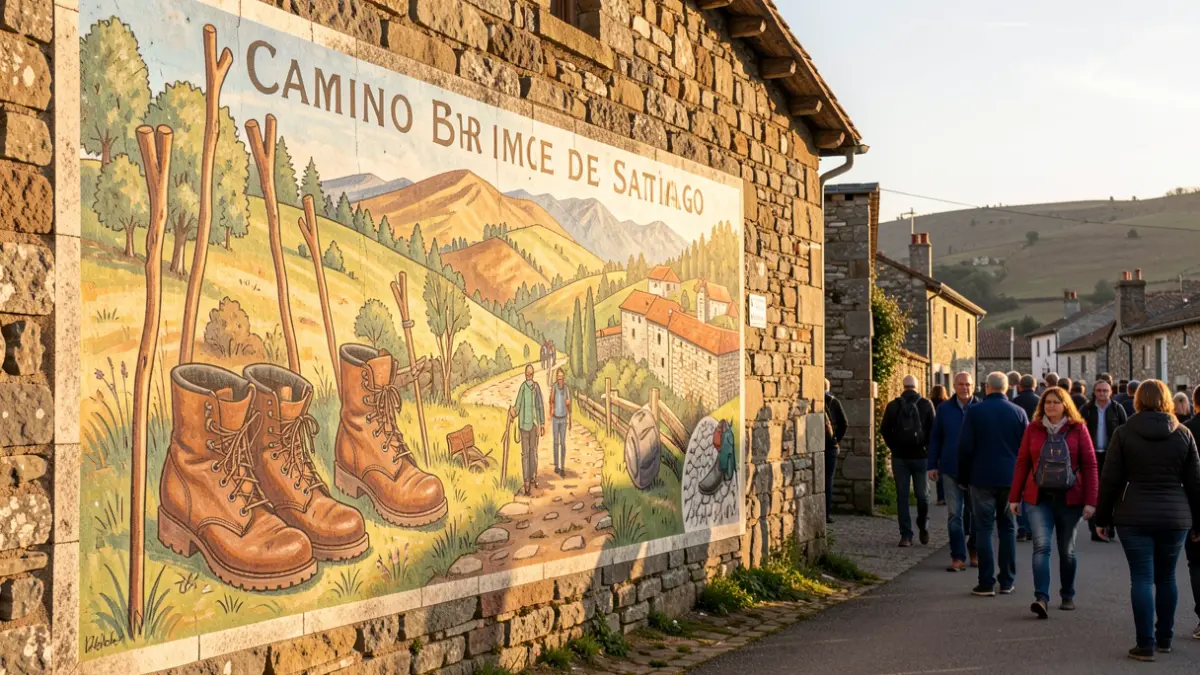
Provincial deputy Antonio Leira highlighted that this initiative, promoted by the Provincial Council of A Coruña in collaboration with the Association of Municipalities of the English Way, the Association of Municipalities of the Fisterra-Muxía Way, and the involved municipalities, aims to integrate urban art into the Jacobean routes, reinforce local identity, and enrich the experience for pilgrims and residents.
Between 2024 and 2026, fourteen murals have been painted in municipalities such as Miño, Paderne, Culleredo, Carral, Abegondo, Mesía, Ordes, and Oroso (on the English Way); and in Negreira, Mazaricos, Dumbría, Cee, Corcubión, and Fisterra (on the Fisterra-Muxía Way).
Antonio Leira stated that "this third edition concludes a route of fourteen murals that are already part of the Camino's landscape", thanking the participating artists Twee Muizen, Sokram, Agustina Shuan, Sekone, and María Martelo. The deputy reiterated the Council's commitment to supporting projects that "strengthen the cultural character of the Jacobean routes and give visibility to the artistic talent we have and must promote and enhance".
Mayors and councilors from the involved municipalities, as well as representatives from the associations of the English Way and Fisterra-Muxía, and the neighborhood association of Buscás, participated in the presentations.
In Mazaricos, Twee Muizen pays homage to the municipality's landscape and people. In Oroso, Sokram presents «Viaxe interior» (Inner Journey), a reflection on the personal path. Agustina Shuan in Mesía recalls the historical role of Bruma hospital as a confluence point. In Beche (Abegondo), Sekone paints the night pilgrims. Finally, in Buscás (Ordes), María Martelo draws inspiration from old photographs from the local community and from Gustav Henningsen to bridge the past and present.