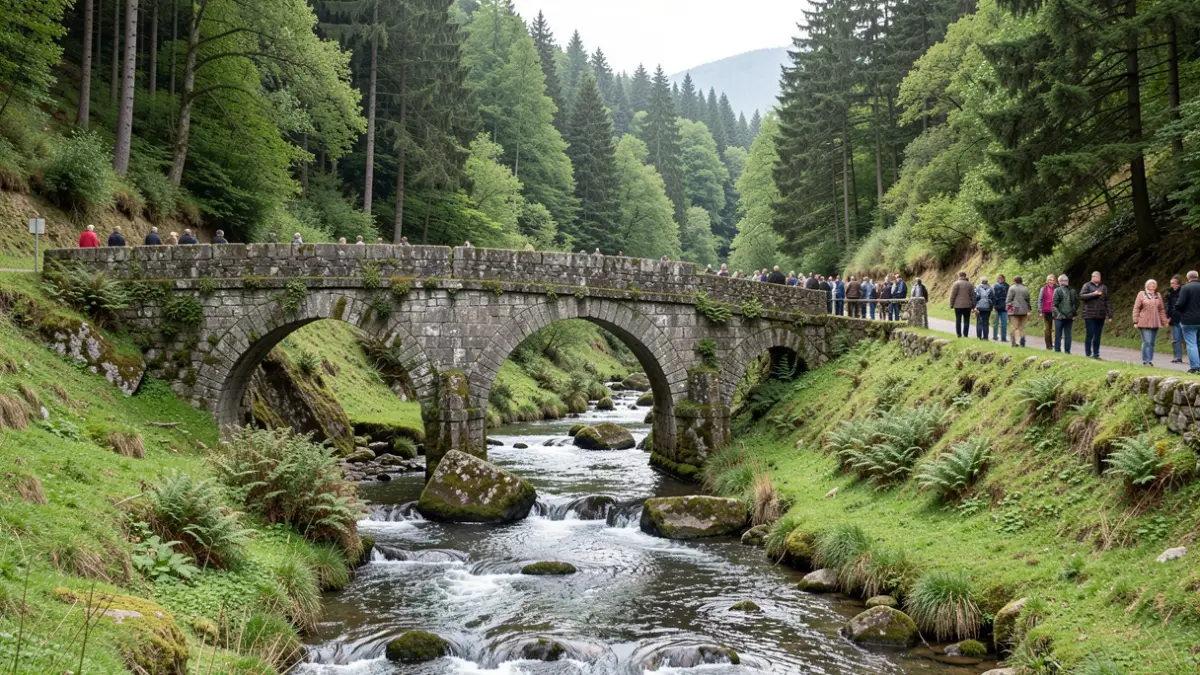
This year's investment, from the Environmental Compensation Fund, focused on enhancing the environment of the Leira Dam, with the recovery of the aqueduct located on the borders of the parishes of Ribela, Parada, and Codeseda. This hydrological and architectural complex is considered an important heritage element and a still largely unknown tourist attraction.
The mayor of A Estrada, Gonzalo Louzao Dono, visited the area to see the results of the work, highlighting the "natural, hydrological, and tourist attraction" of the complex and the "very interesting heritage" of the area.
In the first intervention, carried out in 2024, the Council had already recovered the dam's walls and installed walkways and railings to facilitate pedestrian transit. In this 2026, the focus was on the aqueduct's recovery, restoring some of the large stone slabs covering the channel and part of its original configuration. The structure, designed for water conduction, is nearly three centuries old, with some documentary sources dating its construction to the year 1753.
The Leira aqueduct is part of an old water conduit approximately 3 kilometers long, created for irrigating meadows and crops. In addition to its architectural importance, the beauty of the natural landscape and the popular legends associated with mythological figures like the 'mouros' (mountain spirits), which have given their names to stones and cavities in the area, are noteworthy.