The tool, which uses artificial intelligence to facilitate access to institutional information through chatbots, received the ‘Spotlight’ distinction in the Clarity in Action category. This category recognizes initiatives capable of transforming complex information into clear and accessible content for citizens.
The Atlas of Innovation in Public Communication, an initiative of the United Nations Development Programme (UNDP), seeks to identify innovative public communication practices worldwide. It received 173 candidacies from 50 countries, from which 102 experiences were selected. Only 20 of them received the ‘Spotlight’ distinction for their high ratings in innovation, relevance, impact, and replication potential.
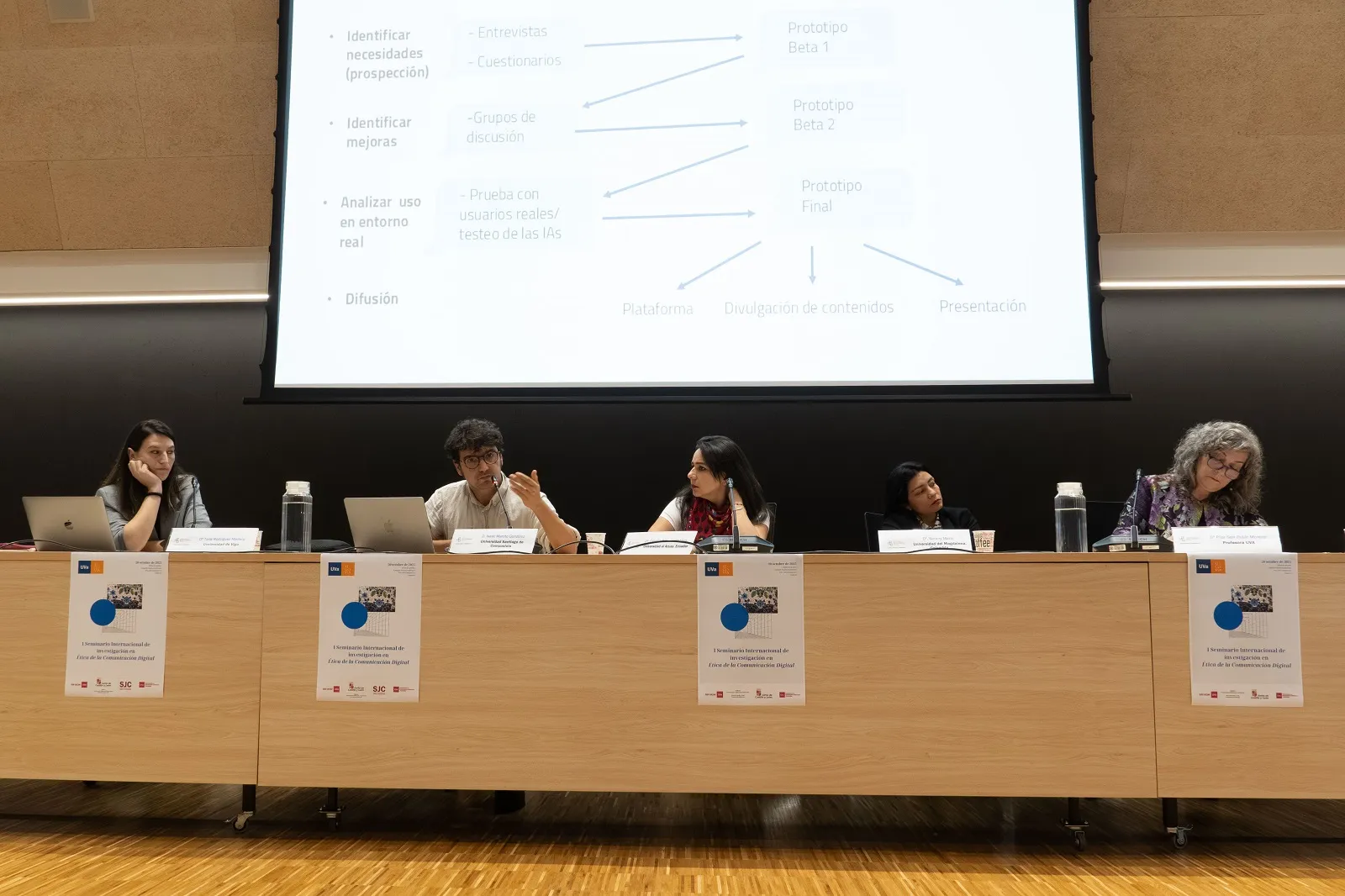
VALUEbot, developed since 2024 at the USC's Faculty of Communication Sciences, facilitates access to institutional information through conversational interfaces. Its modular architecture allows the integration of different artificial intelligence models, promoting technological independence and privacy.
The Atlas highlights the use of ethical artificial intelligence, local models, and open-source technologies to make public communication more accessible, transparent, and reliable.
The project, led by Miguel Túñez López with scientific-technical coordination by Isaac Maroto González, was funded by MCIN/AEI and the European Union through NextGenerationEU/PRTR.
The tool was validated with the participation of 17 professionals from European public media outlets such as CRTVG, CMMTV, Canal Sur, Yle, and NPO, as well as a focus group at the University of Tampere. It was also used to disseminate the report from the CIRCOM Chair at the University of Vigo.
As a result of this evolution, the USC and the University of Vigo have signed a collaboration agreement to promote the use of VALUEbot for didactic and dissemination purposes, expanding its academic and knowledge-sharing applications.