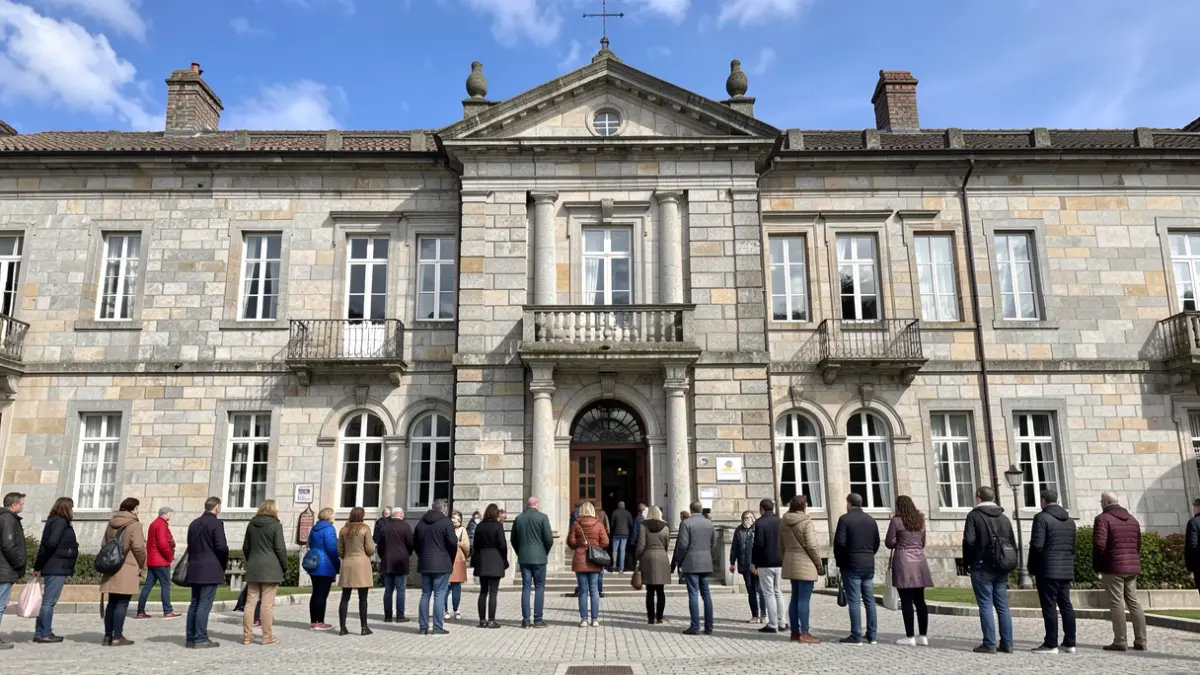
Santiago de Compostela hosted the 14th International Symposium on Lipodystrophies on October 16 and 17. The scientific event gathered 800 national and international specialists to share the latest advances in the knowledge of these rare diseases and analyze their clinical, metabolic, and social implications. The symposium combined basic and clinical research with updates on the diagnosis, classification, and treatment of lipodystrophies.
The event was organized by the Association of Relatives and Patients with Lipodystrophies (AELIP) and the research group UETeM (Unit of Thyroid and Metabolic Diseases) from CiMUS, led by David Araújo Vilar. During the event, the Research Award in Lipodystrophies «Celia Carrión Pérez de Tudela» was presented to Professor Giovanna Lattanzi, director of the National Research Council of Italy, in recognition of her contribution to research.
“"Lipodystrophies continue to present significant challenges in diagnosis and treatment, making it crucial to drive research and strengthen collaboration among scientific teams from different countries. This symposium allowed us to learn about the latest advances, identify new lines of work, and bring scientific knowledge closer to the real needs of patients."
Friday's scientific session included an inaugural lecture by Professor Ángel Carracedo on the IMPaCT Genómica project and its contribution to reducing the diagnostic odyssey of rare diseases. Topics also covered acquired lipodystrophies, the impact of excessive fat storage, bone health, and new therapeutic strategies, as well as new subtypes and the proposed definition and classification from the EClip consensus.
Researchers from CiMUS, including Rubén Nogueiras, Antía Fernández-Pombo, Teresa Prado-Moraña, Sofía Sánchez-Iglesias, and David Araújo-Vilar, presented their contributions on the metabolic consequences and biological bases of the disease. The afternoon session updated the EClip Registry and reviewed metabolic therapies and genetic and cellular mechanisms.
Saturday's session focused on the social and care dimensions, with sessions on patient rights, psychological support, and mental health. The 1st International Meeting of People Affected by Lipodystrophies facilitated the sharing of experiences and best practices in patient support.
CiMUS at the Universidade de Santiago de Compostela is a cutting-edge research center in chronic diseases, organized into Molecular Mechanisms and Translational Integrative programs, aiming to transfer knowledge and innovation. It holds the CIGUS recognition from the Xunta de Galicia and the María de Maeztu Center of Excellence accreditation.