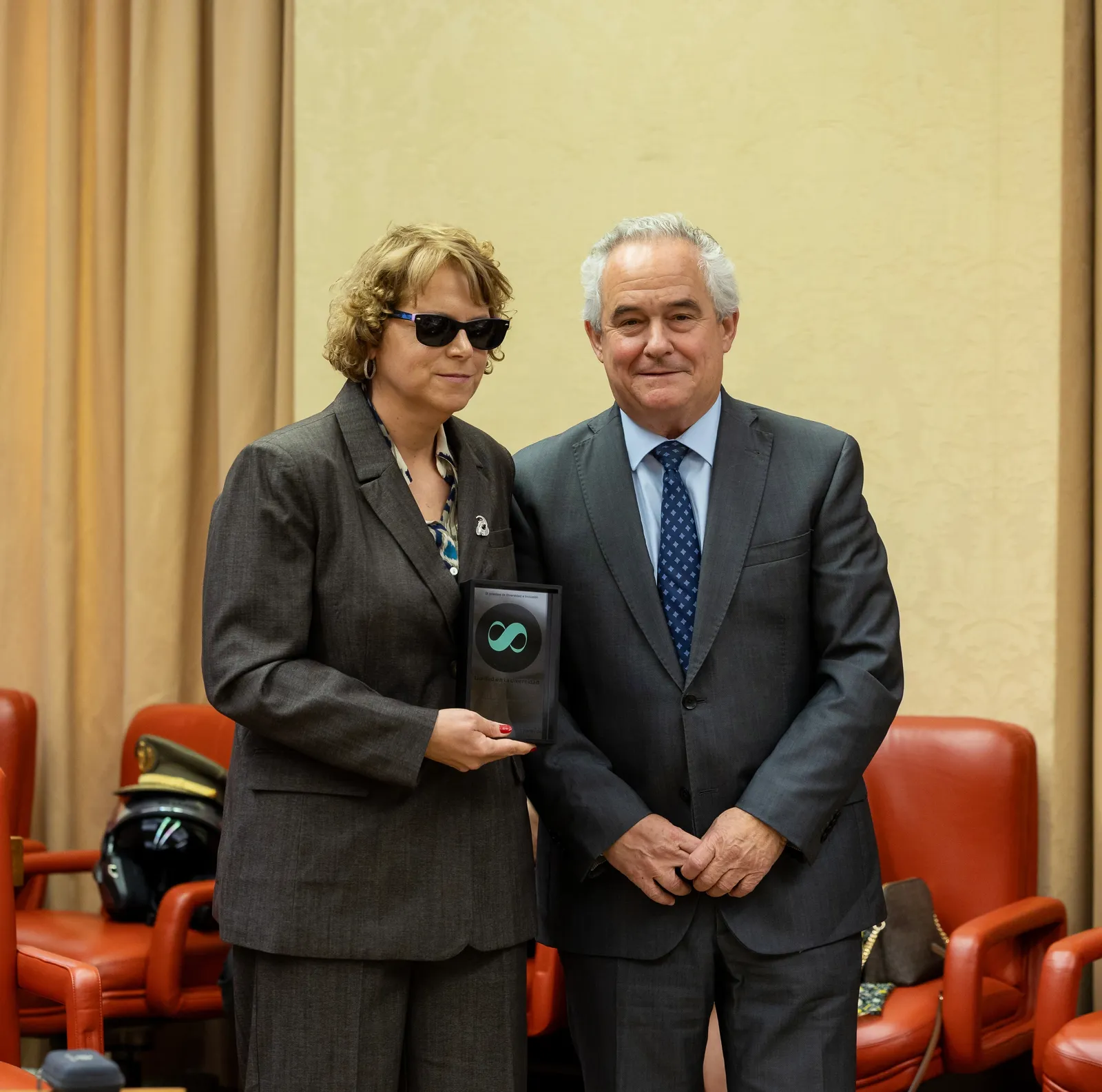
The award, presented by the Adecco Foundation and the Excellence and Sustainability Club, recognizes Mayo's career and commitment to inclusion, equity, and the psychosocial well-being of vulnerable individuals, particularly in educational and university settings.
“"As of today, we cannot yet speak of the existence of real inclusion, because as long as there are barriers that limit people's opportunities for participation, learning, or development, we cannot speak of full inclusion."
During her speech, Mayo pointed out that the most difficult barriers to overcome are not always visible, highlighting mental and attitudinal barriers such as prejudices, stereotypes, and limited expectations. "The most difficult barriers to eliminate are not always visible. Beyond physical obstacles, mental and attitudinal barriers persist: prejudices, stereotypes, and limited expectations that condition many people's opportunities. Because while a ramp can be built quickly, changing a perspective, questioning a belief, or overcoming a prejudice requires much more effort," she explained.
The professor also recalled that inclusion is not just about opening doors, but about ensuring that everyone can walk through them and remain on the other side on equal terms. Her final wish summarized the ultimate goal of inclusion: "I would like the news not to be that a person with a disability reaches certain spaces, but that no one questions whether they can reach them."