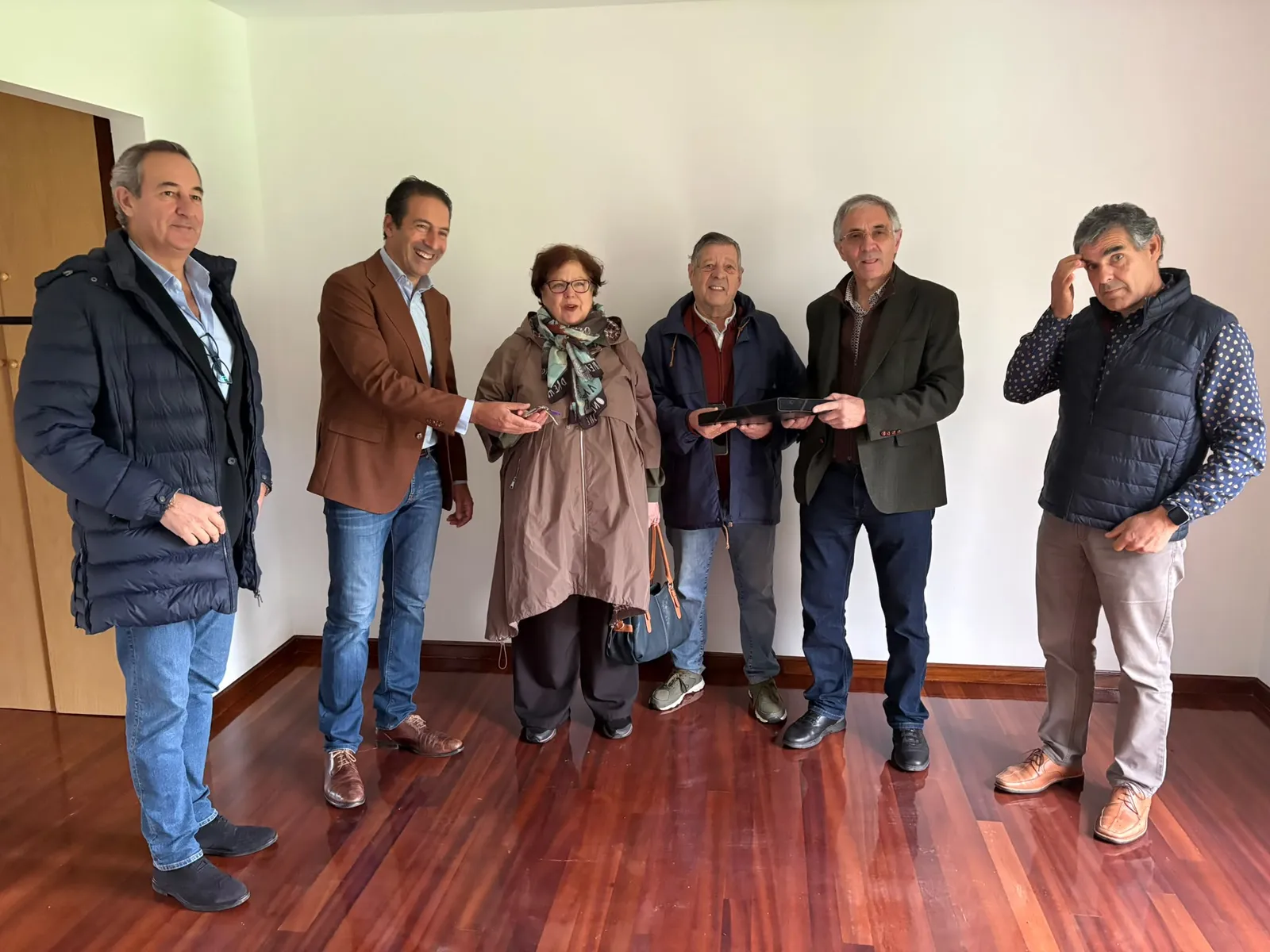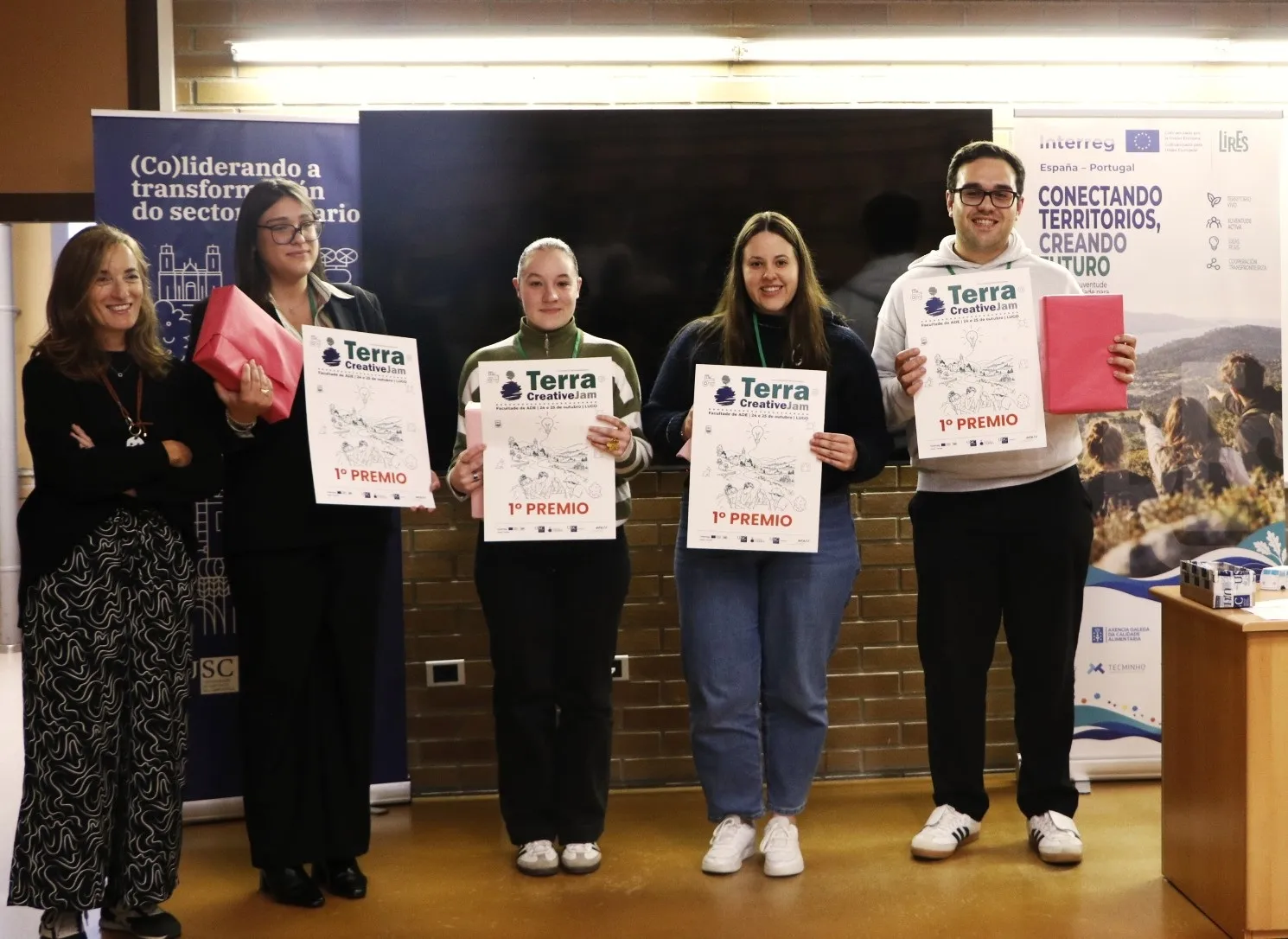
The ‘Aldeia’ project, driven by students Adrián Otero, Jennifer López, Inés Verdes, and Gisela Villanueva from the Faculty of Business Administration and Management at the University of Santiago de Compostela (USC) Lugo Campus, has won the Terra Creative Jam. This event aims to foster the involvement of the university community and youth in rural areas through innovative ideas for sustainable development. The ‘Aldeia’ system uses artificial intelligence to register behavioral patterns and alerts families to any anomalies in the daily routines of elderly individuals, providing peace of mind and keeping them connected.
The second prize went to ‘Fartura na Rúa’ by Icaro Santana, Jesús Álvarez, Iris Faria, and María González. This is a multimedia program that uses cooking as a hook to educate people in rural areas and the elderly through small workshops. These workshops aim to teach them how to use modern digital tools, such as an airfryer or Alexa, to simplify tasks.
The third place was awarded to ‘FOSSO’, by Víctor Pombo, Cristóbal Aceituno, Elisa López, María Carollo, and Roberto Penas. This project proposes transforming septic tank waste into biogas for heating and compost, promoting a circular economy and rural sustainability. Their pilot project is on display in Coeses (Lugo).
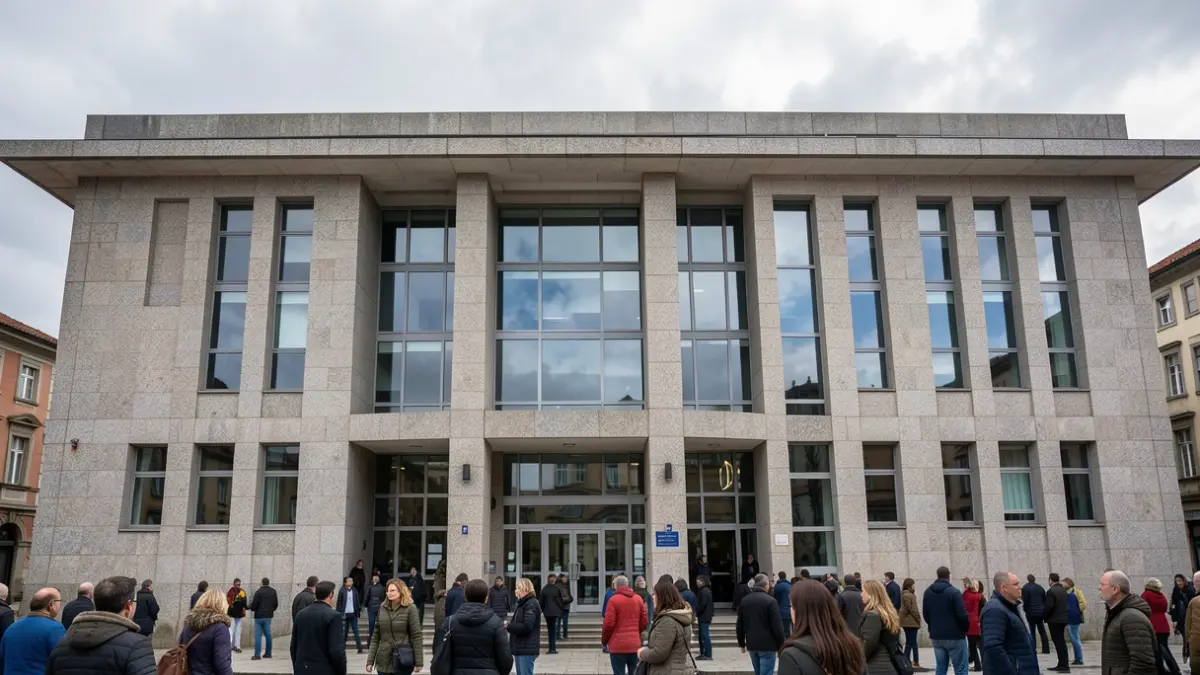
The Terra Creative Jam took place on October 24th and 25th at the USC Faculty of Business Administration. The best proposals will receive awards, institutional support, potential funding avenues, and the opportunity to be incubated within the LIRES project and USC's entrepreneurship programs.
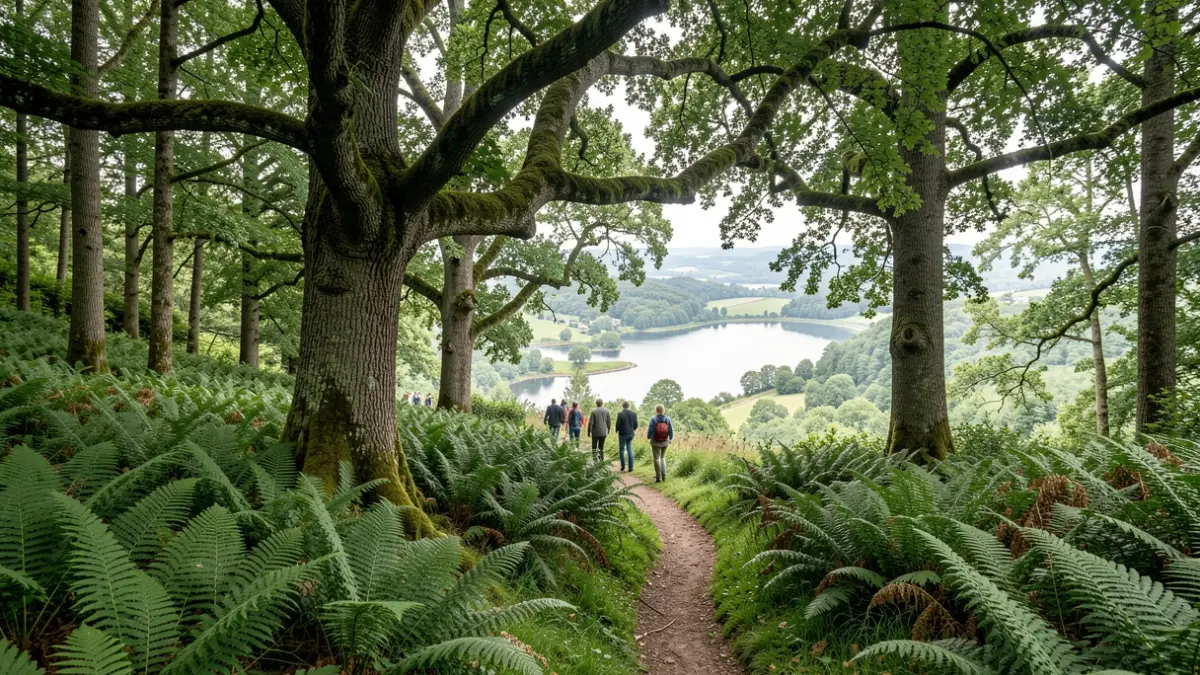
The event is part of the POCTEP project ‘Rural Innovation and Sustainable Entrepreneurship Laboratories – LIRES’, led by USC through its Campus Terra in Lugo. The consortium includes Vida Láctea, TecMinho, UTAD, the Chamber of Commerce of Santiago de Compostela, In.Cubo, the Intermunicipal Community of AVE, and the Galician Agency for Food Quality (AGACAL). The objective is to train young people in rural Galicia and Northern Portugal, with a special focus on rural women, through a hybrid entrepreneurship program aimed at creating new businesses and products or services that promote a Sustainable Rural Economy.