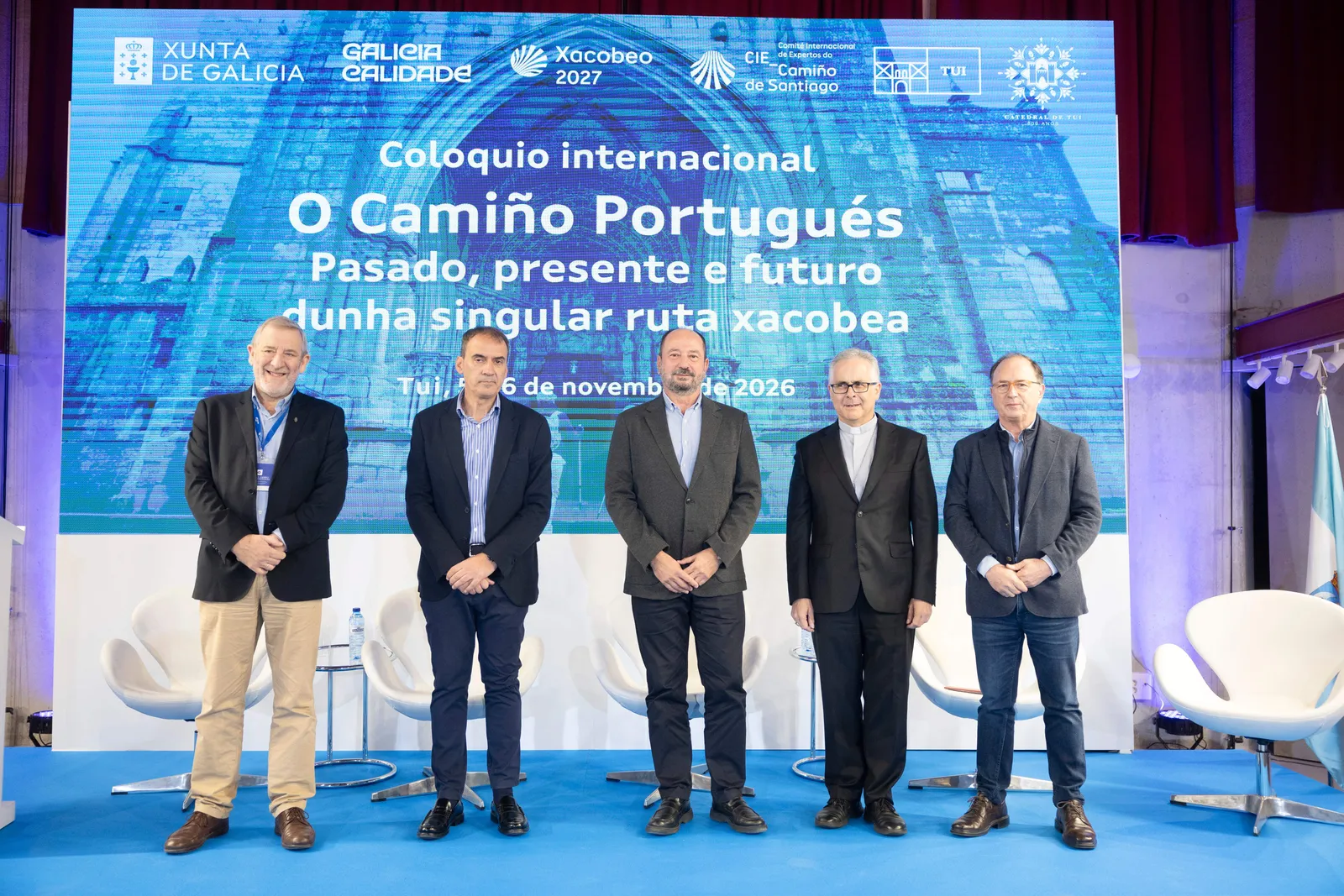
The event, held over two days, brings together researchers, university specialists from Galicia and Portugal, representatives of Friends of the Camino associations, and other stakeholders linked to Jacobean culture. The director of Tourism of Galicia, Xosé Merelles, highlighted the significance of the Portuguese Way and its Coastal variant as the second most popular Jacobean route in terms of pilgrim numbers. He also emphasized the role of Tui as a starting point and its historical and cultural heritage, including its cathedral, which commemorates the 800th anniversary of its consecration.
Merelles also acknowledged the contribution of individuals such as Maria da Graça Sánchez da Gama, a scholar and pioneer in promoting this Jacobean route. He noted that the Portuguese Way is a fundamental link between Galicia and Portugal and meets the demand of thousands of pilgrims worldwide, making it crucial to understand its evolution to foster its conservation and development.
The colloquium, coordinated by the International Committee of Experts of the Camino de Santiago, has over 60 registered participants, including representatives of Jacobean associations and professionals from the Camino-related tourism sector. Throughout the sessions, historical, cultural, artistic, and socioeconomic perspectives will be addressed, along with the route's future challenges.
This meeting coincides with the significant growth of the Portuguese itinerary, which has already welcomed over 112,000 pilgrims in 2026, a 14% increase compared to the previous year. Its strong international appeal is notable, with nearly 75,000 foreign pilgrims (67% of the total), primarily from Portugal and the United States. The Portuguese Way and its Coastal variant account for approximately 20% of total pilgrimages, with the latter showing the highest growth rate (25%).