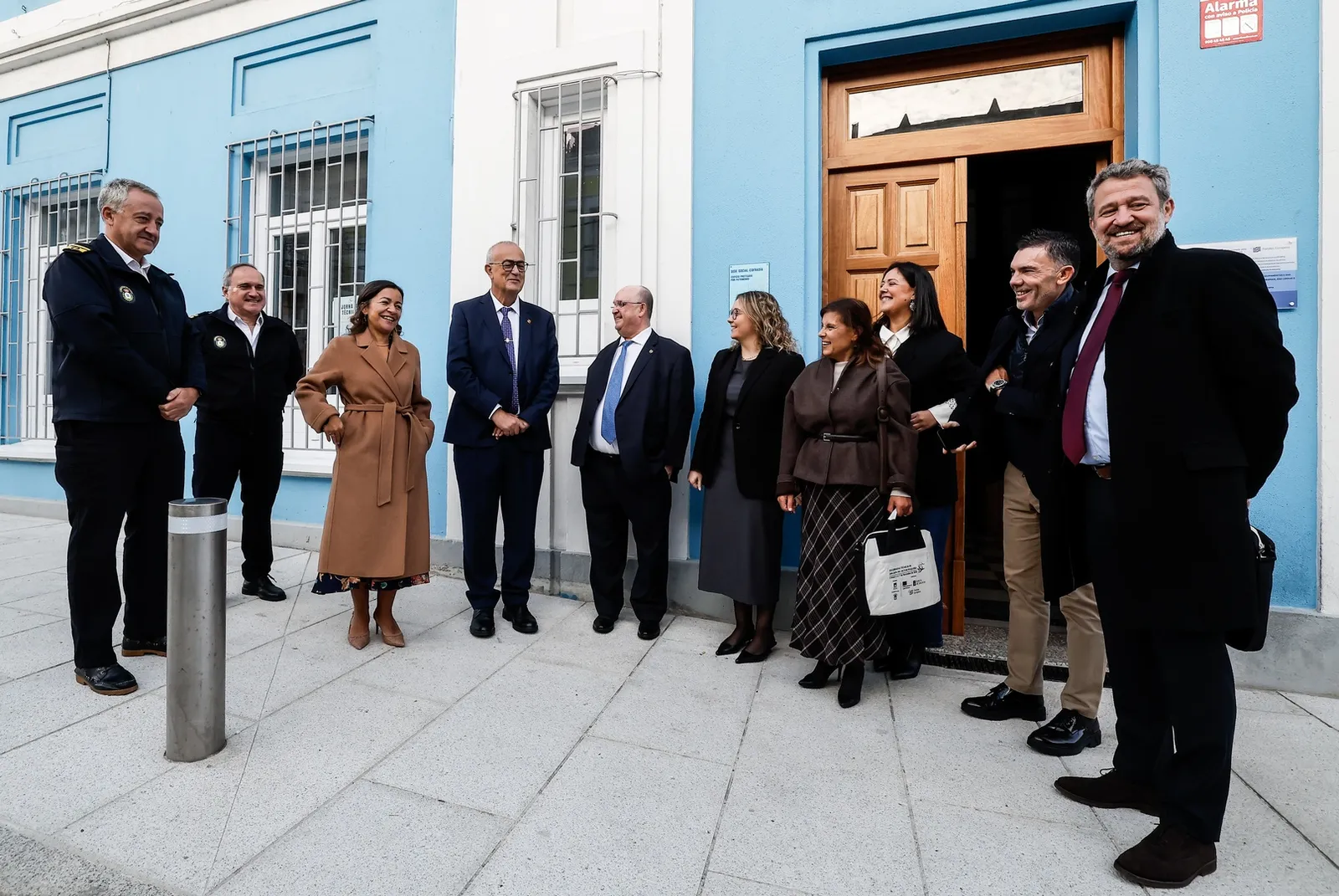
The regional official emphasized the three decades of trajectory of this event, organized by the Celeiro Fishermen's Guild and Port of Celeiro, and acknowledged the role of these entities in its continuity and evolution. Villaverde noted that this thirtieth edition takes place at a time of significant transformations for the activity and warned that "the Galician fishing sector finds itself in a scenario heavily conditioned by global market and geopolitical challenges, as well as by excessively rigorous EU regulatory restrictions."
Among these issues, she referred to the consequences of the ban on bottom fishing in 87 areas of the Northeast Atlantic, which is having a severe impact on the Galician fleet. In this context, she recalled that Galicia continues to present a united front before the Court of Justice of the European Union (CJEU) to defend the sector's interests. The regional official also recalled the relevance of Celeiro's "pescada do pincho" (a type of hake), the first seafood product to obtain the Galicia Calidade seal, as a benchmark for fishing activity based on selectivity and sustainable yield.
She also referred to the negotiations for the next Multiannual Financial Framework 2028-2034 and the possible reform of the Common Fisheries Policy (CFP), in which Galicia demands active participation of fishing regions in governance, simplification of administrative procedures, and a specific and sufficient financial instrument for fisheries and aquaculture, endowed with a minimum of 7.290 million euros, as requested by the European Parliament.
Finally, Villaverde stressed the importance of maintaining collaboration among the various stakeholders linked to fishing activity to face future challenges, stating that "the Administration, the sector, the port, the guild, and science will continue rowing with the same coordinates and in the same direction."
Under the slogan "30 years looking at the sea, thinking about the future," the conference will run until Saturday with a program focused on biodiversity, marine governance, energy efficiency, fleet decarbonization, digitalization, and the application of artificial intelligence. Issues such as generational renewal, food sovereignty, European dependence on imports, and new consumer demands will also be addressed.
The program also includes a tribute to the Technological Center for the Sea (Cetmar), on the occasion of its 25th anniversary, in recognition of its contribution to marine research, technological innovation, and cooperation with the fishing sector.