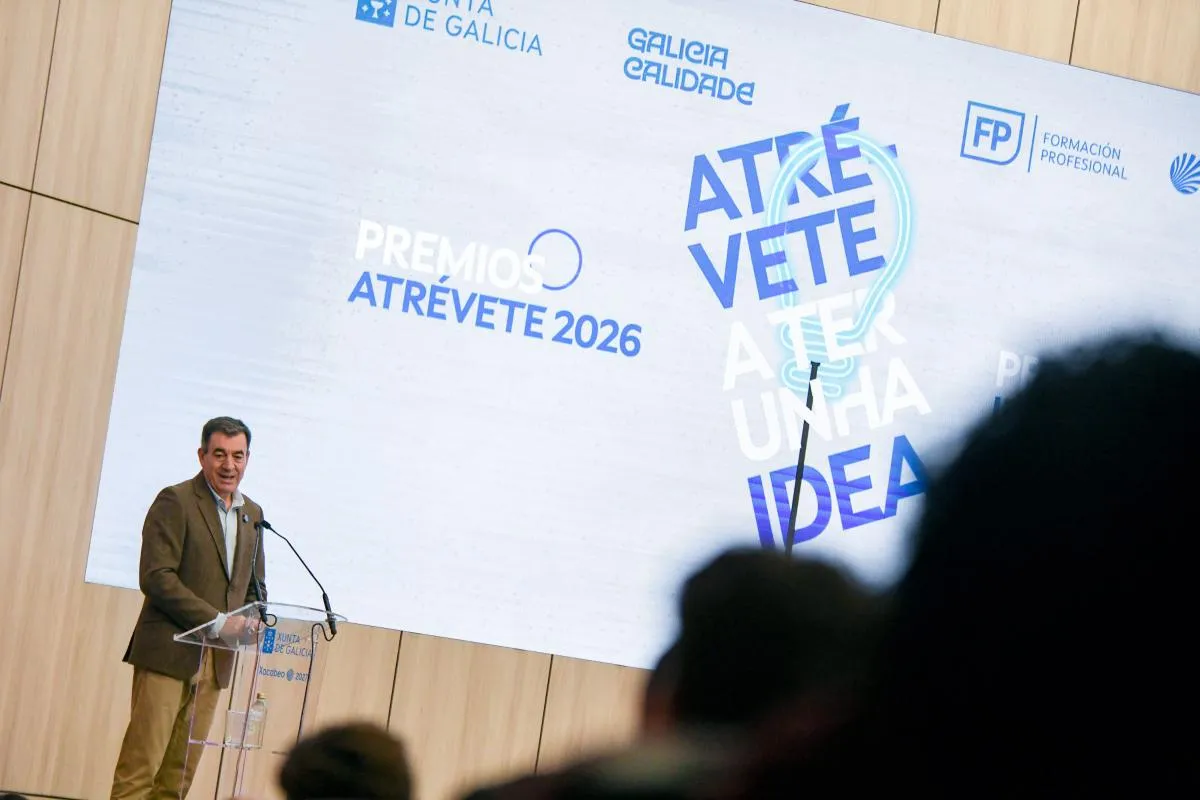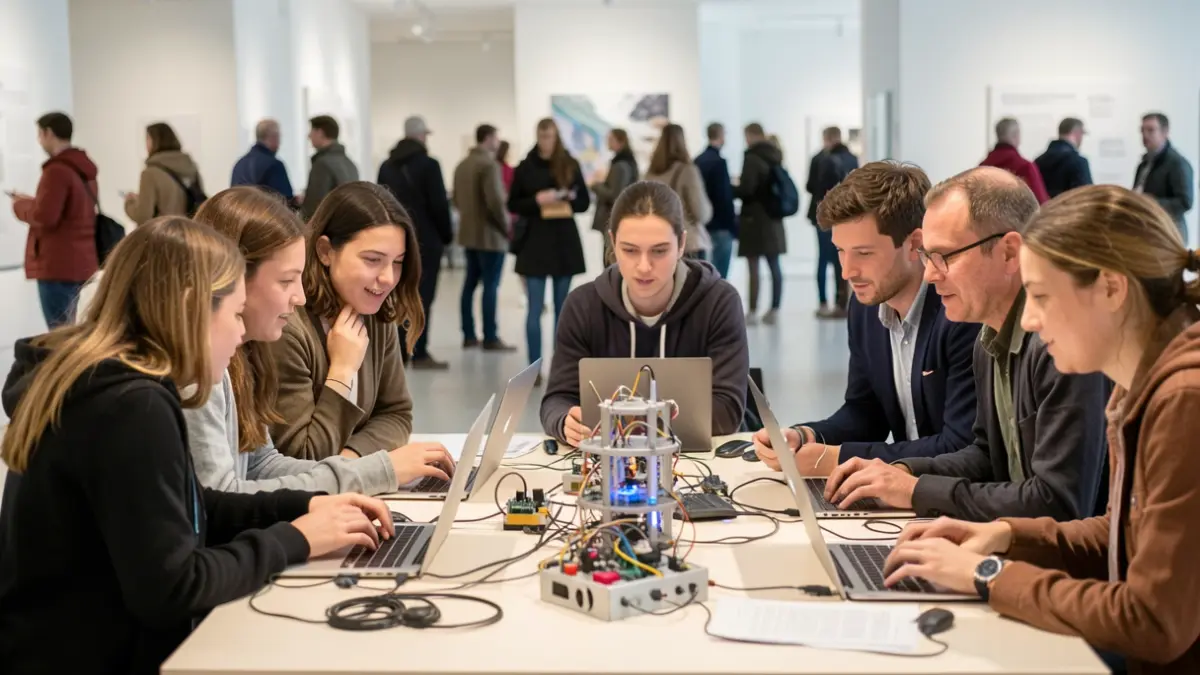
The Talentos Inclusivos program, promoted by the Research Center in Information and Communication Technologies (CITIC) of the Universidade da Coruña and ASPACE Coruña, has kicked off its 2026-2027 edition with an event held in the Leonardo da Vinci hall of the Domus Museum in A Coruña. The gathering brought together 70 people, including institutional representatives, faculty, students, researchers, and collaborating entities, marking the start of a new course of joint work between the educational and disability sectors.
This seventh edition involves fifteen educational centers from the four Galician provinces, with students from ESO, Bachillerato, and Vocational Training cycles. Through collaborative teams, students will work during the course on developing technological solutions that address real needs presented by people with disabilities, aiming to improve their autonomy and quality of life.
The event was attended by Jerónimo Puertas Agudo, Vice-Rector for Research and Transfer at UDC; José Santiago Freire Abeijón, territorial director of the Consellería de Educación, Ciencia, Universidades e Formación Profesional for the province of A Coruña; Antonio Abril, president of the Social Council of UDC; Nereida Canosa, councilor for Social Welfare, Participation, and Equality of the A Coruña City Council; M.ª Carmen Barreiro, president of ASPACE Coruña; and Manuel F. González Penedo, director of CITIC.
Following the institutional interventions, Javier Pereira, head of Talentos Inclusivos, and Irene Brage, project manager of the program, presented the main lines of work for this new edition. Audiovisual projections and participant testimonials highlighted student involvement and commitment to inclusion technologies.
“"The importance of having technological solutions adapted to their needs."
A visit to the Domus exhibition space allowed attendees to see some of the developed solutions, such as a pictogram board with an audible alert, a bubble machine with cause-and-effect buttons, accessible wireless doorbells, and an accessible activity clock with audible alerts, examples of how technology can facilitate communication and autonomy.
The course challenges will be defined based on 53 proposals from users of entities such as ASPACE Coruña, Amencer-ASPACE, and APAM. Student teams will receive support from faculty, CITIC researchers, and third-sector professionals to design solutions in areas like augmentative and alternative communication systems, robotics for rehabilitation, low-cost home automation, augmented reality, 3D printing, and computer access support products.
The VII edition includes fifteen schools: ten from A Coruña, two from Lugo, one from Ourense, and two from Pontevedra. The edition will conclude on June 11, 2027.