Anuskka learned to sew as a child. Fabrics, needles, and sewing were present long before there was a company behind it. Approximately fifteen years ago, she opened her first small business, El Rincón de Anuskka, and that project grew until it became Anuskka Hogar.
Over time, the commissions also changed. From small jobs, they moved on to entire homes; from there, to businesses, and later, to large establishments.
Among the projects completed are spaces such as Meliá María Pita, Residencial Rialta, and Montisqueiro, as well as numerous private homes and businesses.
The size of the projects changed. The way of understanding the work, did not.
This growth also necessitated building a structure around the craft. Today, Anuskka Hogar has workshop, installation, and customer service professionals who participate in the different phases of each project.
It's not about replacing Anuskka's way of working, but about making it possible on a larger scale.
She remains particularly involved in what has always defined her work: judgment, fabric selection, sewing, supervision, and final review.
But behind every project, there are now more hands.
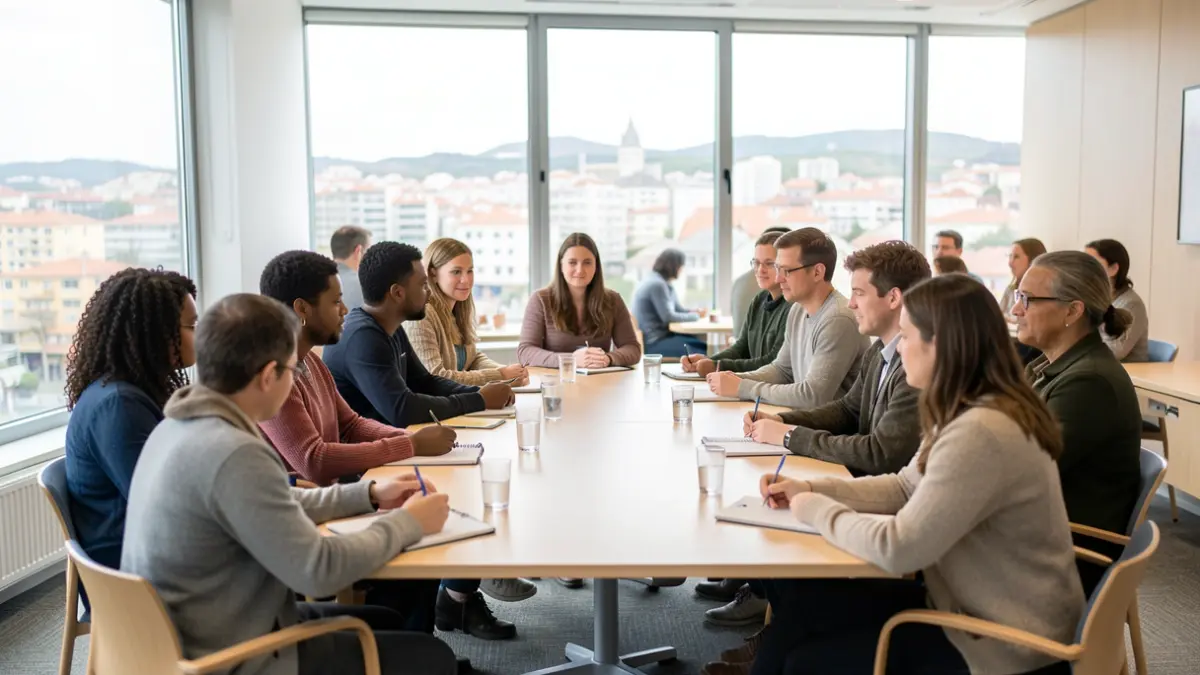
There are those who measure, those who prepare, those who sew, those who install, those who attend to the client, and those who review again when something isn't quite right.
It's not about replacing Anuskka's way of working, but about making it possible on a larger scale.
She remains particularly involved in what has always defined her work: judgment, fabric selection, sewing, supervision, and final review.
But behind every project, there are now more hands.
There are those who measure, those who prepare, those who sew, those who install, those who attend to the client, and those who review again when something isn't quite right.
Growing hasn't meant moving away from the craft. It has meant building a team capable of sustaining it.
There is much more work behind a finished curtain than is visible once it's installed.
Before that, there are visits, measurements, fabric selection, calculations, cutting, sewing, preparation, installation, and review.
In larger projects, this coordination becomes even more important.
When there are many rooms, large windows, or complete installations, each phase depends on the previous one.
The workshop needs to know exactly what has been measured. The installer needs to receive a piece prepared for that specific space. And the client needs to have someone on the other end who knows their project.
Anuskka oversees this process and maintains the same criteria that guided the business's growth from the beginning.
Before that, there are visits, measurements, fabric selection, calculations, cutting, sewing, preparation, installation, and review.
In larger projects, this coordination becomes even more important.
When there are many rooms, large windows, or complete installations, each phase depends on the previous one.
The workshop needs to know exactly what has been measured. The installer needs to receive a piece prepared for that specific space. And the client needs to have someone on the other end who knows their project.
Anuskka oversees this process and maintains the same criteria that guided the business's growth from the beginning.
Because a curtain can be well-made and still need an adjustment when it reaches the actual space.
A drape that doesn't hang exactly as expected. A piece that behaves slightly differently from the one next to it. A height that needs correction.
To many people, these would be details.
For Anuskka Hogar, they are part of the job.
A drape that doesn't hang exactly as expected. A piece that behaves slightly differently from the one next to it. A height that needs correction.
To many people, these would be details.
For Anuskka Hogar, they are part of the job.
The priority is not to finish sooner. It's to finish well.
That phrase summarizes a large part of the business's philosophy. In an era accustomed to speed, Anuskka Hogar has chosen to maintain a pace that allows for review, correction, and repetition when necessary.
If a piece needs more time, it will get more time. If something needs to be redone, it will be redone.
And this way of working applies equally to a private home as it does to a large-scale project.
Because a curtain can change much more than it seems.
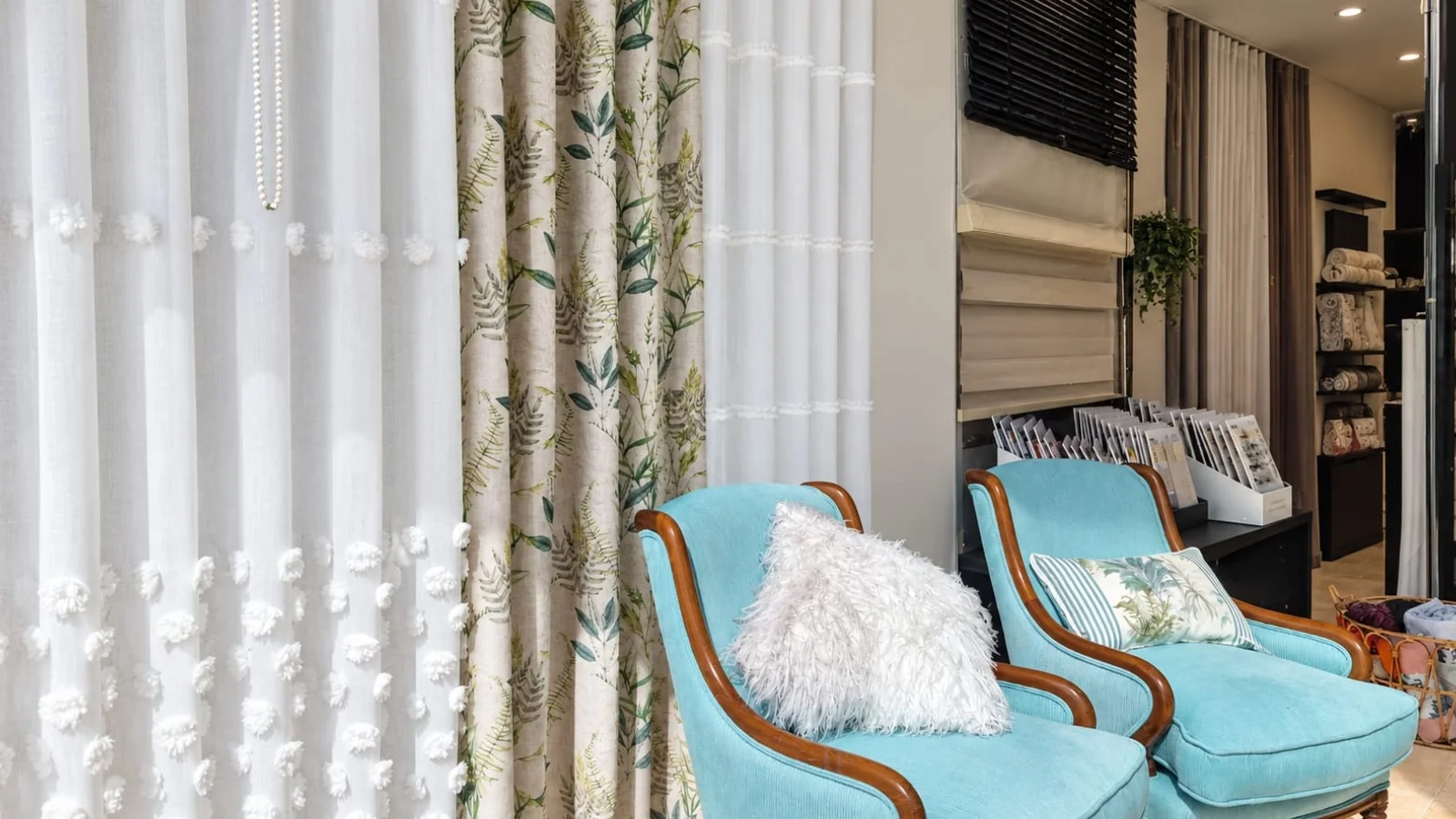
It can alter the amount of light, the visual height, the warmth, the proportions, or the feeling a room evokes when someone enters it.
If a piece needs more time, it will get more time. If something needs to be redone, it will be redone.
And this way of working applies equally to a private home as it does to a large-scale project.
Because a curtain can change much more than it seems.
It can alter the amount of light, the visual height, the warmth, the proportions, or the feeling a room evokes when someone enters it.
That's why the work doesn't simply start by choosing a pretty fabric.
It starts by looking at the space.
How the light enters.
What its dimensions are.
What needs to be resolved.
What its use will be.
And what the person who will live there wants to achieve.
It starts by looking at the space.
How the light enters.
What its dimensions are.
What needs to be resolved.
What its use will be.
And what the person who will live there wants to achieve.
A good curtain doesn't start with the fabric. It starts with understanding the space.
Perhaps therein lies one of the keys to Anuskka Hogar's evolution.
Today, there are larger projects, more clients, more phases, and more professionals involved.
But there is still a very specific way of understanding the outcome: knowledge of fabrics, experience to know which solution works best, care in sewing, precision during installation, and review before considering the job done.
Anuskka continues to set that standard.
The team makes it possible to bring it to every project.
Today, there are larger projects, more clients, more phases, and more professionals involved.
But there is still a very specific way of understanding the outcome: knowledge of fabrics, experience to know which solution works best, care in sewing, precision during installation, and review before considering the job done.
Anuskka continues to set that standard.
The team makes it possible to bring it to every project.
Because behind every finished curtain there is craft, experience, and many more hands than are visible.