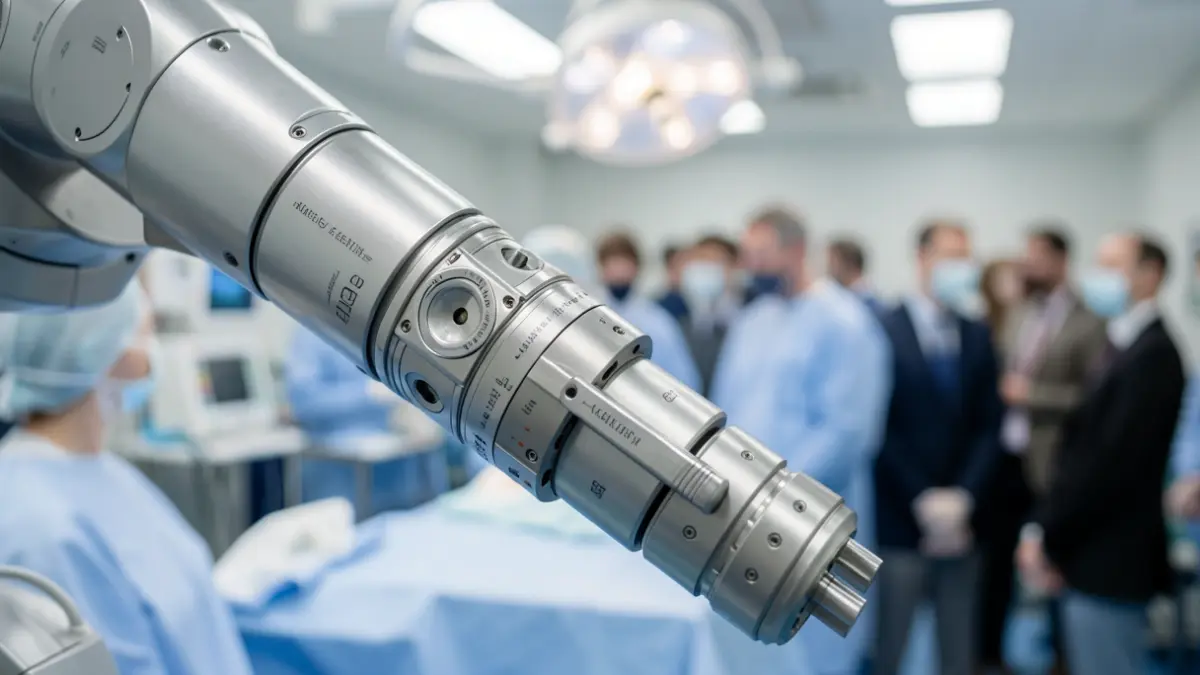
The initiative, driven through the Ribera-Povisa Chair in Innovation and Health, responds to the need to adapt healthcare training to technological changes in operating rooms and offer new specialization opportunities. The proposal was presented by the Vice-Rector for Transfer, Innovation, and Social Impact at UVigo, Rafael Comesaña, during a round table held in Vigo.
As explained by Comesaña, the University is working on developing microcredentials focused on the necessary competencies for participating in robotic surgery interventions. Training content includes patient safety, operating room preparation, specific instrumentation, and the coordination of care teams.
The proposal originates from a request by Ribera Povisa Hospital to strengthen the connection between university training and the real needs of healthcare centers. The vice-rector highlighted the importance of updating professionals' skills and the role of Nursing in the safety and humanization of procedures.
The round table, which brought together specialists in urology and robotic surgery, also emphasized the importance of interdisciplinary work and professional experience in the adoption of robotics, in addition to the sophistication of equipment.
Specialists Manuel Ruibal Moldes and Manuel Carballo Quintá analyzed the evolution of surgical techniques. The session was moderated by Emma Iglesias, Medical Director of Ribera Povisa Hospital, and was attended by healthcare professionals, faculty, and Nursing students.
Robotic systems, such as the da Vinci platform, offer an enlarged three-dimensional view and precise instrument control, facilitating highly accurate movements and access to complex anatomical areas, thereby enhancing minimally invasive surgery and patient recovery.