The study, published in Earth System Science Data and with Mercedes de la Paz from IIM-CSIC as lead author, provides comparable data from eight coastal stations and highlights the role of Aquanitromet, the Institute's scientific-technical service specializing in analyzing these gases in marine waters. The research, coordinated by the Mediterranean Institute for Advanced Studies (IMEDEA, CSIC-UIB), was developed within the framework of the ROADSTER project.
Between 2023 and 2024, the team conducted monthly samplings at stations in Spain, Morocco, Lebanon, and Turkey, measuring N₂O and CH₄ concentrations, along with other environmental variables. The results show that all studied areas act as a net source of these gases to the atmosphere. N₂O presented higher concentrations during colder months, while CH₄ showed greater variability, with episodes of high emissions in the Eastern Mediterranean, possibly related to geological sources or submarine groundwater discharges.
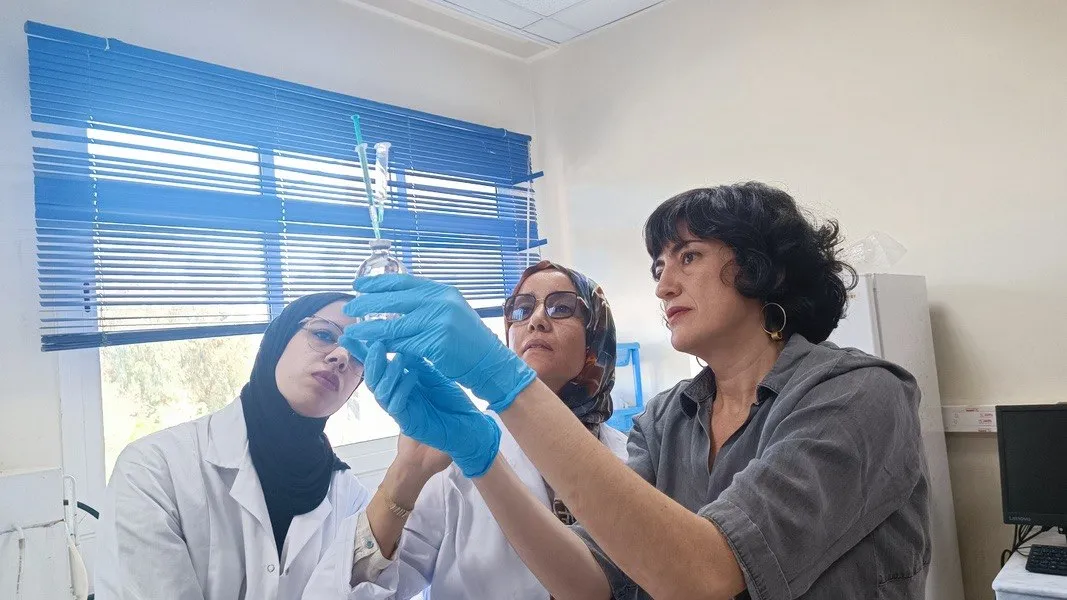
The contribution of IIM-CSIC, through Aquanitromet, was fundamental to ensuring the comparability of measurements, as it houses the only CSIC scientific-technical service for analyzing these gases in marine waters. Samples were sent to Vigo for analysis, avoiding methodological differences. The Institute also organized sampling tasks and training activities in Morocco and hosted a seminar to foster knowledge exchange.
The obtained data are openly available and will serve as a reference for future research on the Mediterranean's role in the global greenhouse gas cycle and for improving climate models. The study underscores the value of public research, international cooperation, and shared scientific-technical infrastructures in generating rigorous information on key climate system processes.