The event, held simultaneously at the UVigo's atlanTTic and the UDC's CITIC centers, included a workshop on Introduction to Forensic Analysis of IoT Devices, presented by Rafael López García, David Diz Nieves, and Pablo Rodríguez Cascón. The institutional opening was attended by Manuel González Penedo, director of CITIC, and Javier González Castaño, director of atlanTTic. The keynote conference, "Estamos vindo moi arriba: un percorrido pola seguridade ata a IA" (We're soaring high: a journey through security to AI), was delivered by Uxío Fuentefría, Staff Backend Engineer at SafeLabs.
The day also featured a panel discussion on "Professional Experience of MUniCS Graduates," moderated by Rubén Pérez Jove. Participants included Pedro Blanco Casal (Indra Group), Pedro Fernández-Arruti Gallego (Tarlogic), Diego Pérez Cordeiro (Technica Engineering Spain), Rosa Seoane (Abanca), and Javier Suárez de Vivero (Plexus), who shared their cybersecurity career paths.
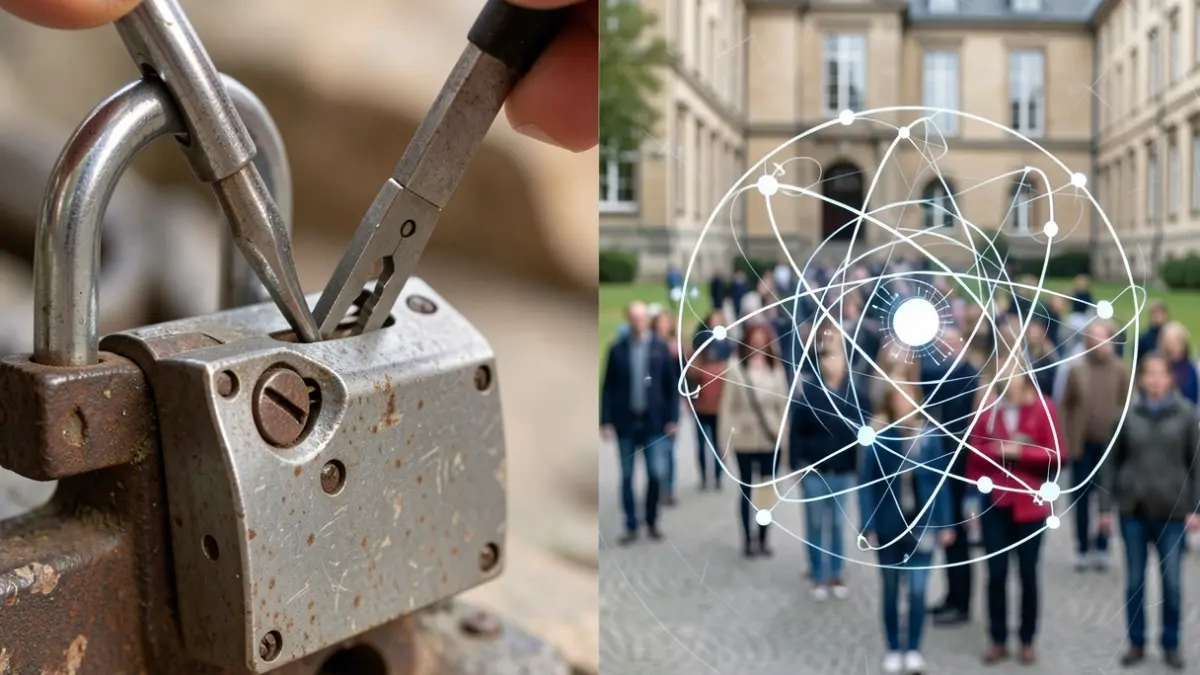
The main competition, in Capture The Flag (CTF) format, consisted of over thirty challenges over four hours, covering areas such as web applications, networks, cryptography, forensic analysis, and reverse engineering. New additions included physical challenges involving lockpicking and NFC card inspection, as well as artificial intelligence and quantum cryptography tests.
“"The first prize, endowed with 1200 euros, went to the team Tr0y4n1z4d0s, composed of Eloy Sastre Sobrino, Pablo Diz de la Cruz, and Daniel Pérez Mosquera. The second place, with a prize of 900 euros, was awarded to CaB, formed by Martín González Dios, Sabela Pérez Quintana, and Asier Cabo Lodeiro. The third prize, of 600 euros, corresponded to We Buy Ducks, consisting of Jan Duinkerken Rodríguez, Xabier Iglesias Pérez, and Jesús Ferreira Rodríguez."
The joint organization by the UDC and UVigo, with the support of the Cátedra R en Ciberseguridade (R Chair in Cybersecurity), involved collaboration from various faculties and research groups. The challenges were developed by researchers associated with the Master's programs in Cybersecurity and Telecommunication Engineering.