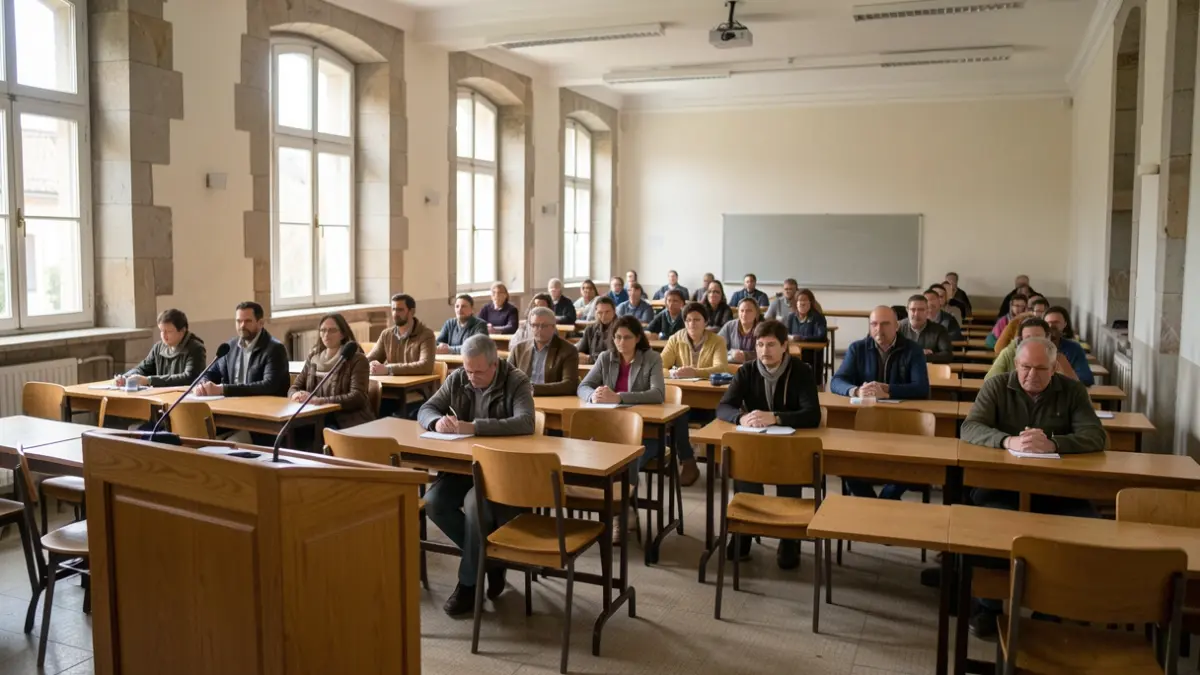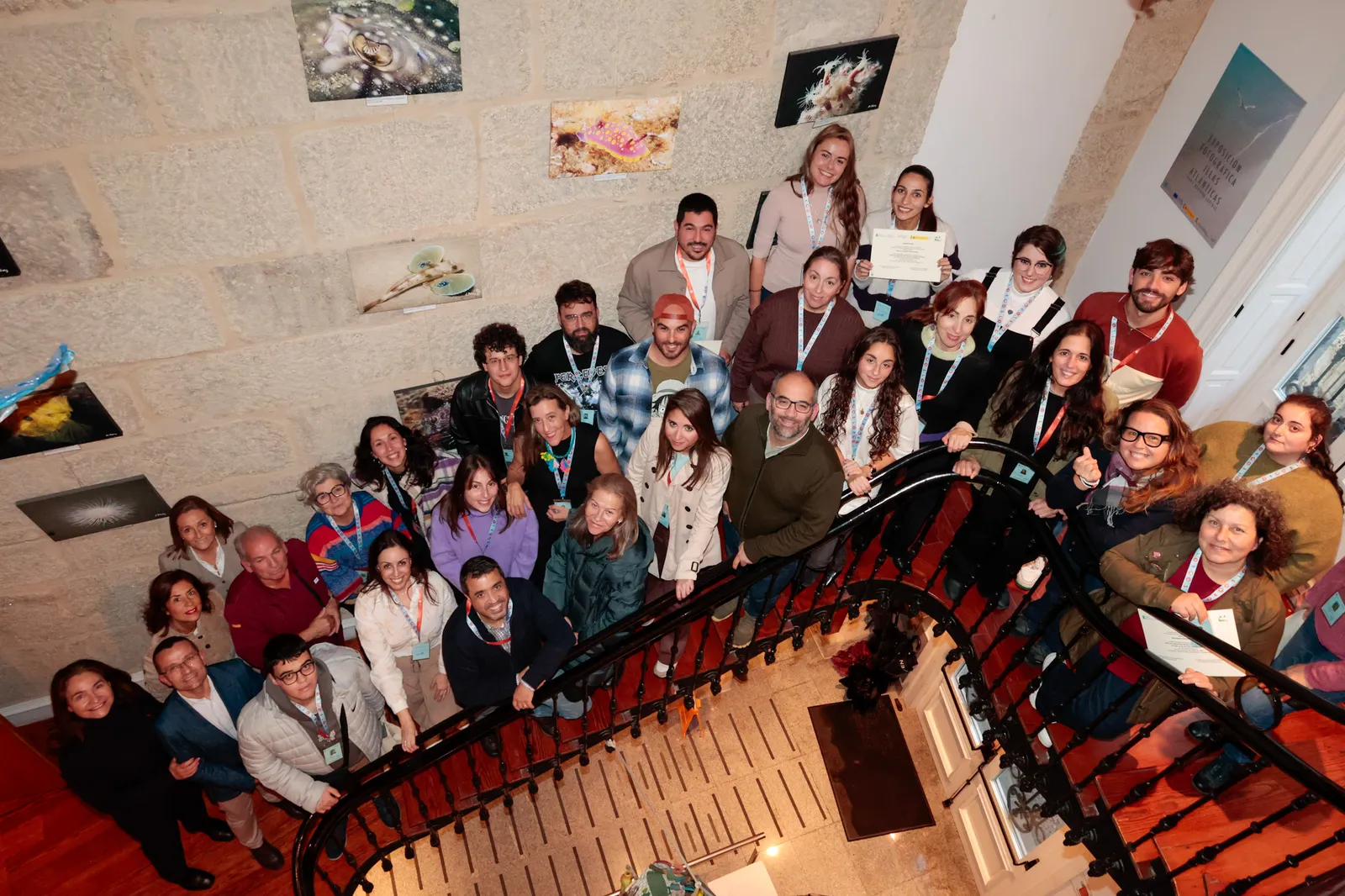
The 5th International Genetics in Aquaculture Meetings (JIGA-V) kicked off on Monday at the Ecimat, the main research infrastructure of the Marine Research Centre (CIM) at the University of Vigo. The event, driven by the International Seasos Network (Euro-Latin Symbiosis for Sustainable Aquaculture), aims to strengthen collaboration between multidisciplinary scientific teams and promote solutions for more resilient and ecosystem-friendly aquaculture, under the One Health approach.
The institutional opening ceremony was attended by the Vice-Rector for Research at the University of Vigo, Manuel Martínez; the Director of the CIM, Elsa Vázquez; the Director of the Ecimat, Damián Costas; and the Secretary of the Faculty of Marine Sciences and CIM researcher, Estefanía Paredes. The organisation of the meetings is chaired by CIM researcher Pablo Presa, who is also a member of the organising committee alongside the network teams in Peru (Jorge Basadre Grohmann University), Chile (Arturo Prat University) and Spain.
“"This fruitful cooperation, led by three countries, also aims to attract new partners to strengthen the Seasos Network. An example of this is the inclusion, in this fifth edition of the meetings, of the Chilean university of Antofagasta and the Spanish Institute of Oceanography (IEO-CSIC)."
The scientific programme revolves around three thematic axes: innovation, animal welfare and biodiversity. Tuesday's session was dedicated to innovation, featuring international experiences in productive diversification, aquaponics and experimental cultivation. Research on diagnostic techniques for transmissible cancers in bivalves, the use of microalgae to remove pollutants and the potential of different organisms for sustainable production were highlighted.
Wednesday's session focused on animal welfare and biodiversity. Topics included ethics in Spanish aquaculture, species susceptibility to diseases, the role of intestinal microbiota and physiological indicators of welfare in captive-bred tuna. In the afternoon, the focus shifted to the conservation of marine biodiversity, the applications of genetics in conservation and the influence of environmental geochemical conditions.
The meetings also include sessions presenting scientific panels on the genetic diversity of aquaculture species, mollusc diseases, the identification of zooplankton species in the Vigo estuary and the development of functional ingredients for fish feed.