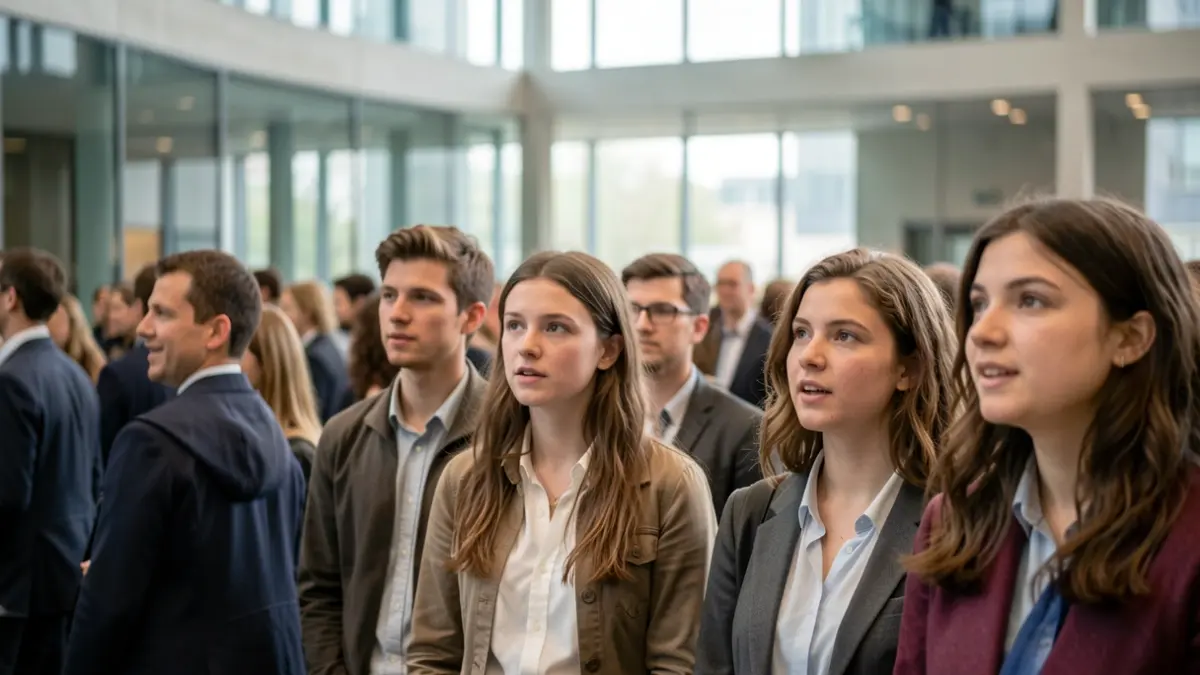
The trip allows students to have “an international experience” and better understand the EU's decision-making processes, approaching a key reality for their academic and professional future. The 30 available places were quickly filled by students from Ourense, coming from different degrees and courses at the organizing faculty.
According to Jesús Vázquez, Dean of the Faculty of Business and Tourism Sciences, this visit “to the heart of Europe” allows students to deepen their knowledge of European construction and its impact on citizens, being a unique opportunity to learn, experience, and connect with Europe from an academic, professional, and personal perspective.
Accompanied by faculty staff, the students are visiting the European Parliament, where they learned about its functioning and role in decision-making affecting millions of citizens, and the House of European History, a space that helps understand the continent's historical evolution and the values of the European project. They are also getting to know the city of Brussels, described as “an authentic meeting point of cultures, languages, and European projects”.
The organizing faculty highlights that these days are being “full of knowledge, reflection, and international experiences that contribute to the academic and personal training of our students, reinforcing their global vision and their connection with the European reality”.