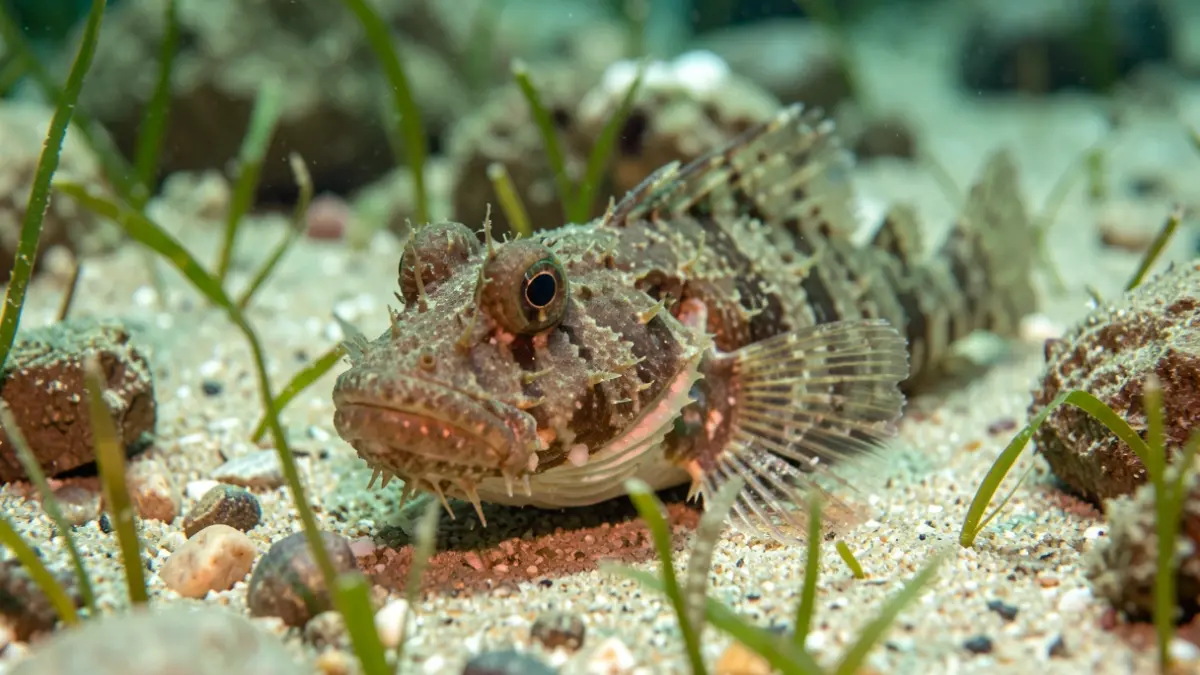
The work, published in the scientific journal Regional Studies in Marine Science, demonstrates that the presence of this species in Galicia does not respond to occasional arrivals, but to a consolidated colonisation process. Between 2018 and 2025, the research team documented 202 specimens in Galician waters, analysing their age structure, growth, reproduction, feeding and genetic diversity.
Records began in the Vigo ría in 2018. Subsequently, specimens appeared in the Pontevedra ría (2019) and Arousa ría (2021). The most recent data, corresponding to 2026, already place the Lusitanian toadfish in the Ferrol ría, its northernmost known distribution limit on the Iberian Peninsula.
“"The rapid increase in records of H. didactylus in Galician waters, from a single observation in 2018 to more than 200 individuals documented in seven years, provides strong evidence that the species is undergoing a process of establishment at the northern edge of its current distribution."
The establishment of this species constitutes another example of 'tropicalisation', a phenomenon in which species from warmer zones expand their geographical distribution northwards in the north-east Atlantic. Although the study does not directly attribute this colonisation to climate change, the results are compatible with an expansion favoured by increasingly suitable environmental conditions.
Analyses reveal that the Lusitanian toadfish is a bottom-dwelling predator with a varied diet, dominated by crustaceans (especially crabs), as well as fish and molluscs. Its ability to exploit different food resources favoured its rapid establishment. The study found no evidence of direct impacts on commercial fishery resources, but highlights the need to continue monitoring the species.
Reconstructing the expansion of the species was made possible thanks to the collaboration of the fishing sector. A significant part of the specimens came from accidental catches reported and voluntarily donated by artisanal fishing professionals, recreational fishermen, brotherhoods and landing site staff. The work also involved researchers from the University of Vigo and the Marine Research Institute (IIM-CSIC).