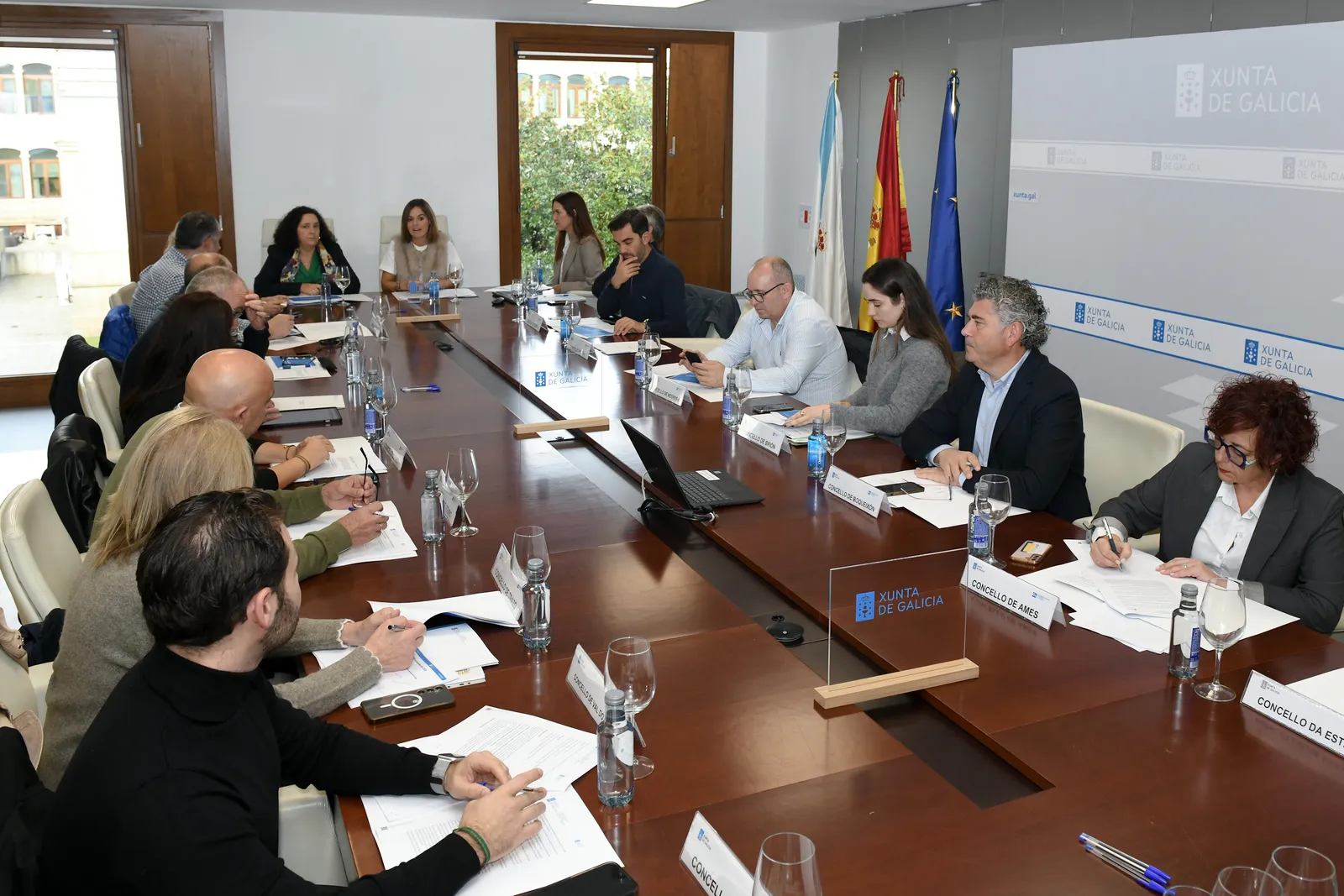
The meeting, held in Santiago de Compostela on November 9, 2026, is part of the Xunta de Galicia's commitment to hold follow-up commissions in all metropolitan transport areas. The encounter served to assess the system's operation and review the actions developed by the Xunta to improve public transport in this area.
The Director General of Mobility, Judit Fontela, and the Xunta Delegate in A Coruña, Belén do Campo, informed about the planned changes with the activation of the new bus concession in the Barbanza region next Saturday, November 14. These changes include new direct services to Santiago de Compostela and other measures to facilitate mobility in the surrounding municipalities. Detailed service information is available on the websites bus.gal and mobt.xunta.gal.
Among the highlighted novelties are services between the region and the Galician capital that will primarily run via highway, with stops at Santiago's hospitals and the San Caetano and San Lázaro administrative buildings, adapted to work schedules. Additionally, on Fridays and Sundays during the academic season, new non-stop services will operate between Santiago and Ribeira, with a duration of one hour. The road connection will also include stops at Compostela's hospitals, improving access for citizens from Dodro, Padrón, Teo, and Ames.
This meeting is part of a series of encounters that already took place in Lugo on October 30 and will be completed before the end of the year with those for the transport areas of A Coruña, Ferrol, and Vigo. Previously, the municipalities received a report on the current service offerings in each town to facilitate analysis and address potential modifications according to citizens' changing needs.
The Santiago de Compostela Metropolitan Transport Area comprises the municipalities of O Pino, Touro, A Baña, Negreira, Oroso, Trazo, Ordes, Santiago de Compostela, Val do Dubra, Ames, Brión, Boqueixón, Teo, Vedra, Rois, Padrón, Vila de Cruces, and A Estrada. This area operates 437 lines, serves over 1,900 stops, with more than 360,000 annual services and covers 13.8 million kilometers.