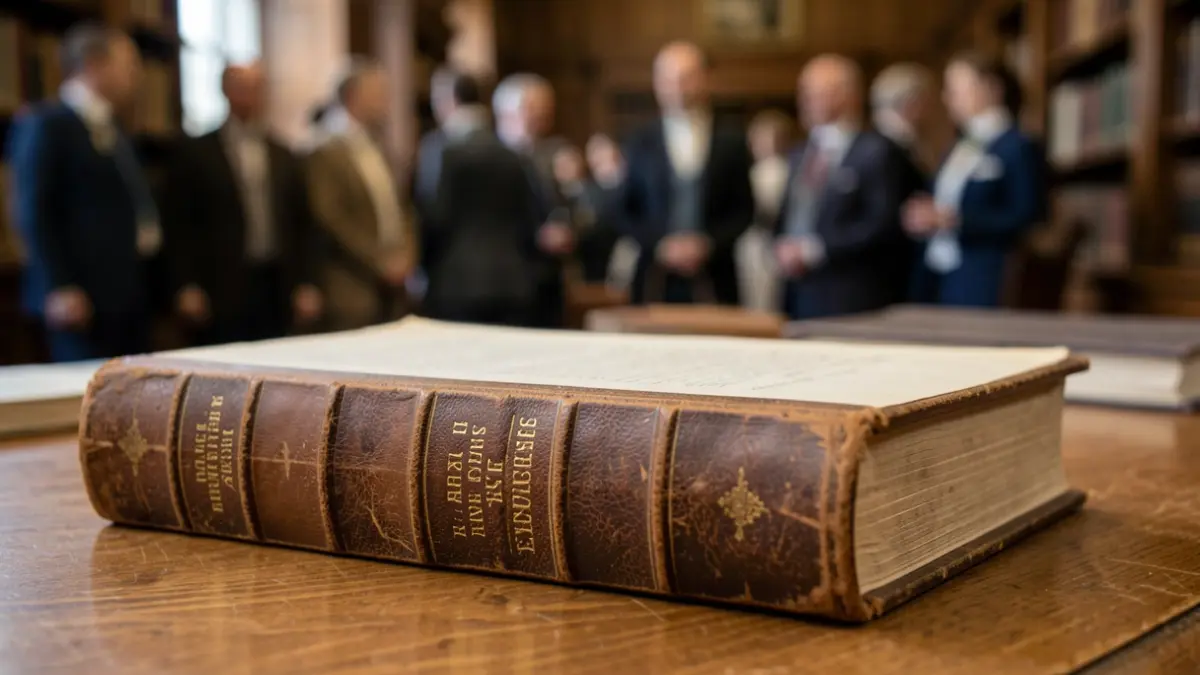
The Rosalía de Castro Chair at the University of Santiago de Compostela, directed by María do Cebreiro Rábade Villar and Fernando Cabo Aseguinolaza, has presented the publication Letters from Alejandra Murguía de Castro to Ángela Santamarina (1916-1925). This epistolary collection recovers the voice of Alejandra Murguía, daughter of Rosalía de Castro and Manuel Murguía, and offers new data on the Murguía-Castro family and, particularly, on the life and work of Rosalía. The book, edited by professor and researcher Dolores Vilavedra and with a prologue by Xesús Alonso Montero, is the first title in the new Library of the Rosalía de Castro Chair.
The publication was presented this Friday, October 16, at the library of the Instituto da Lingua Galega. Participants included Marcelo Maneiro Maneiro, Vice-rector for Innovation and Knowledge Transfer; Elisa Fernández Rei, Director of the Instituto da Lingua Galega; María Coutinho Villanueva, Deputy Director General of Planning and Linguistic Dynamization of the Xunta de Galicia; Fernando Cabo Aseguinolaza, co-director of the Rosalía de Castro Chair; Julio García Comesaña, deputy and Secretary of the Mesa do Parlamento de Galicia; and Dolores Vilavedra Fernández, Professor of Galician Philology at USC, President of the Consello da Cultura Galega, and editor of the volume.
For Vilavedra, the edition of these letters signifies "giving voice to a woman like Alejandra, who remained completely overshadowed by the figures of her parents." The editor champions the interest of a creator who was "practically invisibilized by history." The epistolary collection also reconstructs the friendship between Alejandra Murguía and Ángela Santamarina, women separated by a significant economic and social divide.
Alejandra Martínez-Murguía de Castro (Santiago de Compostela, 1859) was a draughtswoman, painter, and illustrator. She collaborated in the illustrated press of her time, such as La Ilustración Gallega y Asturiana, directed by her father, Manuel Murguía. She also participated in the graphic construction of Galicianist symbols, designing the banner commissioned in 1891 by the Centro Galego da Habana. Her career was marked by sacrifices, as she took on the care of her father and siblings after Rosalía's death in 1885, and she rejected a position at the Prado Museum due to her father's disapproval. She died in A Coruña in 1937.
The recipient of the letters, Ángela Santamarina Alduncín (Tandil, Argentina, 1863), was the Marchioness of Atalaya Bermeja and Countess of Valle de Oselle, as well as a philanthropist. In 1925, she established the Santamarina de Temes Foundation. The relationship between Alejandra and Ángela, women with common interests but separated by a social chasm, constitutes one of the most unique stories in the volume.
Although the correspondence begins decades after Rosalía de Castro's death, the letters provide valuable biographical information. Vilavedra highlights that Alejandra mentions her mother having "five miscarriages," which prompts a re-evaluation of aspects of the relationship between Rosalía and Manuel Murguía and her work. The letters also offer insights into Rosalía as a professional writer and the management of her author's rights by her daughters.
The correspondence also offers new perspectives on Manuel Murguía, portraying him as an "absorbing and tyrannical" father, yet also admired and loved by his daughters. The epistolary collection documents the extreme precariousness of the final decades of his life and the misfortunes that befell his library after his death. The prologue by Xesús Alonso Montero draws attention to the need to facilitate access to Antonio Rey Soto's library and to highlight the documentary heritage of the Santamarina de Temes Foundation.