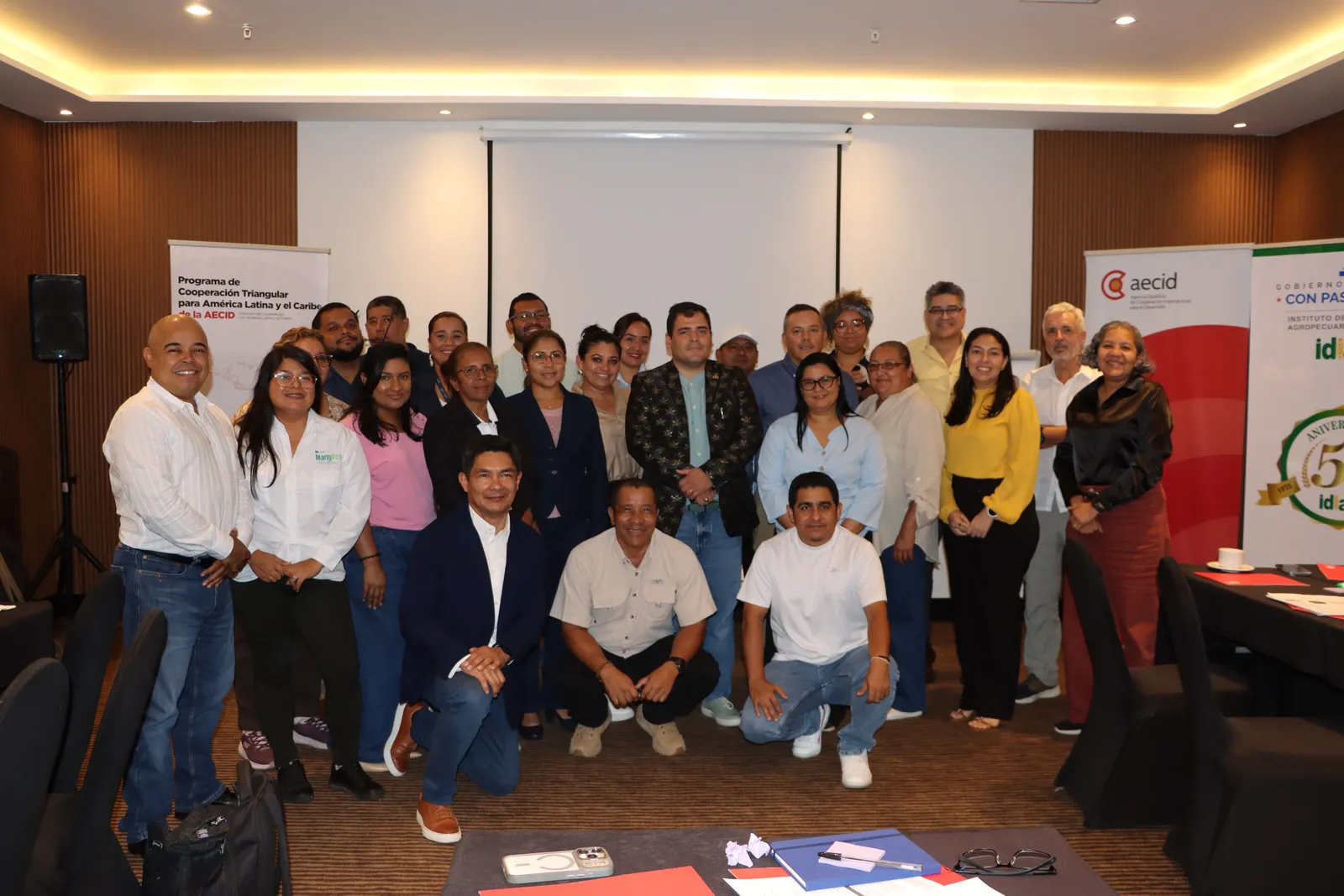
The institutional meeting Triangular cooperation: experiences, learnings and future opportunities, held in November in Panama City, brought together representatives from Spain, Panama, Cuba and Peru. The opening featured Miriam Vásquez de Ortega, Director General of the Panamanian Institute of Agricultural Innovation (IDIAP); Moisés Morera Martín, Spanish Ambassador to Panama; and Carlos Guevara Mann, Panama's Vice-Minister of Multilateral Affairs and Cooperation. Nuria Carrero Riolobos, representative of the Spanish Agency for International Development Cooperation (AECID), also spoke.
Representing the USC, Professor Agustín Merino presented the introductory lecture Conserving ecosystems, improving livelihoods, focusing on the relationship between scientific knowledge, sustainable management of natural resources and community development. He also participated in the panel on triangular cooperation and science-based decision-making.
The conservation of natural resources is not formulated in isolation, but as a condition to improve production, food security and the well-being of the population.
The two main projects are Strengthening I+P+P (Innovation + Promotion + Payment) capacities to restore degraded soils in the western region of the Panama Canal, which aims to improve food security through soil recovery, and Sustainable development of coastal communities through climate-smart beekeeping in mangrove ecosystems, which links coastal ecosystem conservation with the generation of economic opportunities.
A relevant feature of these initiatives is their direct link to researcher training. The two projects are led by DIAMD doctoral students and form the framework for their theses. Currently, six doctoral theses linked to the programme are being developed in Panama, in collaboration with national researchers and centres.
In the case of the beekeeping and mangrove project, the collaboration had a training dimension in Galicia. In September 2026, the USC organised an international capacity-building workshop at the Lugo campus, with the participation of a scientific delegation from Panama and Peru. Activities included sessions on honey quality and characterisation, beekeeping innovation, sensory analysis and hive health.
In parallel, Agustín Merino held institutional meetings with the National Secretariat of Science, Technology and Innovation (SENACYT) and IDIAP. The USC is also involved in the project Design and implementation of a pilot project with a sustainable production approach in the Río Indio basin, in the community of Teriá, within the framework of the EUROCLIMA programme.