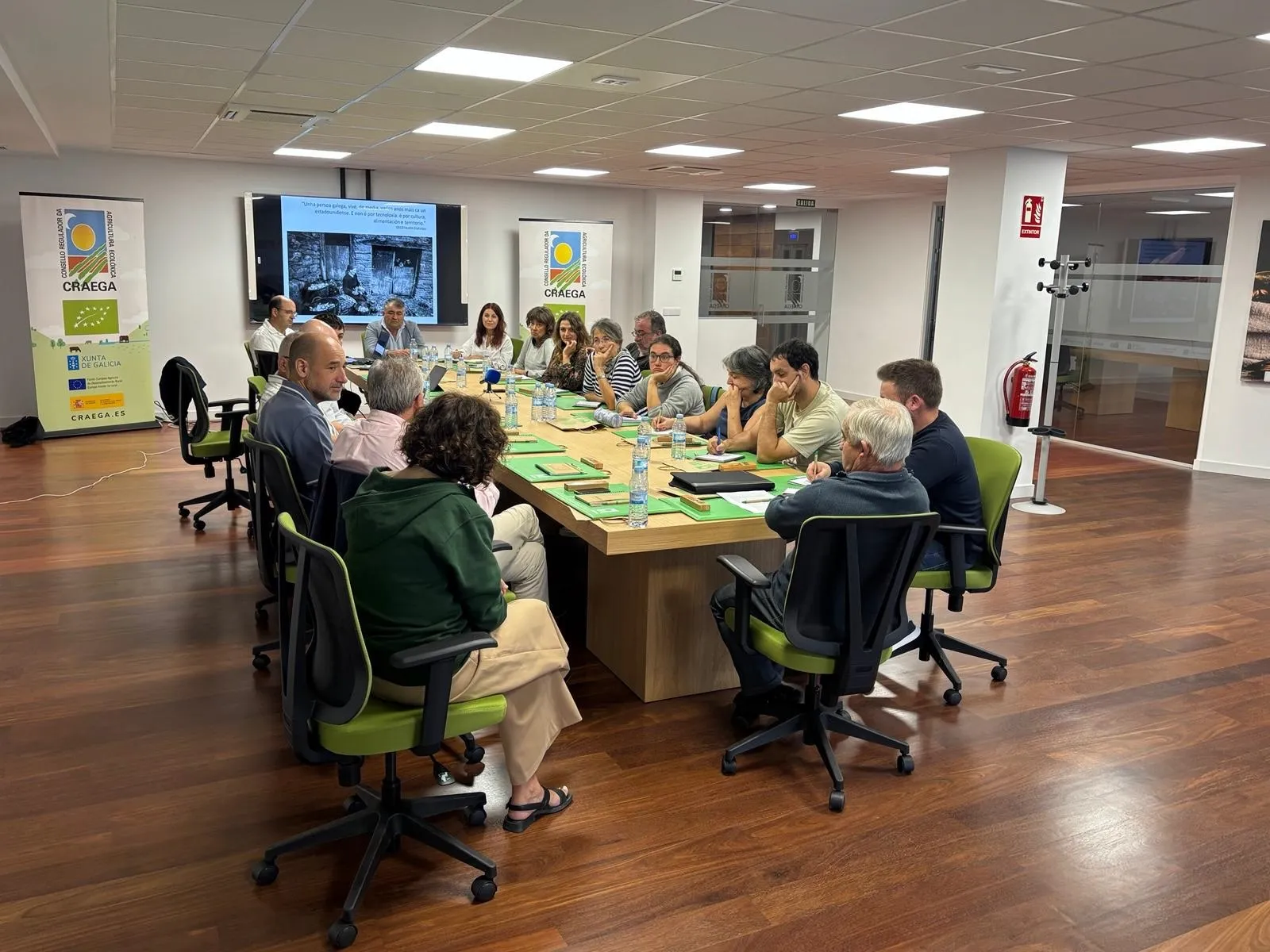
Galician organic production faces significant opportunities but requires applied research, effective transfer, and collaboration models adapted to producers' real conditions. This was one of the main conclusions from the meeting between iTERRA and CRAEGA, which brought together representatives from production, businesses, cooperatives, and technical and research staff.
Recurring concerns such as climate change, drought, fires, changes in livestock feeding systems, and the conservation of productive resources were highlighted. The importance of native varieties, soils, sustainable management, health, traceability, and product development were identified as priority areas. The sector requested that scientific results be useful, accessible, and applicable in the region, bringing research closer to the daily needs of farms.
CRAEGA was identified as a key stakeholder for conveying the sector's real problems to research and facilitating the dissemination of results. iTERRA, for its part, offers diverse scientific capabilities to contribute to more sustainable, competitive, and innovative organic production.
The meeting was initiated with the aim of creating a space for dialogue to foster mutual understanding, listen to the sector's needs, and identify collaboration and joint project development lines between CRAEGA, stakeholders in the Galician organic sector, and researchers from iTERRA.