This initiative seeks to incorporate a complementary tool to detect species that fall outside conventional inventories due to their size, distribution, behavior, or sampling and identification difficulties.
The starting point of this research technique is that all organisms leave traces of their genetic material in their environment. From these traces, it is possible to obtain information about the species that have used that space, without needing to locate them directly, which is very useful for detecting small, rare, or hard-to-observe organisms.
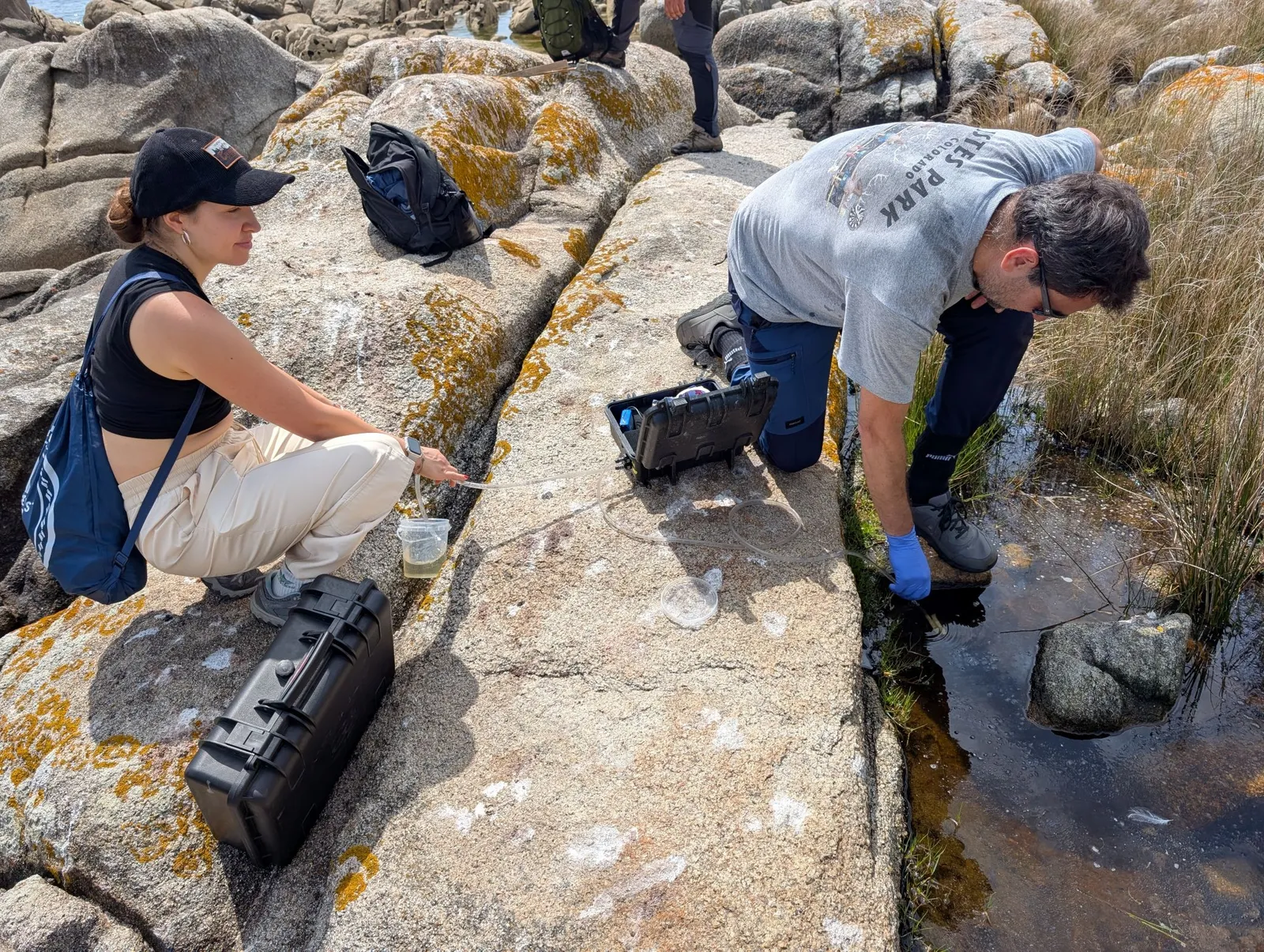
Sample collection, which will take place on both exposed coasts and sheltered areas, in the Lago dos Nenos (Children's Lake), and in various terrestrial habitats, will be repeated throughout the year to cover seasonal variations and combine information from different times and locations.
Once the sample is obtained, the extracted DNA will undergo massive sequencing techniques. Metabarcoding will allow, from a single sample, information on numerous groups of organisms to be obtained and a profile of the detected community to be created. Interpreting the results requires adequate reference databases, so the project begins with the creation of catalogs of known species in both parks.
The study aims for its results to be applicable in other areas of the National Parks Network and to assess the extent to which environmental DNA can become a useful tool for biodiversity monitoring in national parks.