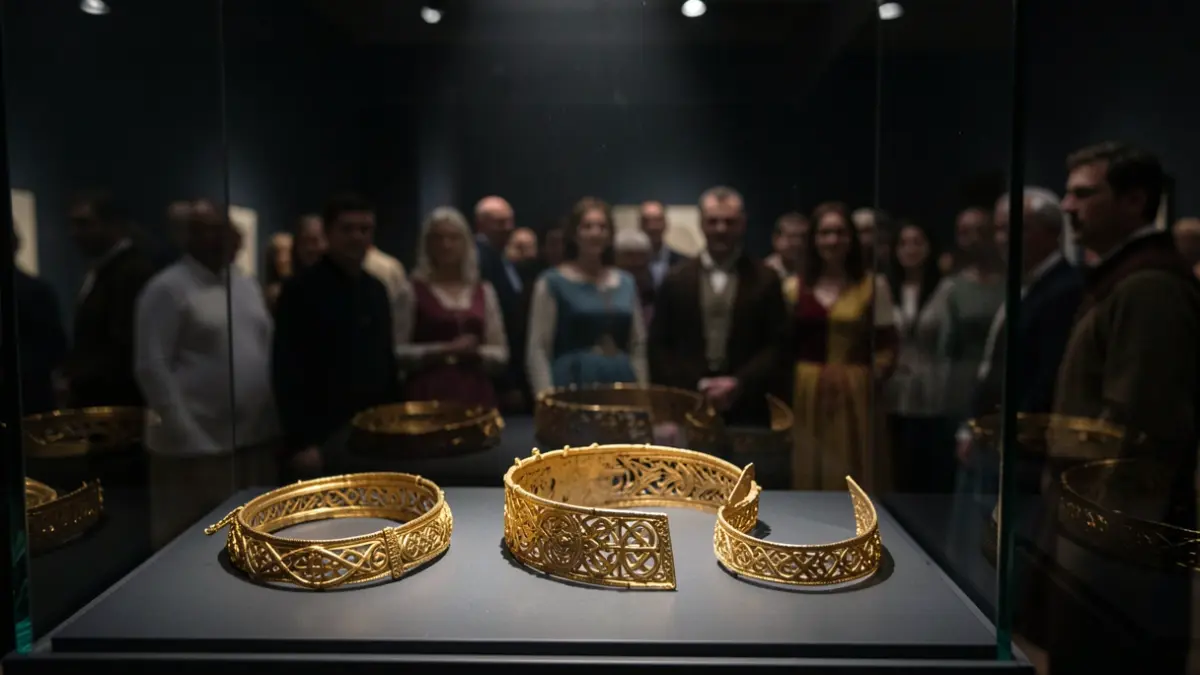
The exhibition, which will run for the coming months, constitutes an important cultural attraction ahead of the upcoming Xacobeo 2027 celebration and aims to bring Galician heritage closer to visitors and pilgrims. It gathers pieces from 28 museums and institutions, offering a journey through nearly 4,500 years of history and an exceptional view of the metallurgical and artistic richness of the pre-Roman Galaic communities.
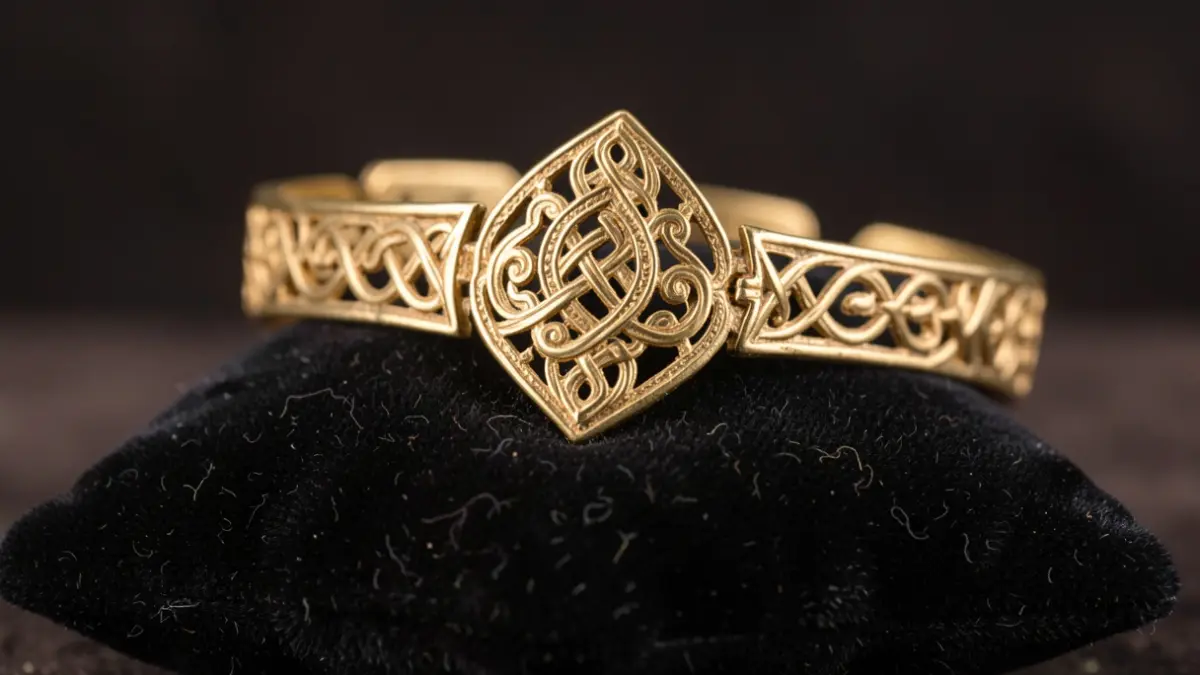
Through torcs, diadems, earrings, and other ornamental elements, along with sculptures and tools, the exhibition explores gold working techniques and its role in the social, economic, and symbolic organization of Bronze and Iron Age societies. Audiovisual resources and a pioneering archaeoplanetarium in Europe complement the tour.
The uniqueness of the so-called 'ouro branco' (white gold), a natural alloy with a high silver content widely available in the northwestern Iberian Peninsula, is highlighted, fostering the development of unique technological traditions and extensive exchange networks with Europe.
Among the most notable pieces are two torcs attributed to Ourense from the British Museum, exhibited in Spain for the first time, and the torque of Sintra. Also included are the previously unseen torcs from Bergondo, discovered in 2023, and a replica of the torque of Burela.
The exhibition also features a reproduction of the Gundestrup cauldron, the Leiro helmet, the Treasure of Caldas de Reis, and sophisticated castreño earrings. The exhibition proposes an updated review of Galaic goldsmithing and its cultural legacy, showing the persistence of ancestral decorative motifs.
The exhibition is curated by Xosé-Lois Armada, a senior scientist at CSIC and a specialist in archaeometallurgy, who has spent over two decades researching ancient metallurgy and Atlantic goldsmithing.