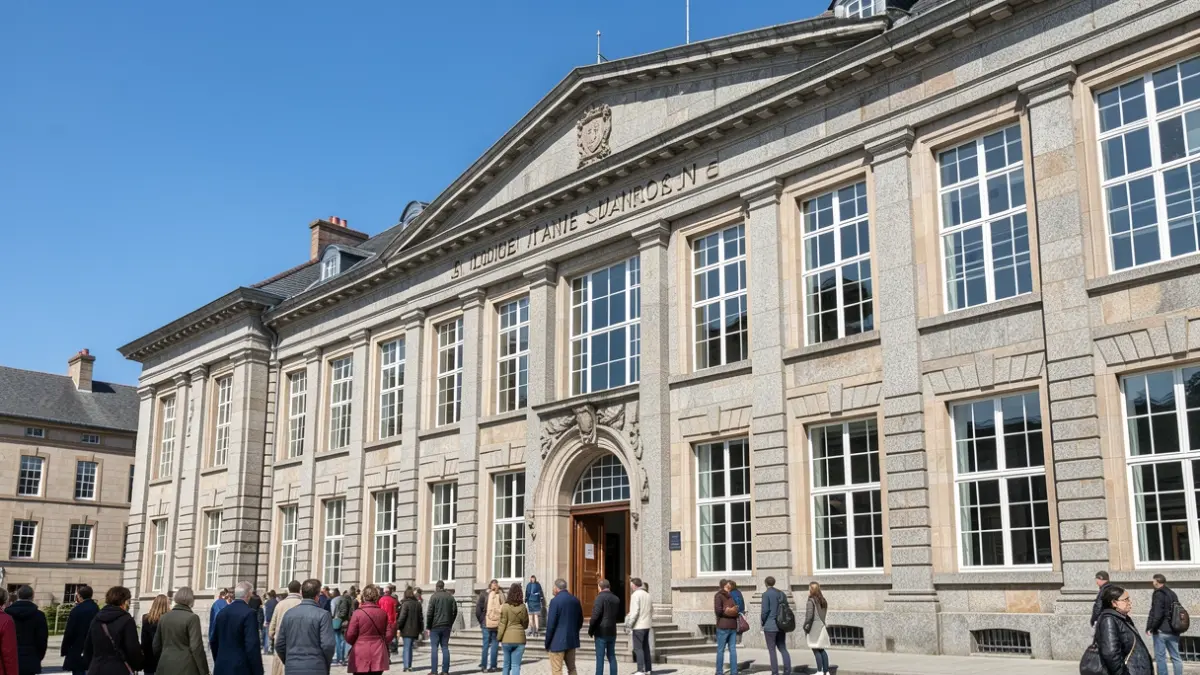
Professor Rosa Pérez Rodríguez from the Department of Spanish Language is the only candidate for the deanship of the Faculty of Philology and Translation. The elections will take place on October 28, with 92 voters eligible: 80 faculty members, seven students, and five members of the Technical Management and Administrative Services Staff (PTXAS). If elected, Pérez will succeed professor José Montero Reguera, who has led the center since 2020.
This will not be Pérez's first time in this role, as she previously led the faculty between 2009 and 2016. Her passion for university management also led her to serve as director of the Department of Spanish Language twice. "Seeing that the succession was so complicated and considering that I enjoy the world of management, I decided to take the step," explains Pérez, who acknowledges that a younger candidate would be ideal, but her experience brings value.
The candidacy is presented with a team Pérez describes as "very young, but with very committed individuals eager to help." She will be joined by vice-deans Valentina Marta Rodríguez, María Platas Alonso, Rocío Hernández Arias, and José Carregal Romero, while Liliana Valado Fernández will serve as secretary.
Immediate objectives include implementing the virtual modality for the Degree in Applied Galician and Spanish Philology for the upcoming academic year, along with a minor modification to the Degree in Foreign Languages to also incorporate virtual teaching. Pérez believes it is "important to learn, organize training courses, etc." to help staff adapt to this new teaching method.
Another priority will be the reform of the Degree in Translation and Interpreting. Pérez highlights the need to reconsider the degree in light of Artificial Intelligence advancements, refuting the notion that translators are no longer needed. "Although she believes the profession remains just as necessary, she also points out the importance of clearly communicating this message to society," calling this issue "absolutely strategic".
Furthermore, Pérez identifies student recruitment and the need to showcase the social value of humanities as key challenges for the faculty, aiming to "move the center forward" and demonstrate that "humanities remain useful and very necessary".
Meanwhile, the current dean, José Montero Reguera, expresses "reasonable satisfaction with the work carried out" during his seven years leading the center, emphasizing the faculty's internal strengthening and external visibility. He highlights the enhancement of academic offerings, with three degrees achieving 70% enrollment and seven master's programs with "excellent" results, as well as successfully completing all required evaluations and certifications.
Montero also points to the "significant effort" in student recruitment and organizing numerous events to connect activities with the city. He acknowledges that "the path was neither simple nor easy," but expresses gratitude for the support from his team and the center. "I believe I am leaving the faculty better than I found it," he concludes, wishing the new team "the best in making the faculty a pleasant place to pursue our academic lives".