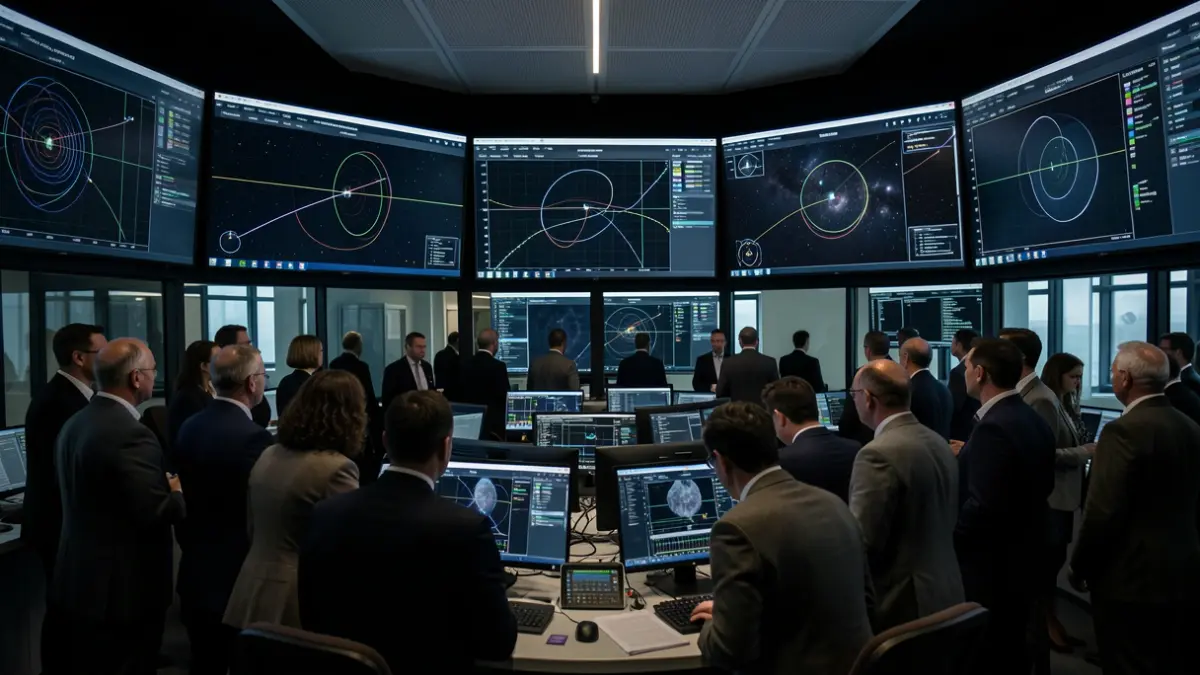
The School of Aeronautical and Space Engineering at the Ourense campus held a conference this Tuesday featuring Lieutenant Colonel Roberto García Robles, head of Spain's Space Surveillance Operations Center (COVE). The COVE's primary mission is to monitor and understand the space situation and provide services supporting Armed Forces operations. It can also monitor natural phenomena (meteorites, asteroids, etc.) or accidental events (like space debris).
The conference took place in the graduation hall of the Jurídico-Empresarial building on campus. Nieves Lorenzo, director of the UVigo School of Aeronautical and Space Engineering, highlighted the importance for Aerospace Engineering students to learn about COVE and its "most relevant strategic capabilities for security and knowledge of the space environment," noting that its work also "contributes to scientific and technological research."
Lieutenant Colonel Roberto García Robles explained that NATO declared space an "operational domain" in 2019, implying military operations. He detailed the EU's approval of its Space Strategy for Security and Defence and stated that COVE has cataloged over 32,000 objects orbiting Earth, calling the figure "enormous" and describing space as a "battlefield."
COVE, established in 2023 and based at the Air and Space Base in Torrejón de Ardoz (Madrid), is tasked with monitoring and cataloging orbital objects, providing space weather predictions, supporting space vehicle launches, and coordinating procedures for suborbital vehicles and re-entry maneuvers.