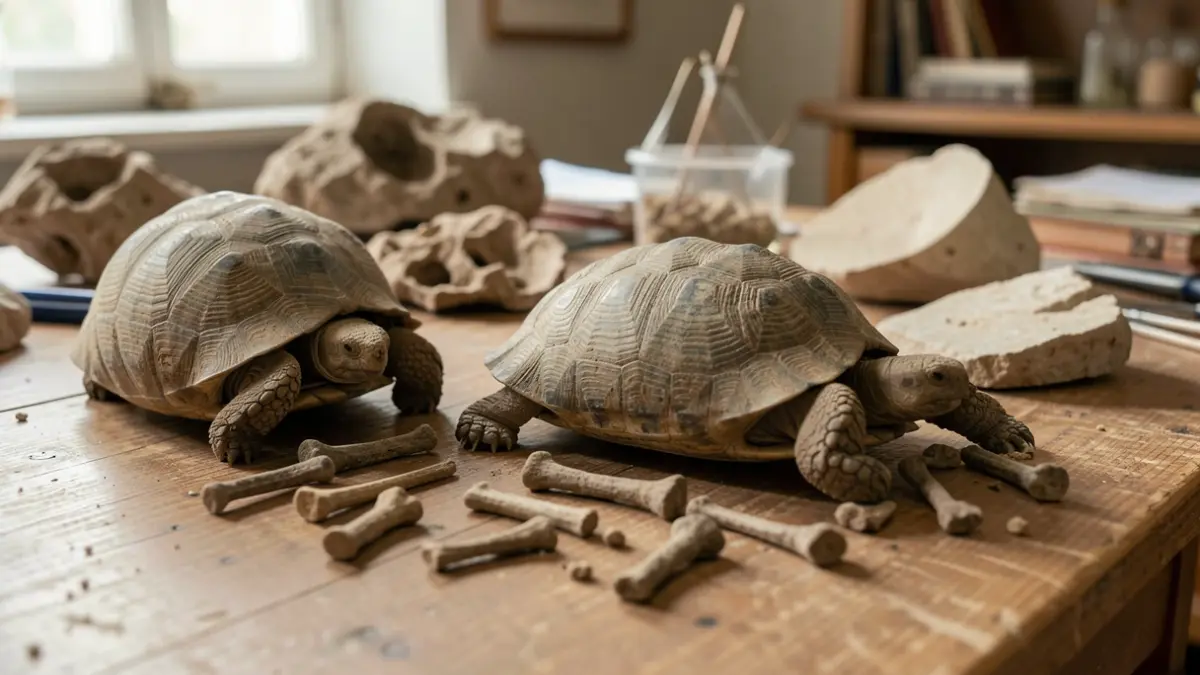
Researchers Iván Rey Rodríguez and Sara Varela González, from the MapasLab group at the CIM UVigo, detected a large quantity of tortoise remains during excavations in level 5A of the site. The hypothesis they aim to verify is whether these animals were part of the human diet or if their presence is due to natural causes or other animals. To validate this, the team will analyse the preservation of the remains and look for evidence of human manipulation, such as cut marks or alterations related to preparation and consumption.
The Kiik Kamar cave, located in the heart of Central Asia in a natural corridor between the Near East, Europe and Central Asia, remained intact until 2024. Excavations, directed by archaeologist Malgorzata Kot from the University of Warsaw, identified nine archaeological levels. Level 5A, dated between 42,000 and 40,000 years, preserves lithic industry, fauna and combustion structures that demonstrate the repeated presence of human groups.
“"The main mystery of Kiik Kamar is related to one of the central debates in human evolution. Upper Paleolithic industries were traditionally associated with the expansion of Homo sapiens across Eurasia, however, in Central Asia, assemblages with similar characteristics and older chronologies than expected have been identified."
The work of the UVigo researchers focuses on the study of small vertebrates, such as mammals, birds, amphibians and reptiles, which are useful for reconstructing past environments. Archaeological sediments are washed and sieved to recover remains of just a few millimetres. In the laboratory, microtomography techniques are applied to study the internal and external structures of bones and teeth in three dimensions without damaging the fossils.
The research will allow an evaluation of whether Upper Paleolithic innovations originated in Central Asia and spread to Europe, if the path was the reverse, or if they developed among various human populations. It will also help determine whether this region functioned solely as a migratory corridor or played its own role in the emergence of new behaviours.
Iván Rey and Sara Varela, who along with Malgorzata Kot published an article about their experience in the National Geographic magazine, will return to Uzbekistan in May 2027 to continue studying the materials. The upcoming campaigns will expand the excavated area and continue into lower levels to determine the age of the sequence and check how technology, subsistence and the use of the cave changed over time.