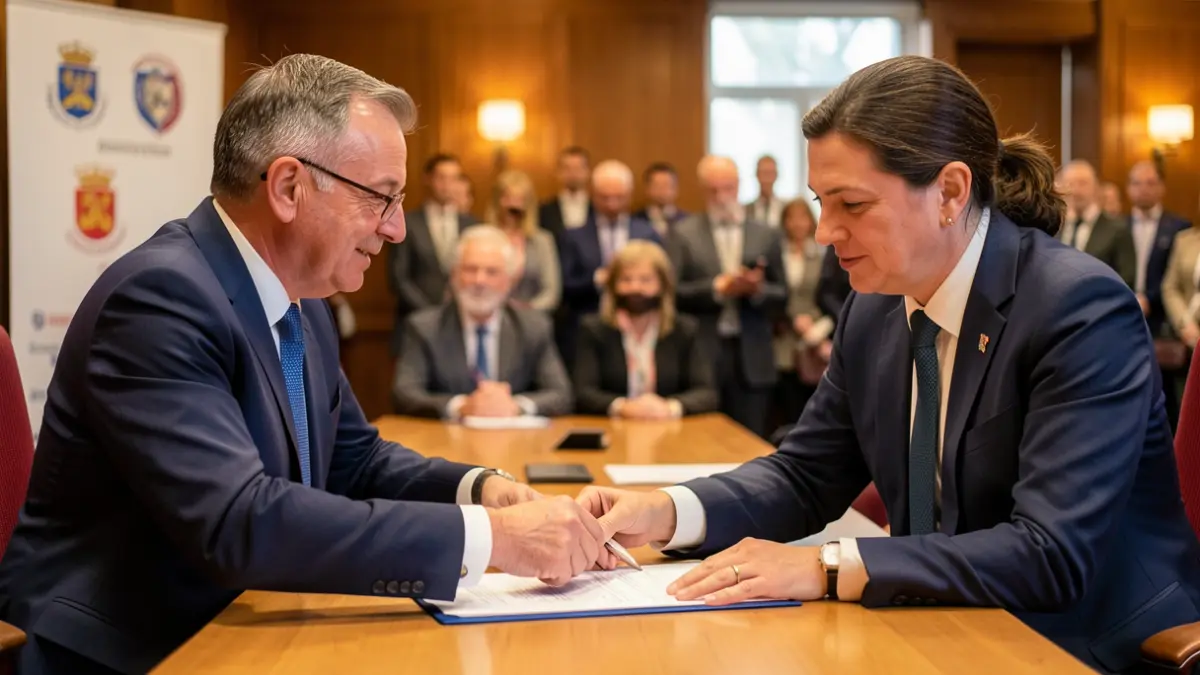
On October 28, the Pias program was launched at the Faculty of Education and Social Work on the Ourense campus. This pilot initiative focuses on the academic inclusion of individuals from the Xunta's child protection system, funded by the Consellería de Política Social e Igualdade. The event marked the program's first activity, aiming to delve into best practices for the academic inclusion of these young people, only 3% of whom pursue higher education.
Organized by the faculty with support from the UVigo Diversity Unit, the Galicia Platform of Childhood Organizations, the College of Social Educators of Galicia, and the Consellería de Política Social e Igualdade, the opening featured remarks from the vice-rector of the Ourense campus, Montserrat Cruz, and the Dean of the Faculty, Isabel Mociño, who highlighted the program's social responsibility.
Cristina Blanco, deputy director of Family Policy, Childhood and Adolescence at the Xunta, expressed her hope that Pias will serve as a "seed" for other universities. Inés Salteiro, director of the Platform of Childhood Organizations of Galicia, emphasized the need for more resources and support, while Raquel Rey, director of the UVigo Diversity Unit, stressed the importance of breaking exclusion figures.
The workshop, titled "From Evidence to Action: Best Practices in the Academic Inclusion of Students with Administrative Protection Records," was attended by members of the university community and professionals from the third sector. Discussions focused on how to facilitate access, retention, and support for these individuals in higher education. Carlos Rosón, director of Igaxes, spoke about academic success in vulnerable contexts, and Deibe Fernández Simo, a professor at the Faculty and head of the Pias program, presented the initiative.
The general objective of Pias is to foster a supportive environment for the academic inclusion of students graduating from the child protection system through four main lines of action. These include individualized information, academic guidance, socio-educational support, and follow-up; assistance with scholarships and grants from the University of Vigo, with specific affirmative action measures and residential support; training and awareness activities for university staff and child protection professionals; and workshops and outreach activities to promote social inclusion and raise awareness about the realities faced by young people who have aged out of care.