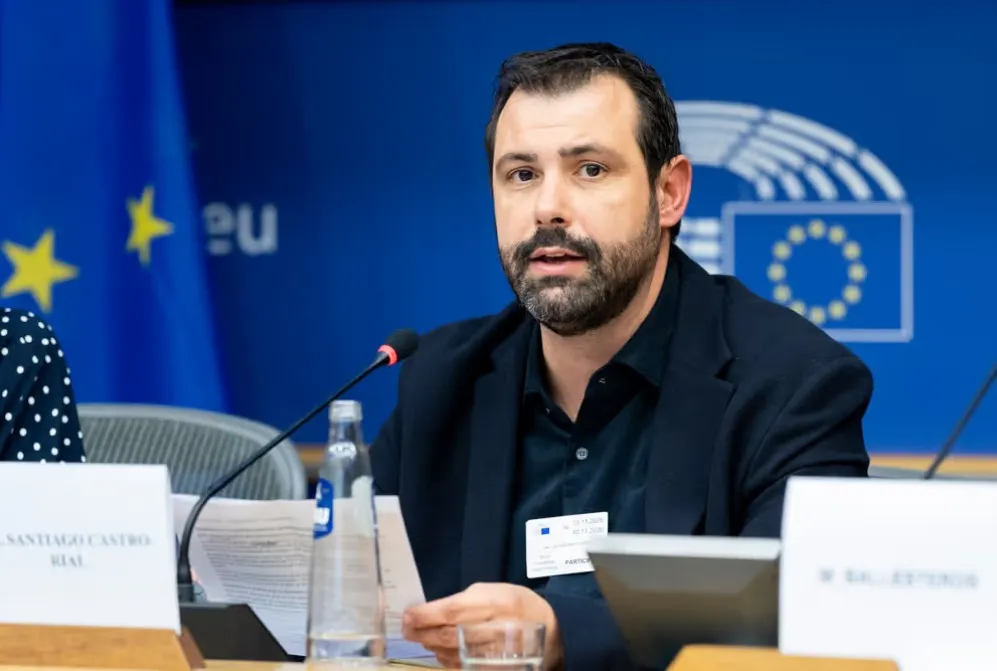
The Technological Centre for Marine Research (CETMAR), under the Consellería do Mar, was present at the European Union to participate in a public hearing with the Committee on Fisheries (PECH). The meeting, held in Brussels, focused on the relevance of socioeconomic data as a fundamental tool for designing fisheries policies in European coastal communities.
The event was divided into two thematic blocks. The first addressed how to foster better economic and social advice for the EU's Common Fisheries Policy (CFP), while the second explored ways to integrate socioeconomic analyses into decision-making processes.
José Luis Santiago, coordinator of CETMAR's Fisheries Socioeconomics area, spoke in the first block alongside expert Marloes Kraan (ICES). Santiago presented three key points for strengthening the socioeconomic pillars of the CFP: the need for updated socioeconomic data, the importance of the geographical dimension within the Data Collection Framework (DCF), and fisheries from the perspective of the blue economy.
The CETMAR technician pointed out that the changing nature of fishing activity means official information is often outdated. He proposed complementing statistics with qualitative information and informant networks to provide earlier indications of emerging economic pressures. He also highlighted that data aggregation in the DCF can mask negative effects on specific fleet segments or fishing-dependent regions, and warned of limited information on how fisheries actually use marine space.
Finally, Santiago emphasized fisheries as part of the blue economy, underscoring their indirect economic effects and the need to link fisheries socioeconomic information more effectively with global marine policies, such as maritime spatial planning and conservation measures.
Following this first part, other experts from IEO-CSIC and Federazione Coldiretti analyzed the integration of socioeconomic analyses into decision-making, exploring practical ways to incorporate these assessments into conservation and management measures. The forum concluded with a debate on the use and collection of data at the community level to improve fisheries management.