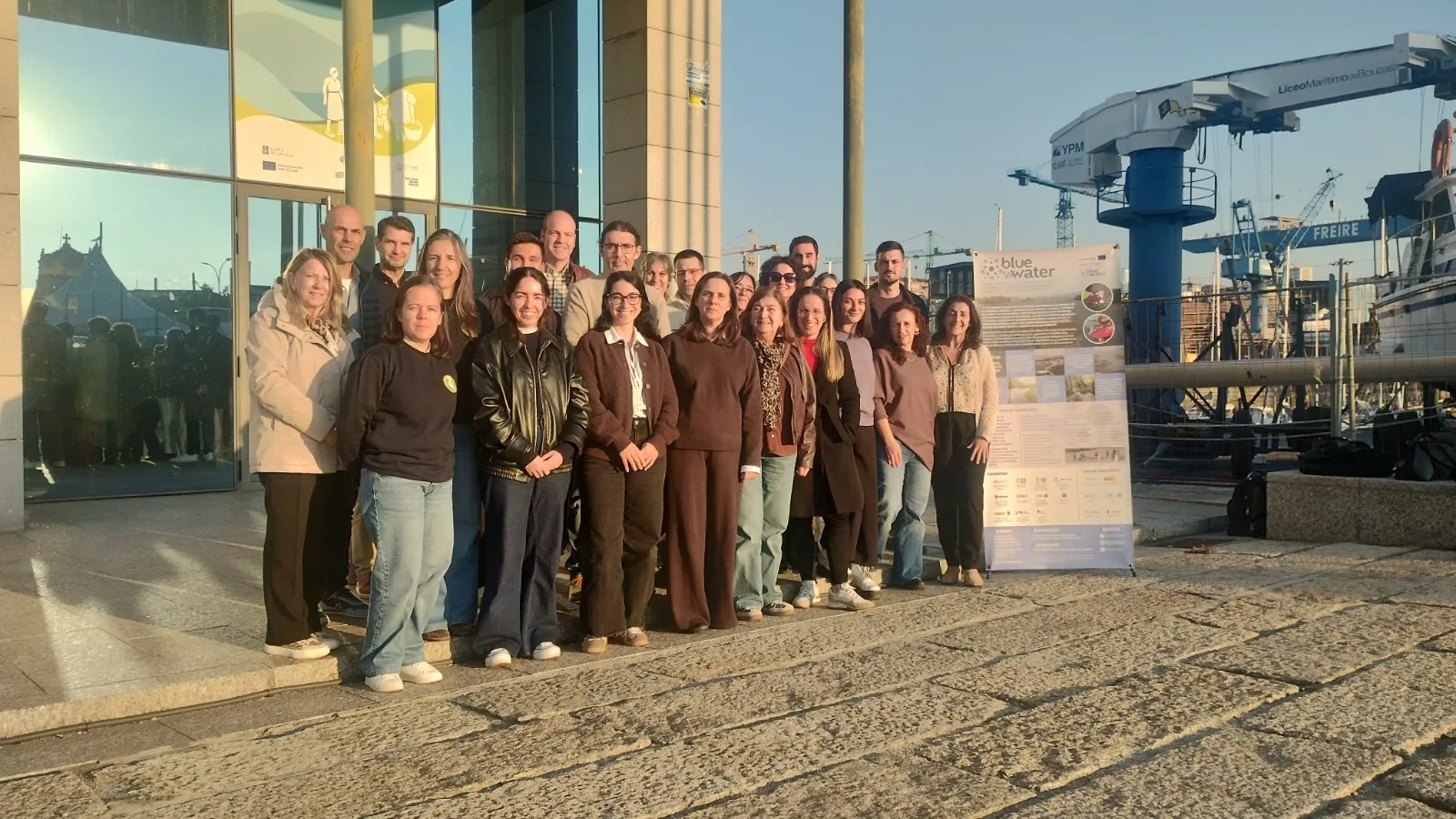
The BlueWWater project, coordinated by CETMAR, presented its advancements today in Vigo for improving water quality and reducing emerging contaminants and microplastics. This initiative, developed over three years in collaboration with entities from Galicia and Northern Portugal, aims to enhance treatment tools and raise public awareness.
Key achievements include the development of methods to analyze up to 95 indicator compounds and the refinement of sampling and analysis techniques for microplastics in wastewater and surface waters. Furthermore, a comparison involving 12 laboratories from Spain and Portugal was conducted to improve measurement reliability.
The project also assessed the capacity of wastewater treatment systems to remove organic and inorganic compounds, analyzing samples from eight treatment plants and riverine and coastal waters. Advanced treatment technologies were evaluated, and trials were conducted to study the reuse of treated water in crops.
Environmental risk assessment included tests with microalgae, sea urchin larvae, and zebrafish to determine the toxicity of treated water samples. Models were also developed to simulate pollutant dispersion in the Miño River.
In environmental education, BlueWWater developed educational games, videos, exhibitions, and workshops to raise awareness about plastic waste and emerging contaminants. The NOR-WATER network, stemming from the project, brings together 68 entities from Spain and Portugal.
The project is funded by the Galicia-Northern Portugal 2021-2027 Cooperation Programme (POCTEP) and involves various institutions such as iARCUS from the University of Santiago de Compostela, Axencia INTECMAR, the University of Porto, IEO-CSIC, CIIMAR, and the CETAQUA Foundation, among others.