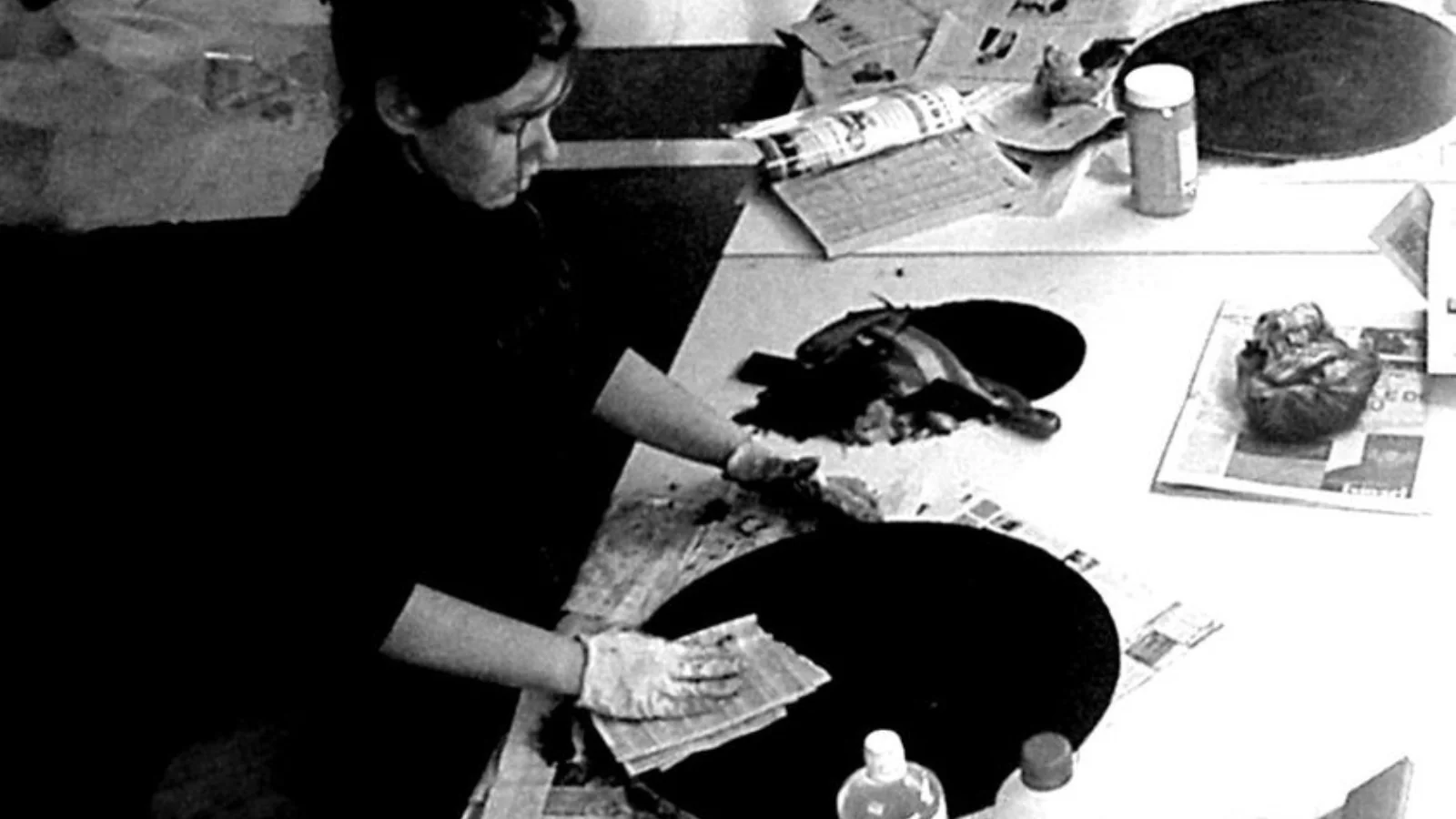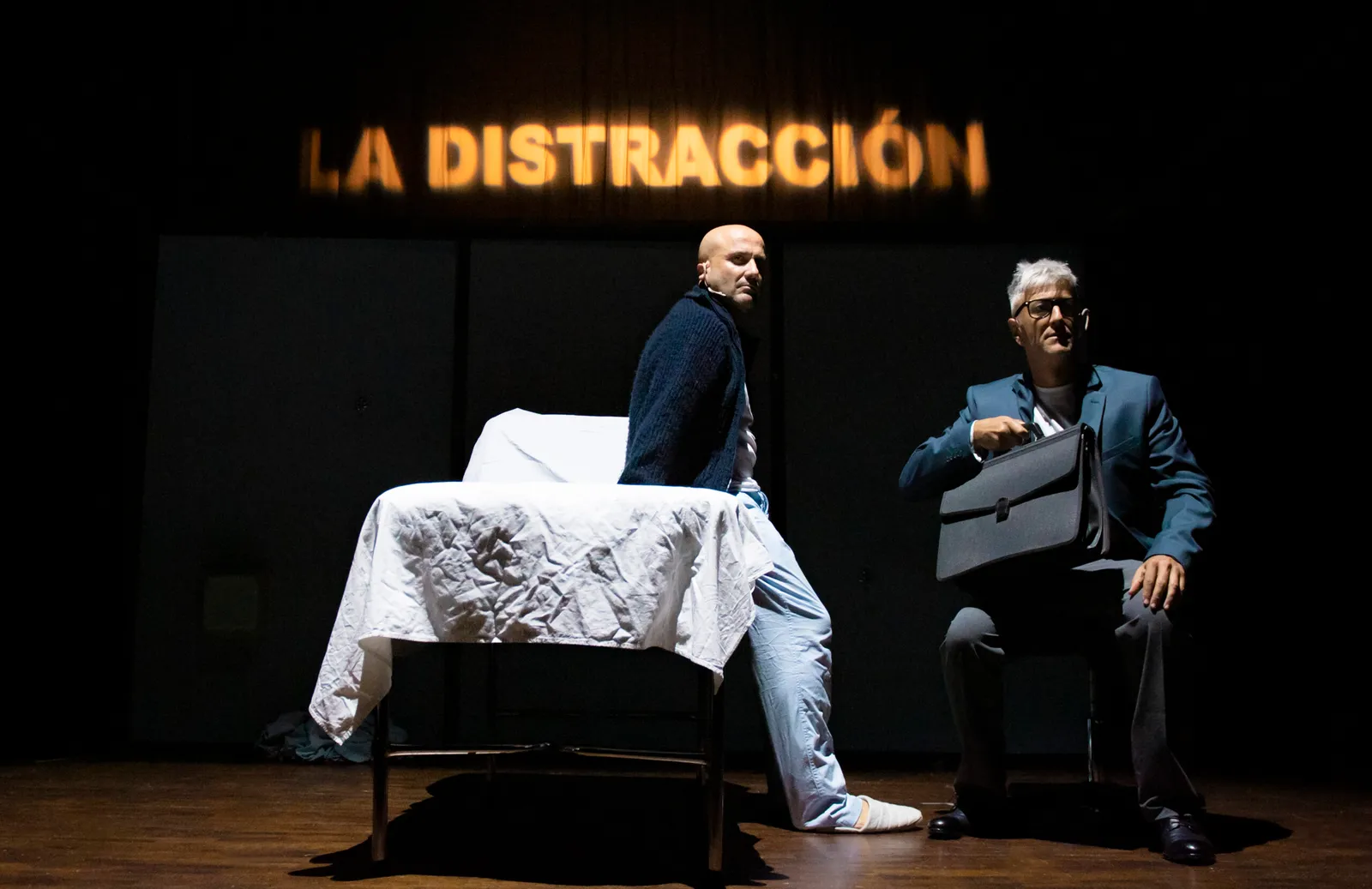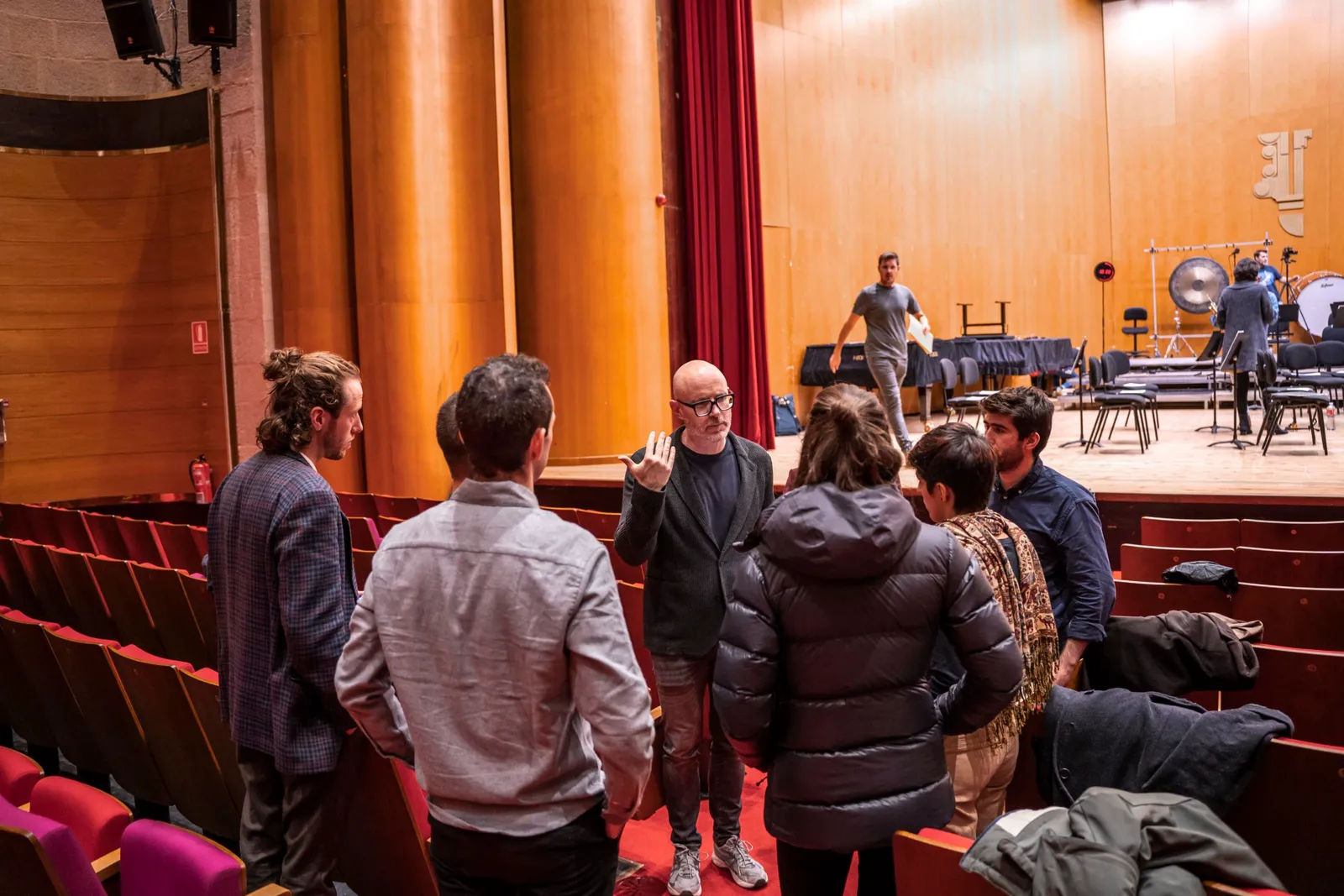
Under the title ‘Lo que somos’ (What We Are), the book delves into the trajectories of seven artists trained at the faculty, connecting their experiences with the idea of territory. The publication, launched in 2021 with the En tránsito (In Transit) series, aims to introduce students to the projects and careers of graduates from different generations.
Vicente Blanco, Lara and Noa Castro, Andrea Davila, Manuel Mata, Ventura A. Pérez, and Carla Souto discuss their interests, research and creation processes, and their time at Belas Artes in this volume. The interviews were conducted by cultural manager and fellow alumna Sara Donoso.
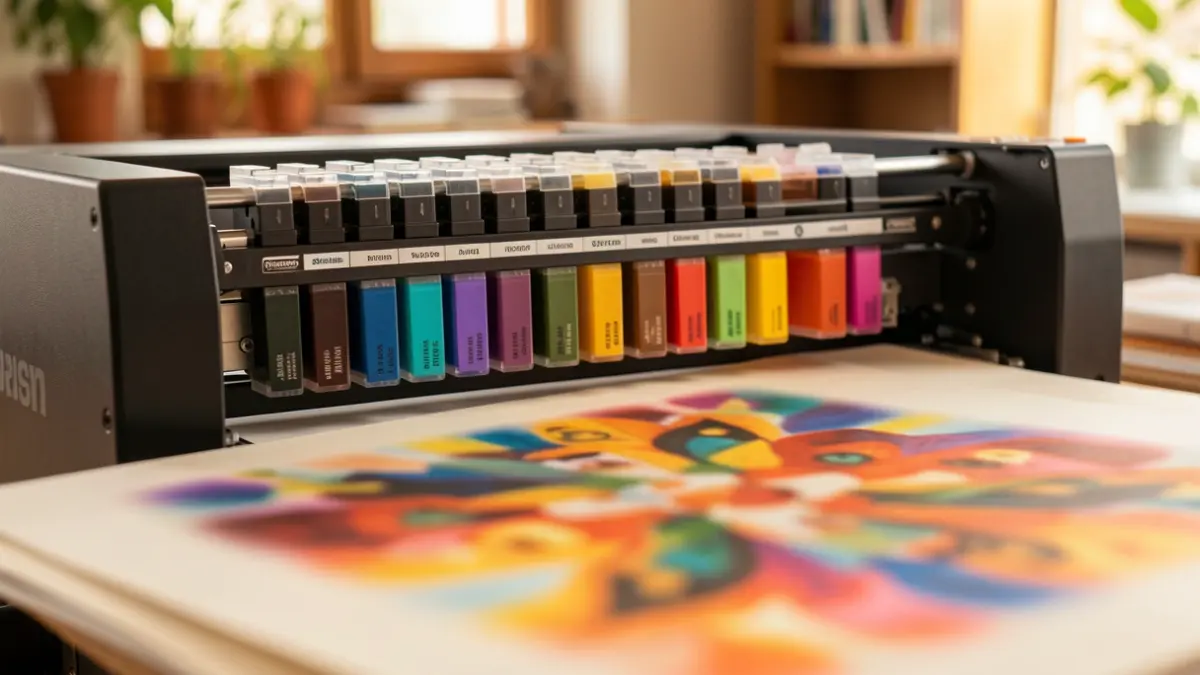
Published by the independent publishing label Error es Bien, 'Lo que somos' features the collaboration of artist and professor Chelo Matesanz in selecting the featured artists and the central theme. Matesanz notes that the artists propose a revision of territory, breaking established patterns to create independent, often ironic and bold, discourses. Coordinator Sara Donoso adds that the environment, memory, landscapes, and the Galician context appear in their practices through diverse approaches. The publication, available in Galician and Spanish, was designed and laid out by Sara González and printed using risograph by Marcos Covelo.
The publication emphasizes the relationships between art, territory, body, memory, education, and society, as well as the processes behind the artworks. Matesanz highlights in the prologue that these artists advocate for artistic practice as a fundamental tool for knowledge and research, and points to the use of humor and the incorporation of aspects of the Galician imaginary as common characteristics.
The book also explores the role of the Faculty of Fine Arts as a space for learning and experimentation, showcasing the diverse paths an artistic career can take after university. Noteworthy trajectories include that of Vicente Blanco, with exhibitions at the Museo Nacional Centro de Arte Reina Sofía and the CGAC; the joint work of sisters Lara and Noa Castro, recognized with grants from the Fundación María José Jove and Fundación La Caixa; Andrea Davila's research on the body in sculpture, with stays at Boston College through a Fulbright scholarship; Manuel Mata's literature and photography project in New York; and Ventura A. Pérez's reflections on miniature and architecture. The trajectory of Carla Souto, who studied in Portugal and Brazil and investigates themes such as the body and geopolitical issues, is also featured.