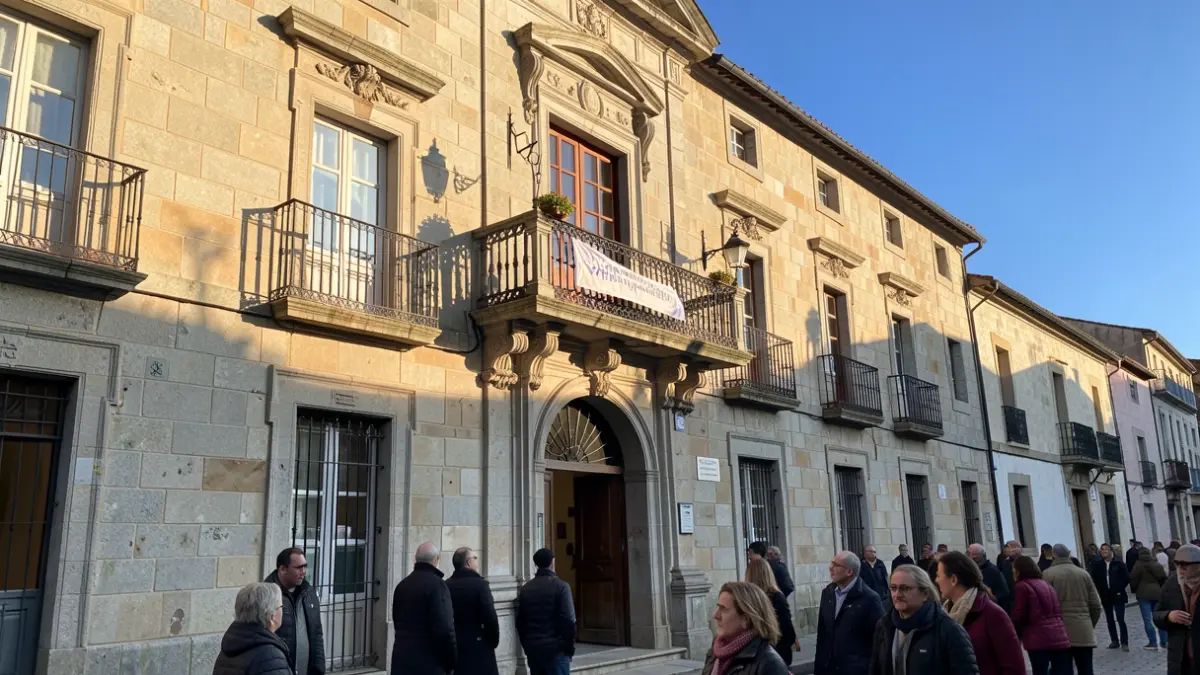
The Spanish National Research Council (CSIC) has launched the second phase of its Young Employment 2026 call, which plans for the formalization of 250 contracts for technical staff supporting research across various centers of the organization. The Institute of Galician Studies Padre Sarmiento (IEGPS-CSIC), based in Santiago de Compostela, is offering three of these positions for young university graduates wishing to start their professional careers in research and scientific management.
The three offers cover complementary profiles to strengthen key areas of the institute. One position focuses on historical research, heritage, and scientific culture, requiring a Degree in Geography and History, History, or Art History. Another position is for administrative management, aimed at graduates in Business Administration and Management, Public Management and Administration, or Labor Relations and Human Resources, and will involve tasks supporting the economic and budgetary management. The third offer is for editorial and publishing management, to collaborate in the editing and dissemination of historical studies and scientific publications, and is intended for degrees in Cultural Management or Humanities.
The contracts will have a duration of one year, under the modality of a training contract for obtaining professional practice appropriate to the level of studies, classified within professional group M2. The established gross annual remuneration is 28,178.78 euros. The call is aimed at individuals under 30 years of age with a university bachelor's degree obtained within the last three years (five years for individuals with disabilities), among other requirements.
The selection process will be based on a merit-based competition, evaluating academic records (up to 96 points) and English language proficiency (up to 4 points). To pass the process, a minimum of 48 points is required. The application submission period is open from November 13 to November 26, 2026. Applications are submitted through the CSIC's CONVOCA application.
This initiative, co-financed by the European Social Fund Plus (ESF+), aims to promote the first professional experience for young people in the research and development sector.