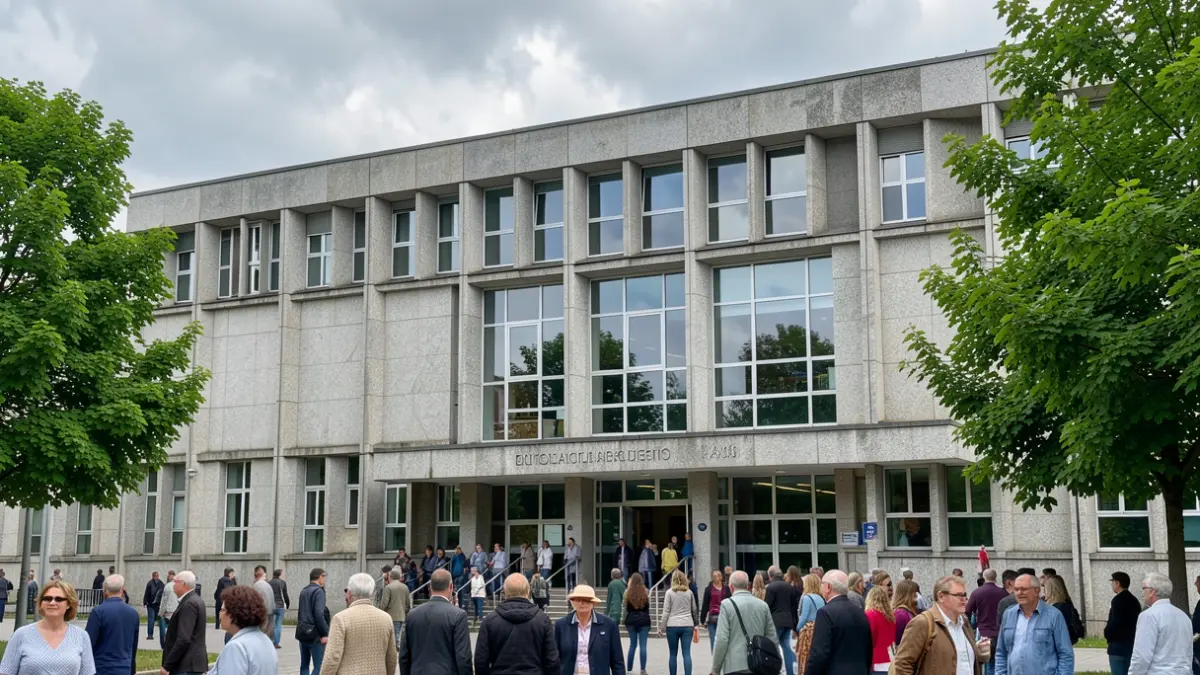
USC has secured a total of four ATRAE grants across the three resolved calls, surpassed only by the Universitat Autònoma de Barcelona with five. The University of Seville also obtained four contracts. Within Galicia, the University of Vigo (UVigo) has achieved three grants and the University of A Coruña (UDC), two.
The four researchers developing their projects at USC under the ATRAE program are María del Carmen Parafita Couto, Emiliano Treré, Cesar Lodeiros Seijo, and Nicholas Márquez Grant. Parafita Couto, affiliated with iLTIUS, is working on the project ‘O cerebro de Babel: Cartografía de ecoloxías multilingües (BabelBrain)’ after seven years at Leiden University. Treré, from iDEGA, is developing ‘Ecoloxías de Datos: Exploración de formas de activismo medioambiental a través e contra os datos na sociedade das plataformas’ (DataECO), coming from Cardiff University.
Cesar Lodeiros Seijo, from the Institute of Aquatic Environment Research for Global Health (iARCUS), joins USC from the Technical University of Manabí in Ecuador to develop the project ‘Afrontar os desafíos da acuicultura en mariscos: resiliencia, sustentabilidade e crecemento azul’. Nicholas Márquez Grant, from the Interdisciplinary Research Center in Environmental Technologies (CRETUS), is undertaking the project ‘Arqueoloxía e Antropoloxía Forense ao Servizo da Sociedade’, having previously been associated with Cranfield University and Oxford University.
Emiliano Treré was received by the President of the Government, Pedro Sánchez, along with other ATRAE researchers. During the meeting, which was also attended by the Minister of Science, Innovation and Universities, Diana Morant, Treré shared initial progress on the DataECO project and a copy of his award-winning book ‘Algoritmos de resistencia’. The project, developed at USC, delves into digital activism and algorithmic resistance internationally, employing a comparative approach across Spain, Italy, Chile, and Ireland.
The ATRAE Program aims to strengthen the Spanish scientific system by hiring internationally recognized researchers working abroad, funding their salaries, project execution, and necessary infrastructure improvements. USC has actively participated in recent editions, attracting specialists in fields such as linguistics, digital activism, aquaculture, and forensic anthropology, with funding potentially exceeding one million euros.