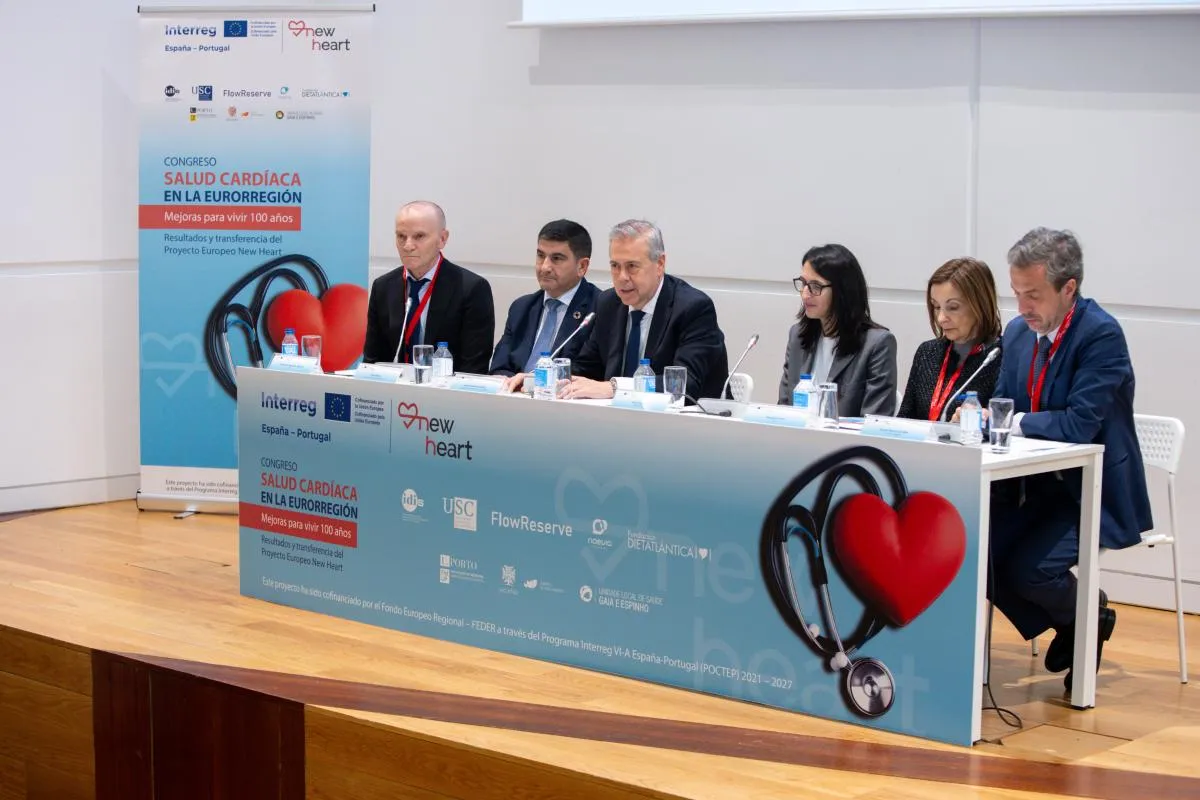
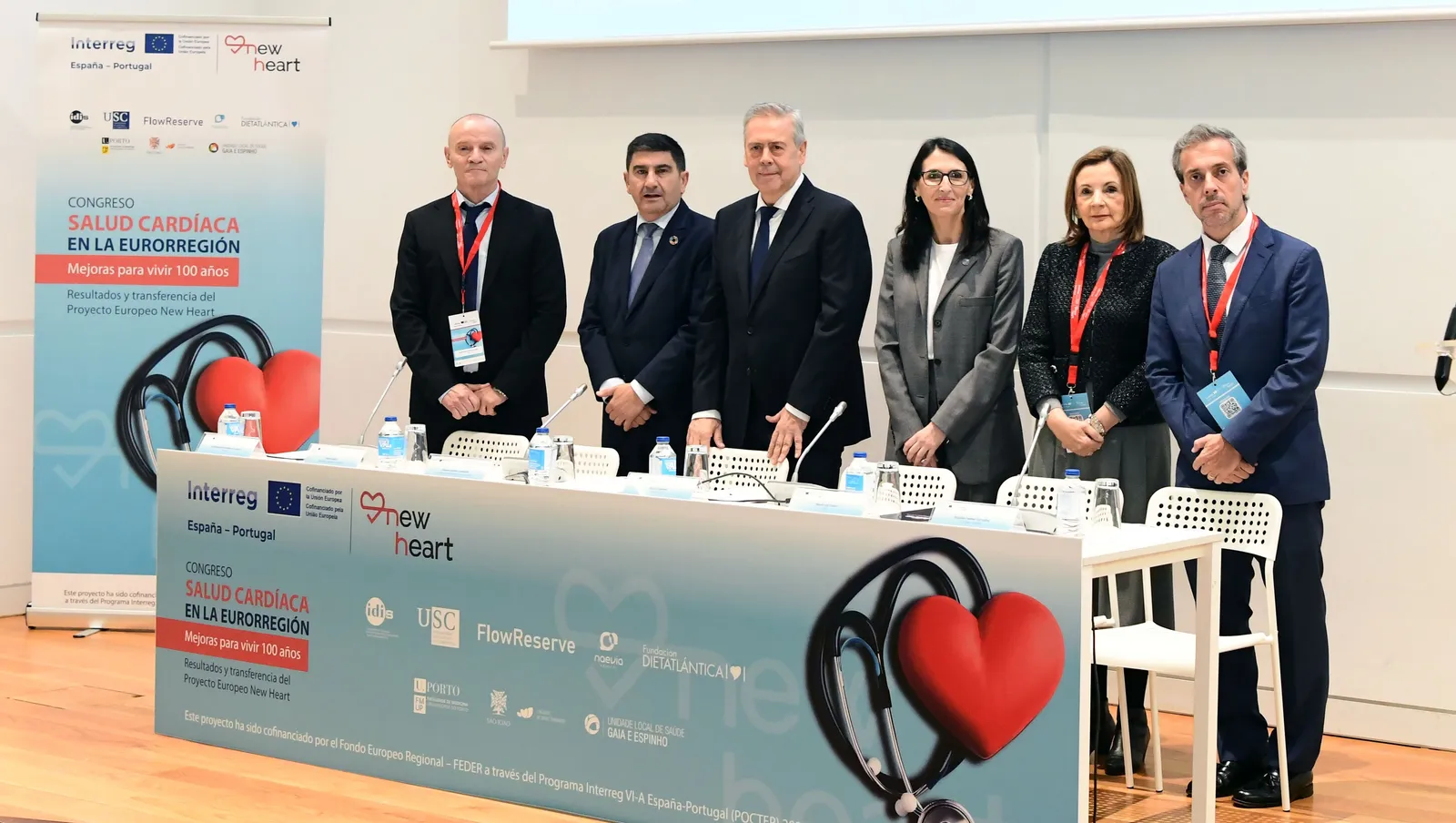
The European project New Heart, connecting Galicia and Portugal, is organizing a congress on November 19th at the Cidade da Cultura, focused on improving the quality of life and cardiovascular health for an increasingly long-lived population. The importance of the Atlantic Diet, the role of Primary Care in early detection, and the use of ICT and Artificial Intelligence tools in diagnosis are among the central themes.
At the opening session, rector Rosa M. Crujeiras highlighted the growing interest in longevity, driven by scientific and technological advancements. She emphasized that the goal is not just to increase life expectancy, but to "ensure that these additional years are years of health, autonomy, and quality of life".
The forum brings together healthcare professionals, researchers, and managers from Galicia and Portugal to advance in the prevention, early diagnosis, and monitoring of cardiovascular diseases. The project aims to optimize cardiovascular care through personalized precision medicine and advanced technology.
Also participating in the inaugural event were José Ramón González Juanatey and Ricardo Fontes-Carvalho, coordinators of the New Heart project; María Luz Couce, scientific director of IDIS; Antonio Gómez Caamaño, Minister of Health of the Xunta de Galicia; Pedro Blanco, Government delegate in Galicia; and Jorge Mendes, vice-president of the Comissão de Coordenação e Desenvolvimento Regional do Norte.