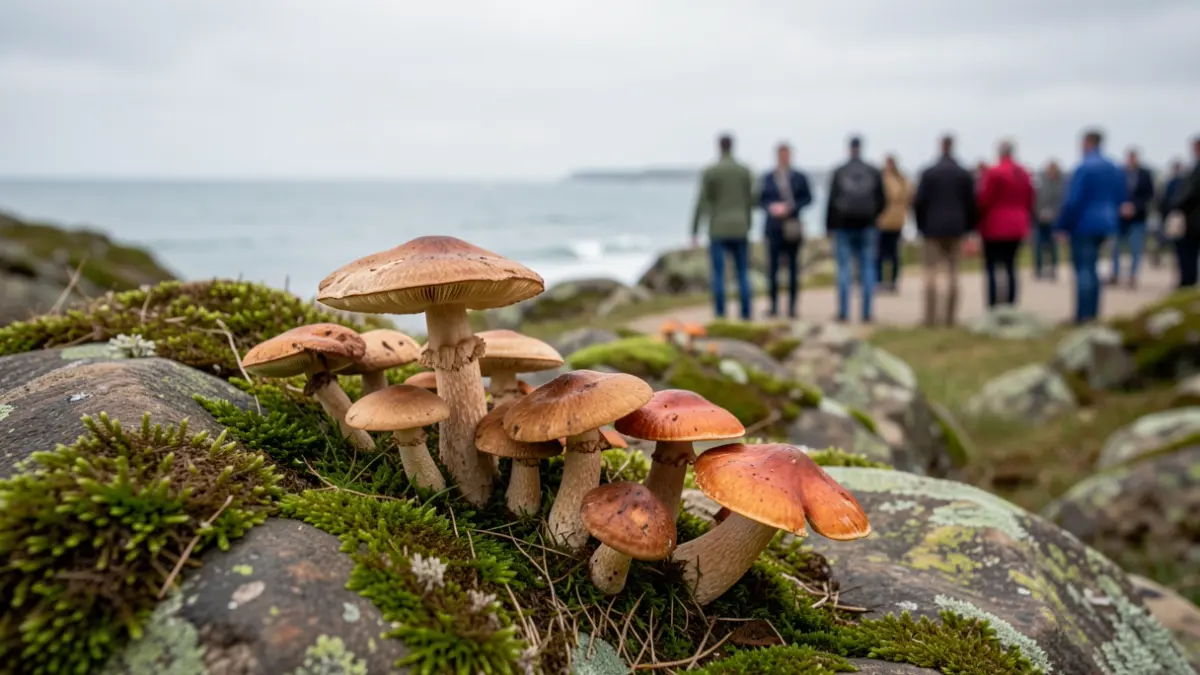
The protected area has just published a new study carried out by researcher Jaime Blanco, which incorporates into the updated catalogue of macromycetes present in the archipelagos of Cíes, Sálvora and Ons. The work includes molecular analysis to confirm the identity of new species and significantly expands knowledge of the park's mycological biodiversity.
The project results record a total of 108 taxa in Cíes, 13 in Sálvora and 69 in Ons. This adds, with previous contributions, an updated catalogue with 257 taxa for Cíes and 63 for Sálvora. Among the findings, three species stand out that had not previously been located in Galicia: agaricus argyeoropotamicus and coprinus xerophilus on Sálvora Island, and melanoleuca luterolosperma on Faro Island, belonging to the Cíes archipelago.
Common species such as the processionary fungus, hepatic boletus, earth star, snowball or boleto were also highlighted. Regarding Ons, specimens of Bonomyces afrosinopicus were found in 2006, constituting the first mention of this taxon in all of Spain, to which 68 further contributions are added between 2006 and 2010.
Between 2017 and 2025, mycological prospections were carried out in different terrestrial habitats on the islands of Cíes and Sálvora, identifying 116 groups of fungi. Four taxa exclusive to this protected area have been described so far, proposed as new to science. The Xunta highlights the extraordinary importance of these elements, as they constitute unique biological heritage with a world distribution restricted to these islands.