The President of the Xunta, Alfonso Rueda, announced today the approval of the draft law for the fight against forest fires in Galicia by the Consello da Xunta. The legal text will be sent to Parliament for debate and approval, expected in the first months of next year. This new legislation aims to transition from a reactive defense model to one of integral fight and strategic land management.
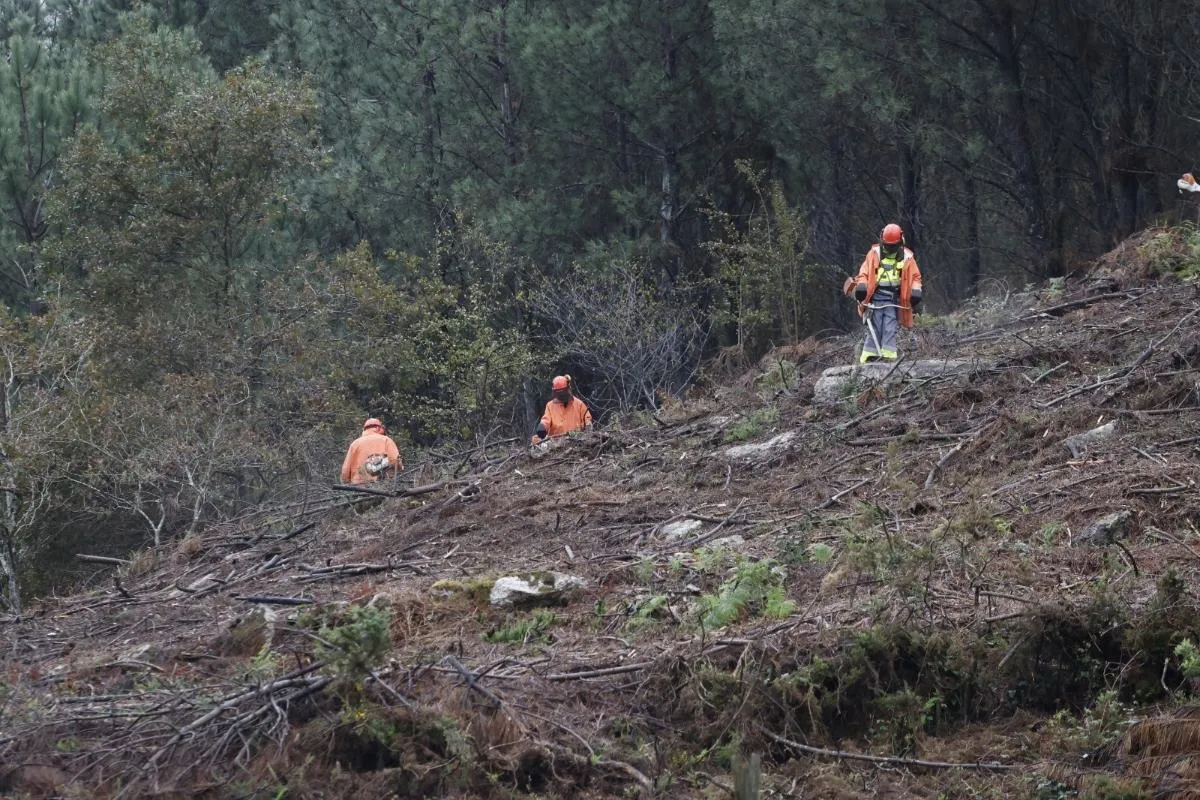
The law introduces new concepts such as the urban-forest interface, defined as urban, rural nucleus, or developable land with vegetation cover, bordering forests. In these areas, biomass management and species removal become a direct legal obligation. New industrial and gas station facilities in agroforestry or urban-forest interface areas are also required to have a perimeter hydrant network for self-protection.
Furthermore, instruments like mosaic landscapes or firebreaks are promoted. Mosaic landscapes aim to create strategic fuel discontinuities through productive land configuration, while firebreaks establish delimited areas in strategic points to halt large fires. The possibility of doubling biomass management distances in strategic zones is also introduced.
Other notable measures include granting authorities the power to issue immediate verbal execution orders on the ground, such as the evacuation of recreational areas or the closure of paths in imminent danger. The high fire danger period is extended by 30 days, now covering from June 16 to October 15.
The legislation also strengthens the strategic protection of water points, declaring the water point network a strategic public safety infrastructure. Construction or planting within a 50-meter radius of fire watch posts is also prohibited.
The project is based on five premises: risk planning, landscape management, preventive forest management, protection of people and infrastructure, and effective execution. The goal is to establish a preventive system linked to both territory and population, promote agriculture and forest management, and enhance self-protection in the urban-forest interface.