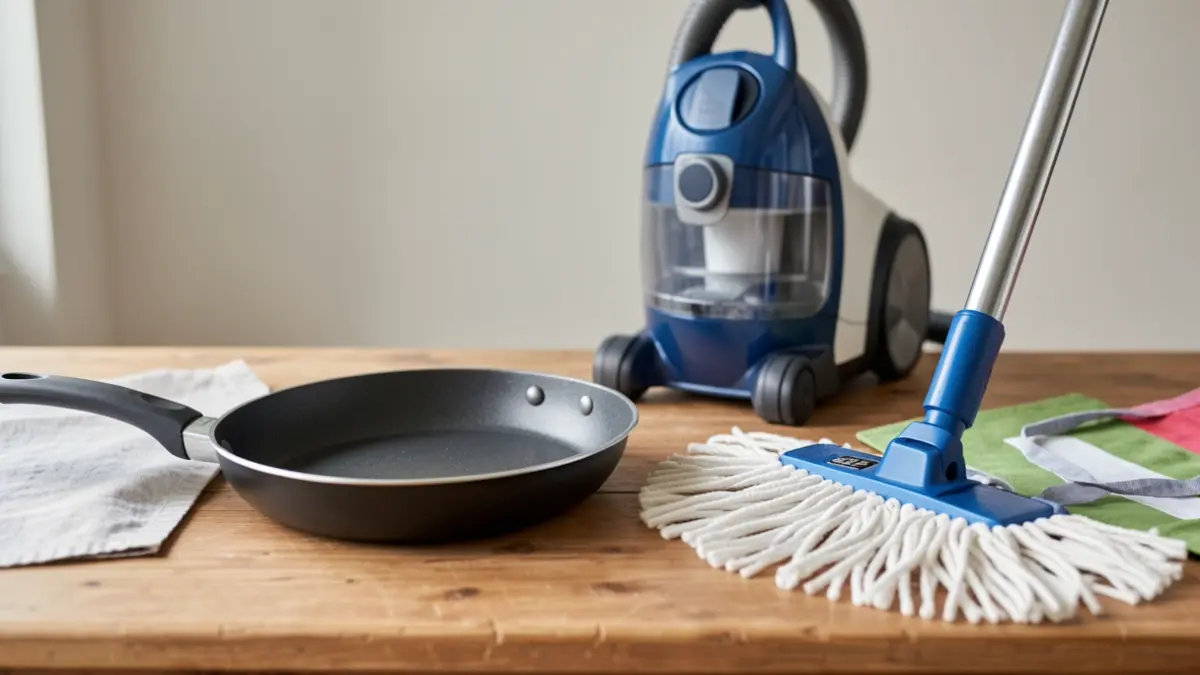
The initiative, developed under the Shared Responsibility Plan, presents four everyday products —a frying pan, a vacuum cleaner, a mop and a unisex apron— to send the message that household tasks have no gender. The proposal aims to promote a cultural change that overcomes the view of these jobs as primarily a female responsibility.
The Councillor for Equality, Ana Núñez, explained that "what continues to need deep transformation is not household utensils, but the habits and stereotypes that condition the distribution of family responsibilities". She added that behind the humorous messages lies a reflection on the persistence of gender roles that attribute a disproportionate share of work to women.
“"What continues to need deep transformation is not household utensils, but the habits and stereotypes that condition the distribution of family responsibilities."
The campaign materials incorporate data from the National Statistics Institute showing that 59% of women perform household tasks daily, compared to 39% of men. Each advertisement concludes with a similar idea: "A frying pan is nothing new. The real novelty would be an equal distribution of household tasks".
This action is part of the municipal sensitisation programme on shared responsibility, developed between March and November 2026. Its objectives include fostering an equitable distribution of family responsibilities, highlighting the social and economic importance of care work, and helping citizens understand the meaning of shared responsibility.